Quantum Computing as a Service (PaaS) is an emerging technology that provides businesses, researchers, and developers with cloud-based access to quantum computing resources. By leveraging QaaS, organizations can harness the power of quantum processors without the need for expensive in-house infrastructure. This model democratizes quantum computing, making it accessible to industries ranging from finance & healthcare to logistics and artificial intelligence.
How QaaS Technology Works
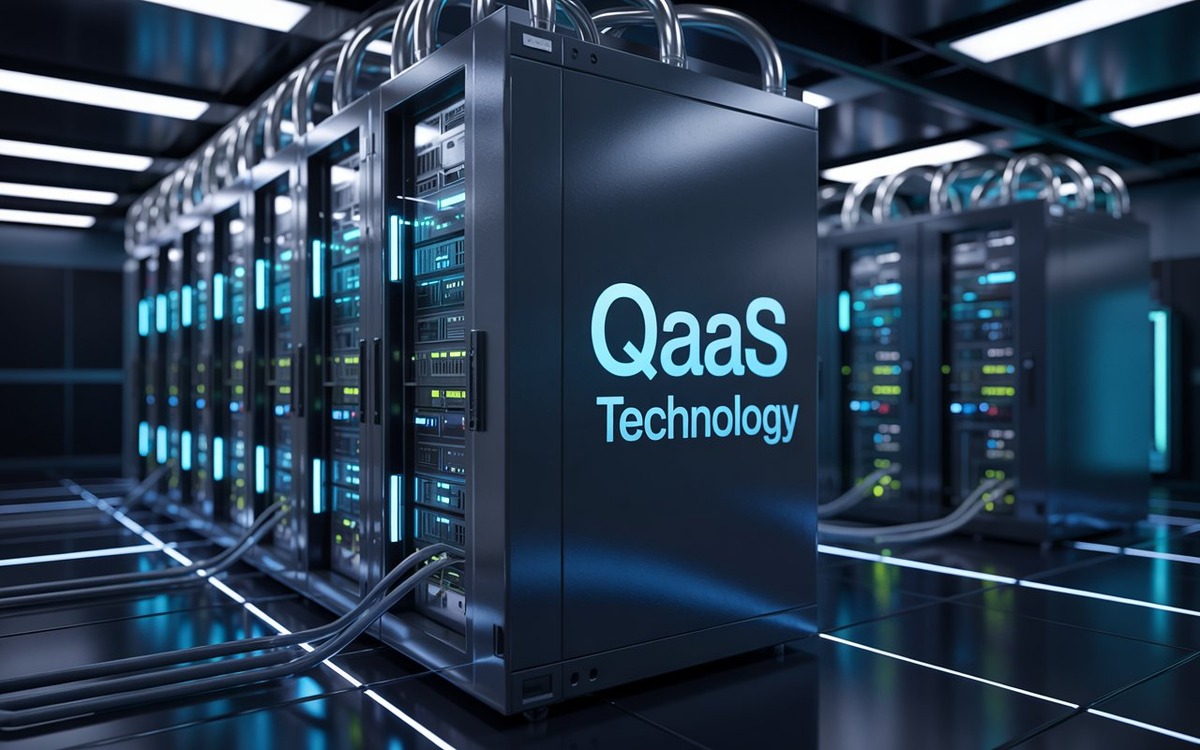
QaaS operates similarly to traditional cloud computing services but with quantum hardware at its core. Key components include:
- Quantum Processors (QPUs) – Accessed remotely via the cloud, perform complex calculations using qubits (quantum bits).
- Hybrid Quantum-Classical Systems – Most QaaS platforms integrate classical and quantum computing for practical applications.
- APIs & SDKs – Developers use tools like Qiskit (IBM) or Cirq (Google) to write quantum algorithms.
- Pay-Per-Use Model – Businesses only pay for the quantum computing resources they consume.
Major providers like IBM Quantum, Amazon Bracket, and Microsoft Azure Quantum offer QaaS solutions, enabling enterprises to experiment with quantum algorithms without massive upfront investments.
Key Benefits of QaaS Technology
✅ Cost-Effective Access – Eliminates the need for expensive quantum hardware.
✅ Scalability – Users can scale quantum computing power based on demand.
✅ Faster Problem-Solving – Quantum algorithms excel in optimization, cryptography, and AI.
✅ Collaboration & Innovation – Researchers worldwide can collaborate on quantum experiments.
Real-World Applications of QaaS
- Drug Discovery & Healthcare – Simulating molecular structures for new medicines.
- Financial Modeling – Optimizing portfolios and risk analysis.
- Logistics & Supply Chain – Solving complex routing problems.
- Cybersecurity – Developing quantum-resistant encryption.
- Artificial Intelligence – Accelerating quantum machine learning models.
Challenges & Future of QaaS Technology
While QaaS is promising, challenges remain:
- Limited Qubit Stability – Quantum decoherence affects performance.
- High Error Rates – Error correction is still being developed.
- Specialized Expertise Required – Quantum programming differs from classical coding.
However, advancements in hybrid quantum computing, error mitigation, and better algorithms rapidly improve QaaS adoption. Experts predict that by 2030, QaaS will be a mainstream tool for industries requiring ultra-fast computational power.
Conclusion
QaaS technology transforms how businesses leverage quantum computing, offering a flexible, cost-efficient alternative to traditional methods. QaaS technology will unlock breakthroughs in AI, cryptography, and scientific research as quantum hardware improves. Companies exploring this technology today will gain a competitive edge in the quantum era.