The Internet of Things has moved far past smart thermostats and fitness trackers. Today, connected devices quietly power hospitals, factories, banks, and entire cities, feeding real-time data into systems that predict problems before they happen. Understanding IoT use cases is no longer optional for businesses trying to stay competitive, since the technology now touches nearly every industry in some form. This guide breaks down the most impactful IoT use cases across healthcare, finance, manufacturing, and emerging technologies like 5G and blockchain, giving you a clear, practical map of where IoT delivers real value in 2026 and beyond.
What Is IoT and Why Use Cases Matter
The Internet of Things refers to a network of physical devices, sensors, and systems that collect and exchange data over the internet without needing constant human input. These devices range from simple temperature sensors to complex industrial machines, all working together to gather information, share it, and trigger actions based on what they detect. This connectivity is the foundation that makes every IoT use case possible, turning raw data into decisions that happen automatically or with minimal oversight.
How IoT Systems Work (Sensors, Connectivity, Data, Action)
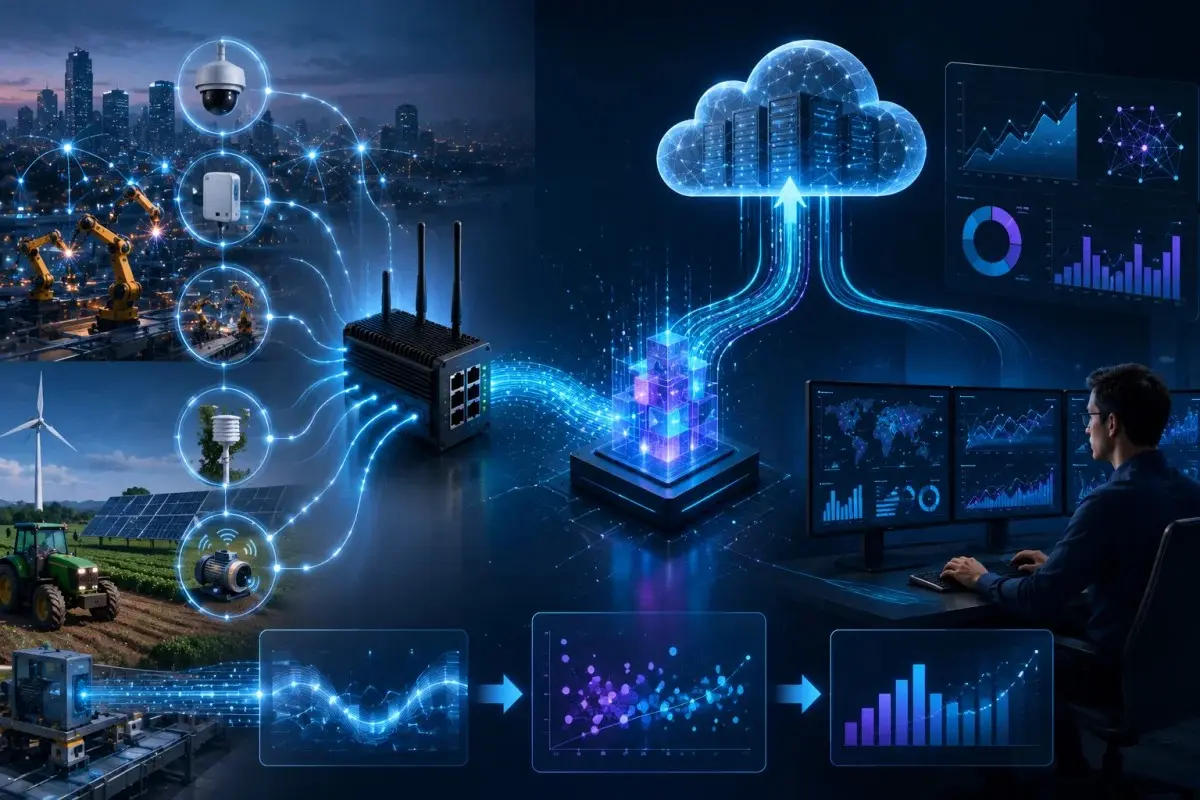
Every IoT system follows a similar pattern regardless of industry. Sensors capture physical information such as temperature, motion, or location. That data travels through a connectivity layer, often Wi-Fi, cellular IoT, or 5G networks, to a central platform. From there, software analyzes the data and either alerts a human or triggers an automated response. This sensor-to-action pipeline is what separates modern IoT use cases from older, disconnected monitoring tools, allowing businesses to react in seconds rather than days.
Why Businesses Are Investing in IoT Today
Companies are adopting IoT use cases because the return on investment has become measurable and significant. Real-time visibility into equipment, inventory, and customer behavior helps businesses cut costs, reduce downtime, and improve safety. In competitive industries like manufacturing and healthcare, the ability to predict failures or patient risks before they escalate has turned IoT from a nice-to-have into a core operational strategy. As 5G expands and analytics tools mature, the range of practical IoT use cases continues to grow across nearly every sector.
Top IoT Use Cases Across Industries
Manufacturing, retail, agriculture, and logistics have become some of the strongest proving grounds for IoT use cases today. Each industry applies connected devices differently, but the goal remains the same: reduce waste, prevent failures, and make faster decisions using real-time data. These sectors also generate the highest volume of measurable results, which is why they dominate most industry reports and case studies on IoT adoption. The sections below outline the most impactful applications shaping operations across these fields right now.
Manufacturing & Predictive Maintenance
Factories use sensors on machinery to track vibration, temperature, and wear patterns, catching mechanical issues before they cause costly breakdowns. This predictive approach has become one of the most valuable IoT use cases in manufacturing, since unplanned downtime can cost thousands of dollars per hour. By continuously analyzing equipment data, plants can schedule repairs during planned downtime instead of reacting to sudden failures, extending machine lifespan and improving overall production efficiency.
Smart Cities & Infrastructure
Cities are deploying connected sensors across streetlights, traffic signals, and water systems to manage resources more efficiently. Smart traffic lights adjust in real time based on congestion, while water sensors detect leaks before they become major infrastructure failures. These infrastructure-focused IoT use cases help municipalities reduce energy waste and maintenance costs while improving safety for residents, making them a growing priority for urban planning departments worldwide.
Retail & Inventory Management
Retailers use IoT-enabled shelves, RFID tags, and connected inventory systems to track stock levels automatically. This reduces manual counting errors and helps prevent both overstocking and stockouts. Some stores also use foot traffic sensors to understand customer movement patterns, adjusting store layouts based on real data rather than guesswork.
Agriculture & Precision Farming
Soil sensors, weather stations, and connected irrigation systems allow farmers to monitor crop conditions field by field. This precision approach reduces water waste and improves yield by applying resources only where needed.
Logistics & Fleet Tracking
GPS-enabled sensors let logistics companies track vehicle location, fuel usage, and delivery times in real time, improving route planning and reducing operational costs across supply chains.
IoT Use Cases in Healthcare
Healthcare has become one of the fastest-growing areas for IoT adoption, with connected devices now playing a role in nearly every stage of patient care. From hospital rooms to patients’ own homes, sensors and wearables collect health data continuously, giving doctors visibility they never had before. These IoT use cases in healthcare are helping providers catch problems earlier, reduce hospital readmissions, and manage limited resources more efficiently. As wearable technology becomes more affordable, this sector is expected to keep expanding rapidly through 2026 and beyond.
Remote Patient Monitoring
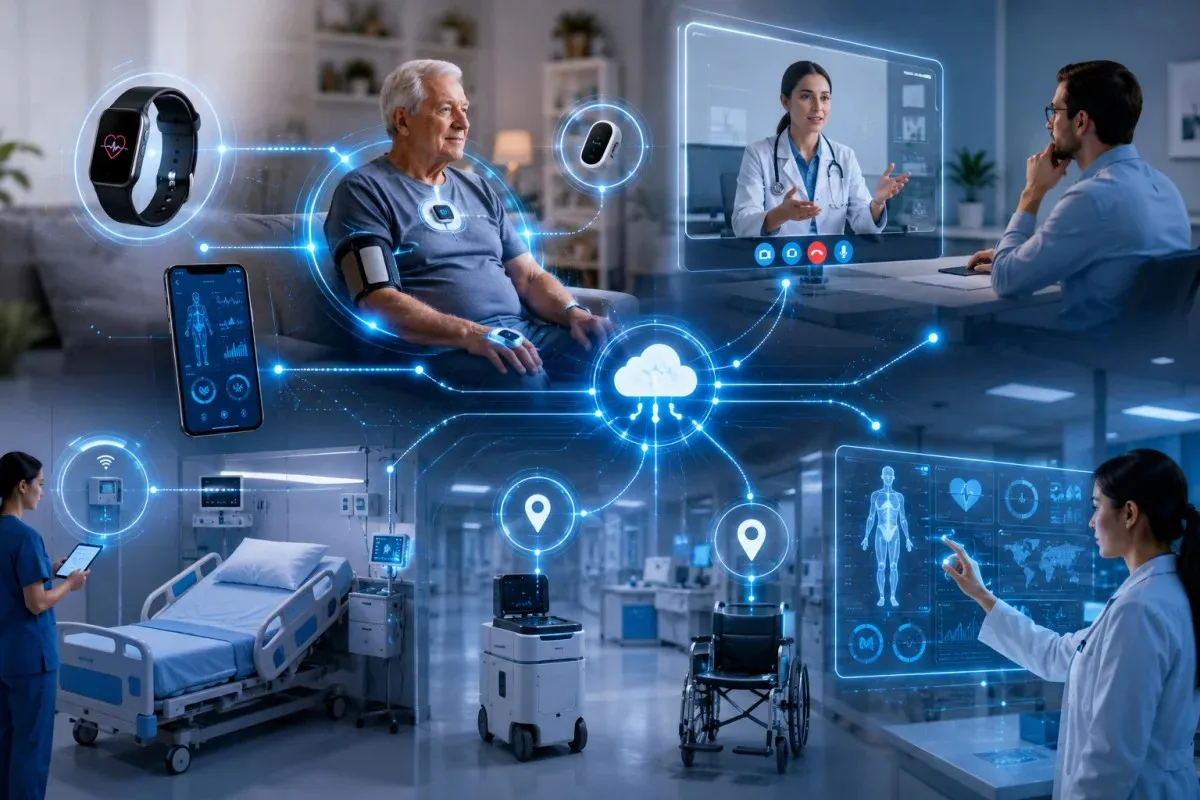
Connected devices now allow doctors to track vital signs like heart rate, blood pressure, and oxygen levels without requiring patients to visit a clinic. This is especially valuable for managing chronic conditions such as diabetes or heart disease, where continuous data can flag warning signs early. Remote monitoring has become one of the most widely adopted IoT healthcare use cases, since it reduces hospital visits while still keeping medical teams informed of a patient’s condition in near real time.
Wearable Health Devices
Smartwatches and fitness trackers have evolved into serious medical tools, capable of detecting irregular heart rhythms, tracking sleep quality, and monitoring blood oxygen levels. Many of these devices now sync directly with healthcare provider systems, allowing doctors to review trends over weeks or months instead of relying on a single office visit. This shift has made wearables a practical entry point for patients who want more control over their own health data.
Hospital Asset Tracking
Hospitals use IoT sensors to track the location of equipment like wheelchairs, infusion pumps, and monitors in real time. This reduces time spent searching for misplaced equipment and improves overall efficiency during emergencies, where every minute matters.
IoT in Telemedicine
Connected devices support telemedicine by feeding real-time patient data into virtual consultations, allowing doctors to make informed decisions remotely. This combination has made healthcare access more practical for patients in rural or underserved areas.
IoT Use Cases in Financial Services
Banks and insurance companies have quietly become major adopters of connected technology, using it to protect customers and streamline operations behind the scenes. While financial services might not seem like an obvious fit for IoT, connected devices are now used to verify identities, detect fraud, and assess risk with far more precision than traditional methods allowed. These IoT use cases in financial services are helping institutions reduce losses while also improving the customer experience at branches and beyond.
Fraud Detection via Connected Devices
Financial institutions use IoT-enabled devices, such as card readers and biometric scanners, to flag unusual transaction patterns in real time. When a device detects behavior that does not match a customer’s typical activity, it can trigger an alert or temporarily freeze a transaction. This layer of connected monitoring has made fraud detection faster and more accurate, reducing losses for both banks and their customers.
Smart ATMs and Branch Automation
Modern ATMs now use sensors to monitor cash levels, detect tampering, and automatically report maintenance issues. This reduces downtime and helps banks respond to problems before customers even notice them. Some branches also use connected devices to manage foot traffic and staffing needs based on real-time data.
IoT-Driven Risk Assessment in Insurance
Insurers increasingly rely on connected devices, such as vehicle telematics or home sensors, to assess risk more accurately. This data allows companies to offer personalized premiums based on actual behavior rather than broad estimates, benefiting both insurers and policyholders with lower risk profiles.
5G and IoT: Powering the Next Generation of Use Cases
The rollout of 5G networks has unlocked a new tier of possibilities for connected devices, removing many of the speed and capacity limitations that held back earlier IoT deployments. With lower latency and the ability to support far more devices per network, 5G is directly responsible for expanding what IoT systems can actually do in real time. These 5G IoT use cases are especially important in industries where even a one-second delay can cause serious problems, such as autonomous vehicles and industrial robotics.
Low-Latency Applications (Autonomous Vehicles, Robotics)
Self-driving vehicles and industrial robots depend on near-instant communication between sensors, control systems, and the surrounding environment. Traditional networks introduced delays that made these applications risky or unreliable at scale. With 5G, data travels fast enough to support split-second decisions, such as a vehicle detecting an obstacle and reacting before a collision occurs. This low latency has turned what were once experimental technologies into practical, deployable systems across transportation and manufacturing.
Massive Device Connectivity at Scale
Unlike previous network generations, 5G is built to handle a significantly higher density of connected devices within the same physical space. This matters for environments like smart factories or large campuses, where thousands of sensors may need to communicate simultaneously without network congestion. This capability is what allows industries to scale their IoT deployments from a handful of test devices to full facility-wide systems, making 5G a foundational piece of nearly every advanced IoT use case moving forward.
IoT Analytics Use Cases
Collecting data from connected devices is only half the equation. The real value comes from analyzing that data to uncover patterns, predict problems, and guide decisions before issues escalate. IoT analytics use cases have become a critical layer on top of raw device data, turning millions of sensor readings into insights that humans can actually act on. Without strong analytics, even the most advanced IoT deployment produces noise instead of useful information, which is why this layer has become a priority for businesses across every industry.
Real-Time Data Processing
Many IoT systems now process data as it arrives instead of storing it for later review. This is essential in situations where immediate action matters, such as detecting a temperature spike in a factory or an irregular heartbeat in a connected medical device. Real-time processing allows systems to trigger alerts or automated responses within seconds, reducing the risk of damage, downtime, or harm from delayed analysis. This speed has become a defining feature of modern IoT analytics use cases across industries.
Predictive Analytics from Sensor Data
Predictive analytics uses historical and real-time sensor data to forecast future events, such as equipment failure or shifting customer demand. Instead of reacting to problems after they occur, businesses can anticipate them and take preventive action. This approach has proven especially valuable in manufacturing and healthcare, where early warnings can prevent costly breakdowns or serious health complications before they fully develop.
Edge vs. Cloud Analytics in IoT
Some IoT systems process data locally on the device itself, known as edge analytics, while others send data to centralized cloud platforms for deeper analysis. Edge processing offers speed and reduces bandwidth use, while cloud analytics allows for more complex, large-scale pattern recognition across entire networks of devices.
Blockchain IoT Use Cases
Combining blockchain with connected devices has created a new way to address one of IoT’s biggest weaknesses: security. Because IoT networks often involve thousands of devices exchanging data, they present a wide attack surface for hackers and bad actors. Blockchain adds a layer of trust and transparency to these exchanges, recording transactions in a way that is difficult to alter or fake. These blockchain IoT use cases are still emerging compared to other applications on this list. Still, they are gaining traction quickly in industries where data integrity and security are non-negotiable.
Securing Device-to-Device Transactions
When IoT devices communicate directly with each other, there is always a risk of interception or manipulation by outside parties. Blockchain allows these device-to-device exchanges to be recorded on a distributed ledger, making it far more difficult for anyone to alter the data without detection. This is particularly valuable in industrial settings, where machines often make automated decisions based on data received from other connected devices without human review at every step.
Supply Chain Transparency with Blockchain + IoT
Combining sensors with blockchain allows companies to track goods from origin to delivery with a permanent, tamper-resistant record. Temperature sensors on a shipment, for example, can log conditions directly to a blockchain, proving whether perishable goods stayed within safe limits throughout transit. This pairing has become especially useful for industries like food and pharmaceuticals, where proving product integrity is often a legal requirement rather than just a business preference.
Decentralized Identity for IoT Devices
Blockchain also enables IoT devices to have verified digital identities that do not rely on a single centralized authority. This reduces the risk of device spoofing, where a fake device impersonates a legitimate one to gain network access, adding another layer of trust to large-scale connected systems.
Real-World IoT Use Case Examples (Case Study Snapshots)
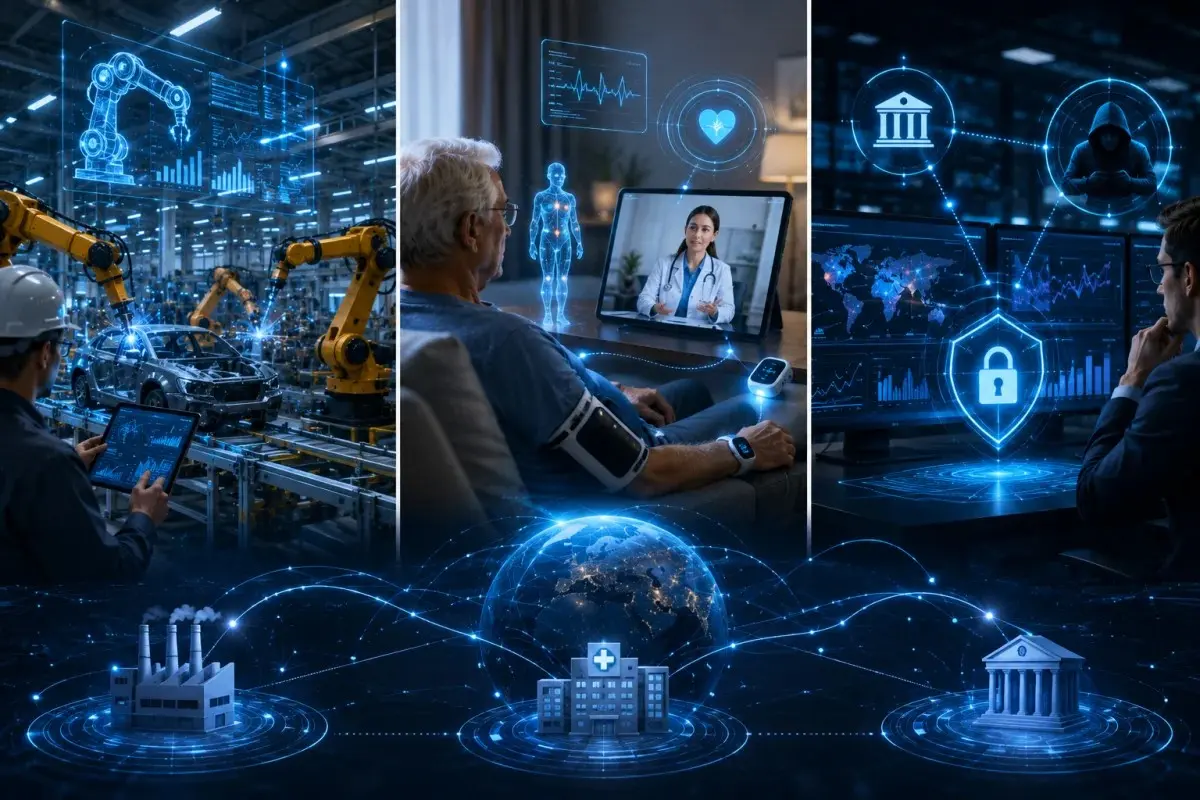
Concepts become far more convincing when paired with real numbers. The following IoT use case examples show how organizations across different industries applied connected technology to solve specific problems, with measurable results that go beyond theory. These snapshots highlight the practical side of IoT adoption, giving a clearer picture of what businesses can realistically expect when they invest in similar systems.
Smart Factory Efficiency Gains
A manufacturing plant installed vibration and temperature sensors across its production line to monitor equipment health in real time. Within months, the plant reduced unplanned downtime significantly by catching mechanical issues before they caused full breakdowns. Maintenance teams shifted from reactive repairs to scheduled interventions, extending the lifespan of critical machinery. This example reflects one of the most common and well-documented IoT use cases in manufacturing today, showing how sensor data alone can reshape an entire maintenance strategy.
Hospital Remote Monitoring ROI
A hospital network implemented remote patient monitoring for patients managing chronic conditions like heart disease. By tracking vital signs continuously through connected devices, care teams identified warning signs earlier and reduced hospital readmissions. The program also freed up bed space for more urgent cases, demonstrating how healthcare IoT use cases can improve both patient outcomes and operational capacity at the same time.
Bank Fraud Reduction with IoT Sensors
A regional bank integrated connected card readers and biometric verification devices across its branches to flag suspicious transaction behavior. The system reduced fraudulent transactions noticeably within the first year, while also speeding up legitimate customer verification. This case illustrates how IoT use cases in financial services can strengthen security without adding friction for everyday customers.
Emerging & Future IoT Use Cases
The applications covered so far represent where IoT stands today, but the technology continues to evolve at a fast pace. New combinations of artificial intelligence, sustainability goals, and connected devices are already shaping what comes next. Understanding these emerging IoT use cases helps businesses prepare for shifts before they become industry standard, rather than playing catch-up once competitors have already adopted them.
AI + IoT Convergence
Artificial intelligence is increasingly being layered on top of IoT systems to make sense of the massive volume of data these devices generate. Instead of simply collecting information, AI-powered systems can now identify patterns, make predictions, and even adjust device behavior automatically without human input. This convergence, often referred to as AIoT, is pushing IoT use cases beyond monitoring and into genuine decision-making, allowing systems to become smarter over time as they process more data across connected networks.
Sustainability and Energy Management
Connected devices are playing a growing role in helping organizations reduce energy waste and meet sustainability targets. Smart sensors can monitor energy consumption across buildings, factories, and equipment, identifying inefficiencies that would otherwise go unnoticed. Some systems automatically adjust lighting, heating, or machinery usage based on real-time demand, cutting costs while lowering environmental impact. As sustainability becomes a bigger priority for regulators and consumers alike, this category of IoT use cases is expected to see significant growth in the coming years.
Frequently Asked Questions
What are the top IoT use cases in 2026?
The top IoT use cases in 2026 span predictive maintenance in manufacturing, remote patient monitoring in healthcare, fraud detection in financial services, smart city infrastructure, and precision agriculture. These applications share a common thread: connected sensors feeding real-time data into systems that trigger faster, more accurate decisions than manual processes ever could.
How is IoT used in healthcare specifically?
In healthcare, IoT connects wearables, hospital equipment, and remote monitoring devices to track patient vitals, manage chronic conditions, and locate medical assets in real time. This allows doctors to catch problems earlier and reduces the need for in-person visits for routine monitoring.
What role does 5G play in IoT use cases?
5G removes the latency and capacity limits that held back earlier IoT deployments. It enables near-instant communication for applications like autonomous vehicles and industrial robotics, while also supporting a much higher density of connected devices within the same network, which is essential for large-scale IoT use cases.
How does blockchain improve IoT security?
Blockchain records device-to-device transactions on a tamper-resistant ledger, making it far harder for bad actors to alter or fake data. It also supports decentralized device identities, reducing the risk of spoofing across large IoT networks.
What industries benefit most from IoT?
Manufacturing, healthcare, financial services, agriculture, and logistics currently see the strongest returns from IoT adoption, largely because these industries depend heavily on equipment uptime, data accuracy, and fast decision-making.
Key Takeaways
IoT use cases now stretch across nearly every major industry, from predictive maintenance on factory floors to remote patient monitoring in healthcare and fraud detection in banking. Technologies like 5G, analytics, and blockchain are not separate trends but supporting layers that make these use cases faster, smarter, and more secure. Businesses that understand where and how to apply IoT are better positioned to reduce costs, prevent failures, and make decisions based on real data rather than guesswork. As adoption grows, the organizations paying attention to these use cases today will be the ones shaping what IoT looks like tomorrow.