Manufacturing technology has quietly become one of the most consequential forces reshaping the global economy. What was once a world of manual assembly lines and mechanical presses is now driven by automation, artificial intelligence, digital twins, and precision engineering that would have seemed like science fiction a generation ago. From aerospace and automotive plants to semiconductor fabs and pharmaceutical facilities, manufacturers are racing to adopt smarter, faster, and more sustainable production methods to stay competitive.
“Manufacturing technology” means different things to different people. For an engineer, it might mean the latest additive manufacturing technique. For a job seeker, it’s a career path with strong salary potential. For a business leader, it’s the difference between operational efficiency and falling behind competitors. This guide brings it all together, covering what manufacturing technology actually is, the types and examples that shape modern factories, industry-specific applications, current trends heading into 2026, and the career opportunities available for those looking to enter or advance in the field.
Whether you’re researching for a business decision, exploring a new career, or simply trying to understand how today’s products get made, this guide is designed to be your one-stop resource on the subject.
What Is Manufacturing Technology? (Definition & Overview)
Manufacturing technology refers to the tools, machinery, software, and processes used to design, produce, and refine physical products at scale. It spans everything from industrial robots welding car frames on an assembly line to cloud-based software coordinating supply chains across continents. At its core, manufacturing technology exists to make production faster, more precise, more consistent, and less wasteful than manual methods alone could achieve.
The term covers a broad spectrum. On one end, it includes foundational equipment like CNC machines and injection molding systems that have been refined over decades. On the other hand, it includes cutting-edge innovations like AI-driven quality control and 3D-printed components. What ties it all together is a shared purpose: transforming raw materials into finished goods more efficiently, safely, and reliably.
Understanding manufacturing technology matters whether you’re a plant manager evaluating new equipment, a student considering a career in the field, or a business leader trying to understand how automation might affect your industry. It’s no longer a niche topic reserved for factory floors. It now intersects with data science, sustainability, and global supply chain strategy.
How Manufacturing Technology Has Evolved
Manufacturing has moved through several distinct eras. The first industrial revolution introduced mechanized production powered by water and steam. The second brought mass production and assembly lines, epitomized by Henry Ford’s innovations in the early 1900s. The third introduced computers and early automation, allowing machines to be programmed rather than manually operated for every task.
Today’s manufacturers are in the midst of a fourth shift, often called Industry 4.0, defined by connected, data-driven systems. Machines now communicate with each other, production data is analyzed in real time, and decisions that once took days can happen in seconds. This evolution hasn’t replaced earlier technologies so much as layered new capabilities onto them, creating hybrid systems that blend older mechanical processes with modern digital intelligence.
Key Components of Modern Manufacturing Systems
A modern manufacturing operation typically relies on several interconnected components working together:
- Automation and robotics: Machines that perform repetitive or precision tasks with minimal human intervention
- Sensors and IoT devices: Hardware that collects real-time data on equipment performance, temperature, and output quality
- Manufacturing execution systems (MES): Software that tracks and manages production processes on the factory floor
- Enterprise resource planning (ERP) integration: Systems that connect manufacturing data with broader business operations like inventory and finance
- Quality control technology: AI and machine vision systems that catch defects faster and more accurately than manual inspection
- Materials and additive technology: Advanced alloys, composites, and 3D printing capabilities that expand what’s physically possible to produce
These components rarely operate in isolation. The real power of modern manufacturing technology comes from how well it’s integrated, a theme that will come up repeatedly throughout this guide.
Types & Examples of Manufacturing Technology
Manufacturing technology comes in many forms, each suited to different production needs. Understanding the main categories helps clarify how modern factories actually operate and how these systems work together to move a product from raw material to finished goods.
Automated Manufacturing Systems
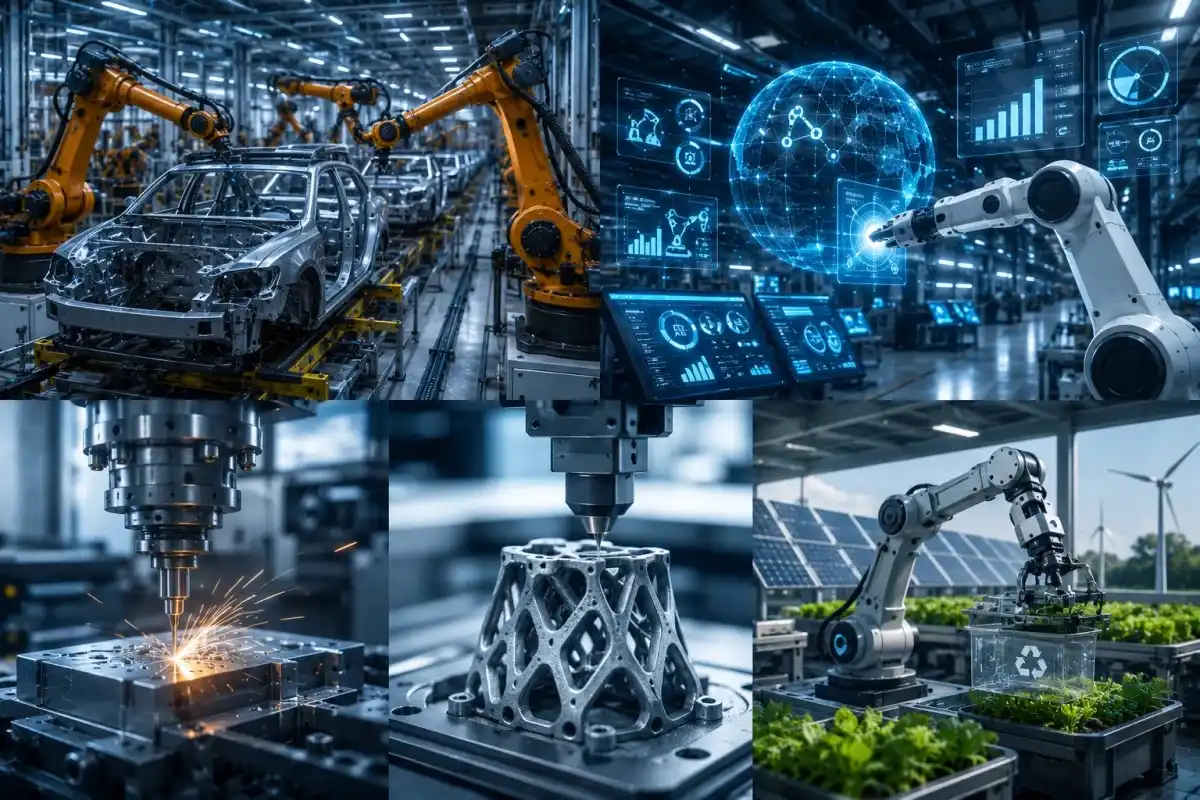
Automated systems use machinery and robotics to perform tasks that once required constant human labor. This includes robotic arms on assembly lines, automated guided vehicles that move materials across a facility, and programmable logic controllers that manage repetitive processes with precision. Automation reduces human error, increases output speed, and allows facilities to run production around the clock. It has become especially valuable in industries like automotive manufacturing, where consistency and volume are critical to staying competitive.
Digital and Smart Manufacturing Technologies
Smart manufacturing connects machines, sensors, and software into a single data-driven ecosystem. Digital twins create virtual replicas of physical equipment, allowing engineers to simulate and test changes before applying them on the factory floor. Real-time monitoring systems track performance and flag issues before they cause costly downtime. These technologies give manufacturers visibility into their operations that simply wasn’t possible a decade ago, turning raw production data into actionable insight.
Precision and Additive Manufacturing
Precision manufacturing relies on highly accurate machining and measurement tools to produce components with extremely tight tolerances, which are often required in industries such as aerospace and medical devices. Additive manufacturing, commonly known as 3D printing, builds parts layer by layer rather than cutting them from raw material. This approach reduces material waste, shortens prototyping timelines, and enables the production of complex geometries that traditional methods can’t easily achieve.
Sustainable Manufacturing Technologies
Sustainability has become a growing priority across the manufacturing sector. Energy-efficient equipment, closed-loop recycling systems, and materials designed for reuse are helping manufacturers reduce their environmental footprint. Many companies are also adopting software that tracks energy consumption and emissions across production lines, allowing them to identify waste and make targeted improvements. This shift isn’t just about compliance. It’s increasingly seen as a competitive advantage as customers and regulators place more weight on sustainable practices.
Advanced Manufacturing Technology Explained
Advanced manufacturing technology refers to the most sophisticated tools and systems currently reshaping how products are designed, built, and delivered. It goes beyond basic automation, combining data intelligence, connectivity, and adaptive systems that can respond to changing conditions in real time.
What Makes Technology “Advanced” in Manufacturing
Not all manufacturing technology qualifies as advanced. The term generally applies to systems that use real-time data, machine learning, or connected networks to make decisions with minimal human input. A robotic arm that follows a fixed set of instructions is an example of automation. A system that adjusts its own behavior based on sensor feedback, production history, or predictive analytics is an advanced manufacturing technology. This distinction matters because advanced systems can adapt to new conditions, while traditional automation typically cannot.
Smart Factories and Industry 4.0
Industry 4.0 describes the current wave of manufacturing innovation built around connectivity and data. In a smart factory, machines, sensors, and software systems communicate continuously, sharing information that helps optimize every stage of production. This connectivity allows manufacturers to predict equipment failures before they happen, adjust production schedules on the fly, and reduce waste across the supply chain. Smart factories represent a shift from reactive manufacturing, where problems are fixed after they occur, to proactive manufacturing, where problems are anticipated and prevented.
Digital Twins, IoT, and AI in Manufacturing
Digital twins create a virtual model of a physical asset, process, or entire production line, allowing engineers to test changes and predict outcomes without disrupting real operations. The Internet of Things, or IoT, connects physical equipment to digital networks, enabling constant data collection from sensors embedded throughout a facility. Artificial intelligence then analyzes that data to identify patterns, predict maintenance needs, and improve quality control. Together, these three technologies form the backbone of many advanced manufacturing operations today.
Manufacturing Technology by Industry
Different industries adopt manufacturing technology in different ways, shaped by their unique requirements around precision, regulation, volume, and safety. Looking at how specific sectors apply these tools helps illustrate the practical impact of manufacturing technology beyond general concepts.
Aerospace Manufacturing Technology
Aerospace manufacturing demands extreme precision and rigorous quality control, since even minor defects can have serious safety consequences. This industry relies heavily on advanced materials such as titanium alloys and carbon composites, as well as precision machining and additive manufacturing, to produce lightweight, complex components. Automated inspection systems using machine vision are commonly used to detect microscopic flaws that human inspectors might miss. Digital twins also play a major role, allowing engineers to simulate how aircraft components will perform under stress before physical production begins.
Automotive Manufacturing Technology
The automotive industry was one of the earliest adopters of large-scale automation, and it continues to lead in manufacturing innovation. Robotic assembly lines handle welding, painting, and component installation with speed and consistency. Many automotive manufacturers now use predictive maintenance systems to reduce equipment downtime and real-time production monitoring to catch quality issues early. The rise of electric vehicles has also pushed manufacturers to adopt new battery production technologies and retool existing facilities to handle different materials and assembly processes.
Semiconductor and Electronic Manufacturing Technology
Semiconductor manufacturing operates at an extraordinary level of precision, often working with components measured in nanometers. This creates significant technological limitations, since even microscopic contamination or misalignment can ruin an entire batch of chips. Cleanroom environments, advanced lithography equipment, and highly specialized automation are essential to this process. Electronic manufacturing, more broadly, relies on automated assembly of circuit boards and components, along with rigorous testing systems to ensure reliability before products reach consumers.
Pharmaceutical and Industrial Manufacturing Technology
Pharmaceutical manufacturing technology is shaped heavily by regulatory requirements, since consistency and safety are non-negotiable. Automated systems handle mixing, filling, and packaging under strict controls to prevent contamination, while data-tracking systems maintain detailed records for compliance. Industrial manufacturing, a broader category covering machinery, equipment, and heavy goods production, often combines traditional mechanical processes with newer automation and monitoring technology to improve efficiency without sacrificing the durability these products require.
Current Trends & the State of Manufacturing Technology (2025-2026)
Manufacturing technology continues to evolve rapidly, driven by economic pressures, labor shortages, and advances in artificial intelligence. Understanding where the industry stands right now and where it’s heading helps businesses and job seekers alike make informed decisions.
Manufacturing Technology Trends to Watch
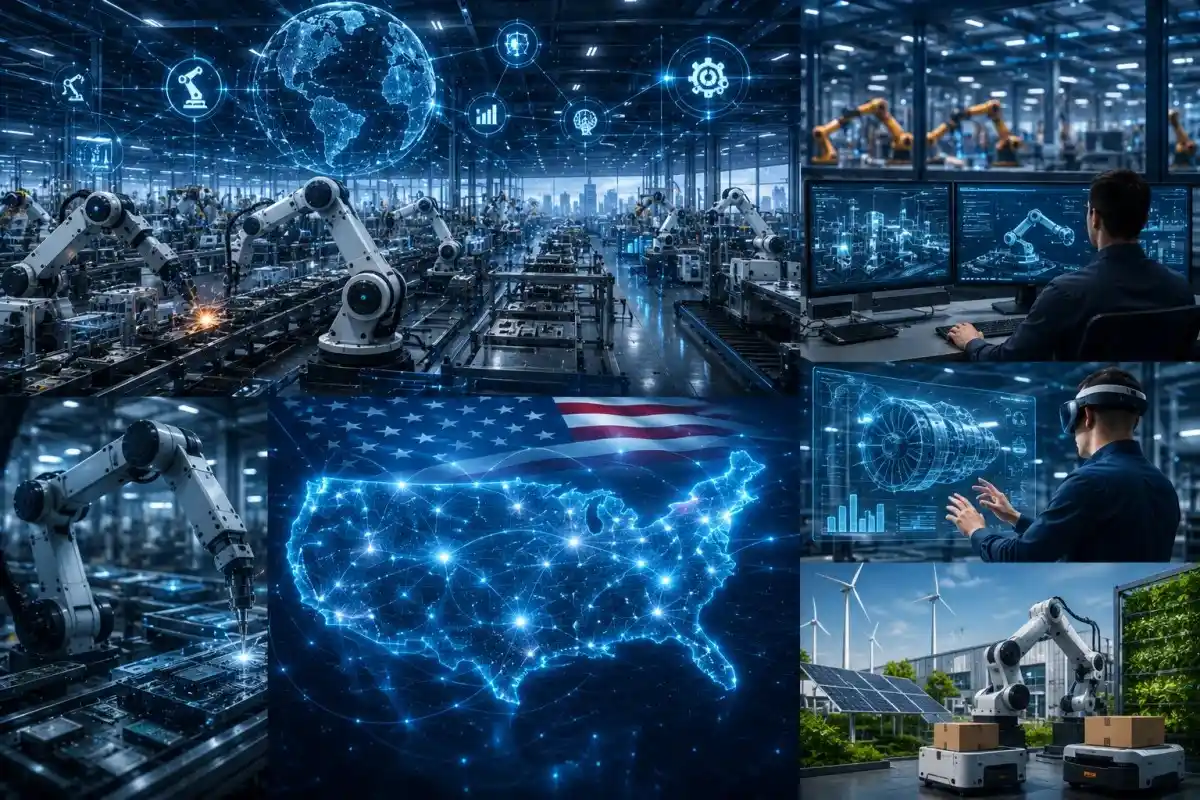
Several trends are currently shaping the manufacturing landscape. Artificial intelligence is moving beyond simple automation into predictive analytics, helping manufacturers anticipate equipment failures and optimize production schedules before problems occur. Reshoring and nearshoring efforts are also gaining momentum, as companies look to reduce supply chain risk by moving production closer to home markets. Labor shortages continue to push manufacturers toward greater automation, not to eliminate jobs entirely, but to fill gaps where skilled workers are hard to find. Cybersecurity has also become a growing concern as more factory systems connect to digital networks.
The State of U.S. Manufacturing Technology
The United States manufacturing sector has been navigating a mix of challenges and opportunities. Federal incentives aimed at boosting domestic semiconductor and clean energy production have encouraged new investment in advanced facilities. At the same time, manufacturers continue to face a persistent skills gap, with many roles requiring specialized training in robotics, data systems, and advanced machinery. Companies that invest in workforce development alongside new technology tend to see the strongest returns, since equipment alone cannot solve productivity challenges without skilled people to operate it.
The Future of Manufacturing Technology
Looking ahead, manufacturing technology is expected to become even more autonomous and data-driven. Fully connected smart factories, where machines coordinate production decisions with minimal human oversight, are likely to become more common rather than experimental. Sustainability will likely continue driving innovation, as manufacturers face growing pressure to reduce waste and energy consumption. Advances in materials science, including new composites and recyclable alternatives, may also reshape what products are built and how they are built in the coming years.
Manufacturing Engineering & Technology Solutions
Manufacturing engineering focuses on designing, optimizing, and maintaining the systems and processes that enable production. This section examines how engineering principles integrate with technological solutions to keep manufacturing operations running efficiently.
Manufacturing Process Technology
Process technology covers the specific methods and equipment used to transform raw materials into finished products. This includes techniques like injection molding, stamping, machining, and assembly, each suited to different materials and production volumes. Manufacturing engineers are responsible for selecting and refining these processes to balance speed, cost, and quality. Small improvements in process technology, such as reducing cycle time or minimizing material waste, can lead to significant gains when applied across large-scale production runs.
Technology Solutions for Manufacturing Operations
Beyond the physical processes, manufacturers rely on a range of software solutions to manage daily operations. These include manufacturing execution systems for real-time production tracking, enterprise resource planning software for coordinating inventory and finances, and supply chain management tools for monitoring materials from supplier to shipment. Together, these solutions give operations teams visibility across the entire production cycle, helping them identify bottlenecks and respond quickly when issues arise.
Leading Manufacturing Execution Systems
Manufacturing execution systems, often called MES platforms, act as the connective layer between the factory floor and broader business systems. Well-known platforms in this space help manufacturers track work orders, monitor equipment performance, and maintain quality records. Some systems, like those offered by AVEVA, integrate directly with existing industrial equipment to provide a unified view of production data. Choosing the right MES platform often depends on a company’s specific industry, scale, and existing technology infrastructure.
Careers in Manufacturing Technology
As manufacturing becomes more advanced, the career opportunities within the field are expanding well beyond traditional factory roles. Today’s manufacturing careers often blend hands-on technical skills with data analysis, programming, and engineering knowledge.
Manufacturing Technology Jobs and Roles
Manufacturing technology roles range widely in scope and responsibility. Manufacturing technicians maintain and troubleshoot equipment on the production floor, while automation engineers design and program robotic systems. Quality control specialists use technology to monitor product consistency, and manufacturing engineers oversee entire production processes to improve efficiency. There are also growing opportunities in data-focused roles, where professionals analyze production data to identify trends and recommend improvements. This variety means the field offers entry points for people with different skill sets and levels of technical training.
Manufacturing Technology Salary Guide
Salaries in manufacturing technology vary based on role, experience, and location, but the field generally offers competitive compensation compared to many other industries. Entry-level technicians typically earn a solid starting wage, while specialized roles such as automation and manufacturing engineers command significantly higher salaries due to their technical expertise. Experience with specific systems, such as robotics programming or MES platforms, can also increase earning potential. As manufacturers continue investing in advanced technology, demand for skilled workers who can operate and maintain these systems is expected to keep salaries competitive.
Manufacturing Engineering Technology Degrees and Education Paths
Several education paths can lead to a career in manufacturing technology. Associate degrees in manufacturing engineering technology provide foundational skills for technician and support roles and are often combined with hands-on training. Bachelor’s degrees in manufacturing or industrial engineering open doors to higher-level engineering and management positions. Many professionals also pursue certifications in specific technologies, such as robotics, automation software, or quality control systems, to strengthen their qualifications. Community colleges and technical schools have also become increasingly important, offering practical training programs designed to meet current industry demand.
Manufacturing Technology Companies & Innovators
A number of companies have established themselves as leaders in manufacturing technology, each contributing tools, systems, or expertise that shape how modern factories operate.
Leading Manufacturing Technology Companies
Several companies stand out for their role in advancing manufacturing capabilities. Körber offers technology solutions spanning software and automation for manufacturing and supply chain operations. Trane Technologies operates manufacturing facilities focused on climate and industrial systems, incorporating advanced production methods across its locations. AVEVA provides manufacturing execution systems and industrial software used across multiple sectors. Smaller specialized firms, such as Southern Manufacturing Technologies and Yeager Manufacturing Technologies, contribute precision machining and custom manufacturing solutions within their respective niches. Together, these companies represent the range of scale and specialization found across the manufacturing technology landscape.
Notable Manufacturing and Technology Centers
Beyond individual companies, certain facilities have become recognized hubs for manufacturing innovation. Ford’s Manufacturing Technology Development Center focuses on advancing automotive production methods and testing new technologies before they reach full-scale manufacturing. General Electric operates manufacturing and technology centers dedicated to research and development across its industrial divisions. Regional manufacturing hubs, including facilities in areas such as Raleigh, have also grown into centers of advanced manufacturing, often supported by local workforce development and technology investment initiatives.
Industry Events & Resources
Staying current in manufacturing technology often means engaging with the events and publications that shape industry knowledge and connect professionals across the field.
International Manufacturing Technology Show (IMTS)
The International Manufacturing Technology Show, held in Chicago, is one of the largest manufacturing trade shows in North America. It brings together equipment manufacturers, software providers, and industry professionals to showcase the latest advancements in machining, automation, and production technology. Attendees can see live demonstrations of new equipment, attend educational sessions on emerging trends, and network with suppliers and peers. For many manufacturing professionals, IMTS serves as a key benchmark for understanding where the industry is heading each year.
Manufacturing Technology Journals and Research Publications
Academic and industry journals play an important role in advancing manufacturing knowledge. The Journal of Advanced Manufacturing Technology publishes peer-reviewed research on new processes, materials, and production methods, often bridging the gap between academic research and practical application. The Journal of Manufacturing Technology Management focuses primarily on the strategic and operational aspects of manufacturing, covering topics such as supply chain management and organizational efficiency. Together, these publications provide engineers, researchers, and business leaders with rigorous, up-to-date insights that inform real-world decision-making.
Frequently Asked Questions
What is an example of manufacturing technology?
Common examples include robotic assembly lines used in automotive plants, 3D printing for producing custom or complex parts, and manufacturing execution systems that track production data in real time. Sensors that monitor equipment performance and AI-powered quality control systems are also widely used examples across various industries.
What’s the difference between manufacturing technology and advanced manufacturing technology?
Manufacturing technology is a broad term encompassing tools, machinery, and software used in production. Advanced manufacturing technology refers specifically to systems that use real-time data, connectivity, or artificial intelligence to make adaptive decisions. A basic robotic arm following fixed instructions is a manufacturing technology. A system that adjusts its behavior based on live sensor feedback is considered advanced.
What does a manufacturing technology career pay?
Salaries vary widely depending on role, experience, and location. Entry-level technicians typically earn a solid starting wage, while specialized roles such as automation and manufacturing engineers often earn significantly more due to their technical expertise. Experience with specific systems, such as robotics or MES platforms, tends to further increase earning potential.
What’s the future of manufacturing technology?
The future points toward greater autonomy, with smart factories coordinating production decisions with minimal human oversight. Sustainability will likely continue driving innovation, as companies work to reduce waste and energy use. Advances in materials science and AI are also expected to reshape what products are manufactured and how they are manufactured in the years ahead.