Healthcare is going through a major shift, and much of it is being driven by IoT. This refers to the growing network of connected medical devices, wearables, and hospital equipment that collect and share real-time health data. These connected systems are changing how doctors monitor patients, how hospitals manage equipment, and how care is delivered both inside and outside clinical settings. Instead of waiting for symptoms to appear, healthcare providers can now track patient health continuously, allowing for faster intervention and better outcomes.
From smartwatches that monitor heart rhythms to smart hospital beds that alert nurses before a fall occurs, IoT devices in healthcare are becoming a standard part of modern medical care. When combined with AI, these devices become even more powerful, since AI can analyze the data collected by IoT sensors and detect patterns that humans might miss. This combination is helping doctors make quicker, more informed decisions.
In this guide, we will explain how IoT works in healthcare, explore real-world applications and examples, and discuss the security concerns and future trends shaping this technology. Whether you work in healthcare, technology, or simply want to understand how connected devices are transforming patient care, this guide will give you a complete and practical overview of the topic.
What Is IoT in Healthcare?
IoT in healthcare refers to the use of connected devices, sensors, and software systems that collect, transmit, and analyze health-related data in real time. Instead of relying only on scheduled checkups or manual reporting, healthcare providers can now receive continuous streams of information directly from patients, medical equipment, and hospital systems. This connectivity allows doctors and care teams to detect problems earlier, respond faster, and make decisions based on live data rather than outdated records. In simple terms, IoT turns everyday medical devices into smart, communicating tools that support better and more timely care.
Definition of IoT in the Healthcare Industry
In the healthcare industry, IoT refers to a network of interconnected medical devices and applications that communicate through the internet to collect and exchange health data. These devices range from wearable fitness trackers to advanced hospital monitoring systems. The core idea is simple: instead of health data staying isolated on a single device, it becomes part of a larger system that doctors, hospitals, and even patients can access. This creates a more connected and responsive healthcare environment where information flows automatically instead of manually.
How IoT Works in Healthcare
IoT in healthcare typically follows a simple process. First, sensors or wearable devices collect health data such as heart rate, oxygen levels, or movement patterns. This data is then transmitted through wireless networks to cloud-based systems or hospital databases. Once stored, the data can be analyzed using software or AI tools to detect patterns, flag abnormalities, or trigger alerts. Finally, healthcare providers can access this information through dashboards or apps, allowing them to monitor patients remotely and take action quickly when needed.
Key Components of a Healthcare IoT Ecosystem
A healthcare IoT ecosystem typically includes four key components: sensors and devices that collect data, connectivity networks that transmit it, cloud platforms that store and process it, and software or applications that turn raw data into useful insights. Together, these components allow continuous communication between patients and providers. Some systems also include AI layers that help interpret complex data patterns. When these components work together smoothly, they create a reliable, real-time flow of health information that supports faster and more informed medical decisions.
How AI and IoT Work Together in Healthcare
AI and IoT in healthcare are increasingly used together because each technology strengthens the other. IoT devices are excellent at collecting large volumes of real-time health data, but on their own, they cannot always interpret what that data means. This is where AI comes in. By analyzing the information gathered from IoT devices, AI can identify patterns, predict potential health risks, and support faster, more accurate medical decisions. Together, these technologies create a smarter, more responsive healthcare system.
The Role of AI and IoT in Healthcare (AIoT Explained)
The combination of AI and IoT, often called AIoT, allows healthcare systems to move beyond simple data collection. IoT devices continuously gather information such as heart rate, blood sugar levels, or movement, while AI processes this data to detect trends and anomalies. For example, AI can learn what a patient’s normal vital signs look like and immediately flag unusual changes. This partnership transforms raw data into actionable insights, helping doctors intervene earlier and reduce the risk of complications or emergencies.
Why AI Enhances IoT Data in Clinical Settings
IoT devices generate massive amounts of data every day, often more than healthcare staff can manually review. AI helps solve this problem by automatically analyzing data streams and highlighting only the information that matters most. In clinical settings, this means fewer false alarms, faster diagnosis, and more efficient use of medical staff time. AI also allows systems to learn over time, improving accuracy as more patient data is collected and analyzed.
Real-World AI + IoT Integration Examples
In real-world settings, AI and IoT are already working together in several ways. Smart wearables use AI algorithms to detect irregular heartbeats and alert users or doctors immediately. Hospital monitoring systems use AI to analyze data from multiple IoT sensors and predict patient deterioration before visible symptoms appear. Even remote patient monitoring platforms rely on AI to filter incoming data and prioritize cases that need urgent medical attention, improving both speed and accuracy of care.
Types of IoT Devices Used in Healthcare
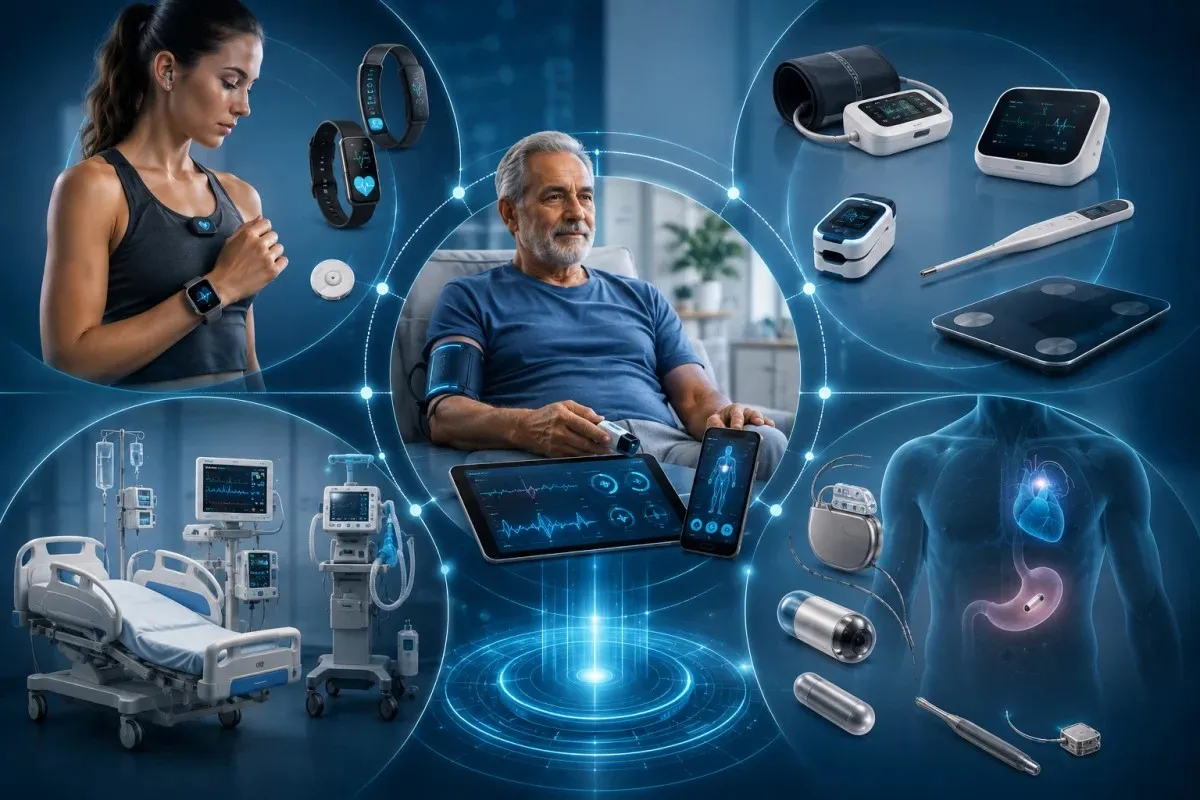
IoT devices in healthcare come in many forms, each designed to serve a specific role in patient monitoring, diagnosis, or hospital management. These devices range from small wearable sensors to large hospital equipment, all connected through the internet to share real-time data. Understanding the different types of IoT devices used in healthcare helps illustrate just how widely this technology has been adopted across the medical field, from personal health tracking to full-scale hospital operations.
Wearable IoT Devices in Healthcare
Wearable IoT devices are among the most common and visible examples of this technology. These include smartwatches, fitness bands, and biosensors that track metrics such as heart rate, oxygen levels, sleep patterns, and physical activity. IoT wearables in healthcare allow patients to monitor their own health daily while giving doctors access to continuous data outside of clinical visits. This is especially useful for managing chronic conditions, since it enables early detection of concerning changes before they become serious.
Remote Patient Monitoring Devices
Remote patient monitoring devices allow healthcare providers to track a patient’s condition without requiring them to be physically present in a clinic or hospital. These devices measure vital signs such as blood pressure, glucose levels, or heart activity and transmit the data directly to medical staff. This type of IoT device is particularly valuable for elderly patients or those with chronic illnesses, as it reduces hospital visits while still maintaining close medical oversight and quick response times when needed.
Hospital-Based IoT Equipment
Inside hospitals, IoT devices play a major role in improving efficiency and patient safety. Smart beds can detect patient movement and alert staff to prevent falls. At the same time, connected infusion pumps ensure accurate medication delivery. Asset tracking systems use IoT sensors to locate medical equipment instantly, reducing delays in emergencies. These hospital-based IoT devices help streamline daily operations, minimize human error, and ensure that critical resources are always available when needed.
Implantable and Ingestible IoT Devices
Implantable and ingestible IoT devices represent one of the more advanced applications of this technology. These include devices such as smart pacemakers or ingestible sensors that monitor internal health conditions from within the body. They continuously collect data and transmit it to healthcare providers, allowing for precise, real-time monitoring of conditions that would otherwise require frequent testing. Although more specialized, these devices highlight how far IoT integration has progressed in modern medical care.
Applications and Use Cases of IoT in Healthcare
The applications of IoT in healthcare extend far beyond simple monitoring. Today, IoT use cases in healthcare span nearly every part of the patient journey, from prevention and diagnosis to treatment and long-term management. These applications help reduce hospital workloads, improve response times, and give patients more control over their own health. Understanding these use cases shows how deeply IoT has become integrated into everyday medical practice, not just as a trend but as a functional part of modern care delivery.
Remote Patient Monitoring
One of the most widespread applications of IoT in healthcare is remote patient monitoring. Connected devices track vital signs such as blood pressure, glucose levels, and heart rate, sending this data directly to healthcare providers in real time. This allows doctors to monitor patients outside traditional clinical settings, reducing the need for frequent in-person visits. It is especially valuable for elderly patients or those managing chronic conditions, since it enables early intervention before minor issues become serious complications.
Chronic Disease Management
IoT plays a significant role in helping patients manage chronic conditions such as diabetes, hypertension, and heart disease. Connected devices continuously track relevant health metrics and alert both patients and doctors when readings fall outside safe ranges. This constant flow of data allows for more personalized treatment plans and quicker adjustments when needed. As a result, patients experience better long-term health outcomes while reducing the frequency of emergency hospital visits caused by unmanaged conditions.
Hospital Asset & Inventory Tracking
Beyond patient care, IoT is widely used to improve hospital operations. Asset tracking systems use IoT sensors attached to equipment such as wheelchairs, defibrillators, and IV pumps to monitor their location and availability in real time. This reduces the time staff spends searching for critical equipment during emergencies. Inventory tracking systems also help hospitals manage medical supplies more efficiently, preventing shortages and reducing waste through automated stock monitoring.
Telemedicine and Virtual Care Integration
IoT devices strengthen telemedicine by supplying real-time health data during virtual consultations. Instead of relying solely on patient descriptions, doctors can review live readings from connected devices to make more accurate assessments. This integration improves the quality of remote consultations. It allows for continuous care between virtual appointments, making telemedicine a more reliable option for ongoing patient management rather than just occasional check-ins.
Medication Management and Smart Dispensers
Smart medication dispensers use IoT technology to help patients stay consistent with their prescribed treatment plans. These devices can send reminders, track dosage times, and alert caregivers or doctors if a dose is missed. This is particularly useful for elderly patients or those managing multiple medications, as it reduces the risk of errors and improves adherence to treatment plans without requiring constant supervision.
Emergency Response and Real-Time Alerts
In emergencies, IoT devices can be lifesaving. Wearables equipped with fall detection or irregular heartbeat alerts can automatically notify emergency contacts or medical services when a critical event occurs. Hospital systems also use real-time alerts to flag sudden changes in a patient’s condition, allowing staff to respond immediately. This rapid response capability significantly improves patient safety in both home and clinical settings.
Real-World Examples of IoT in Healthcare
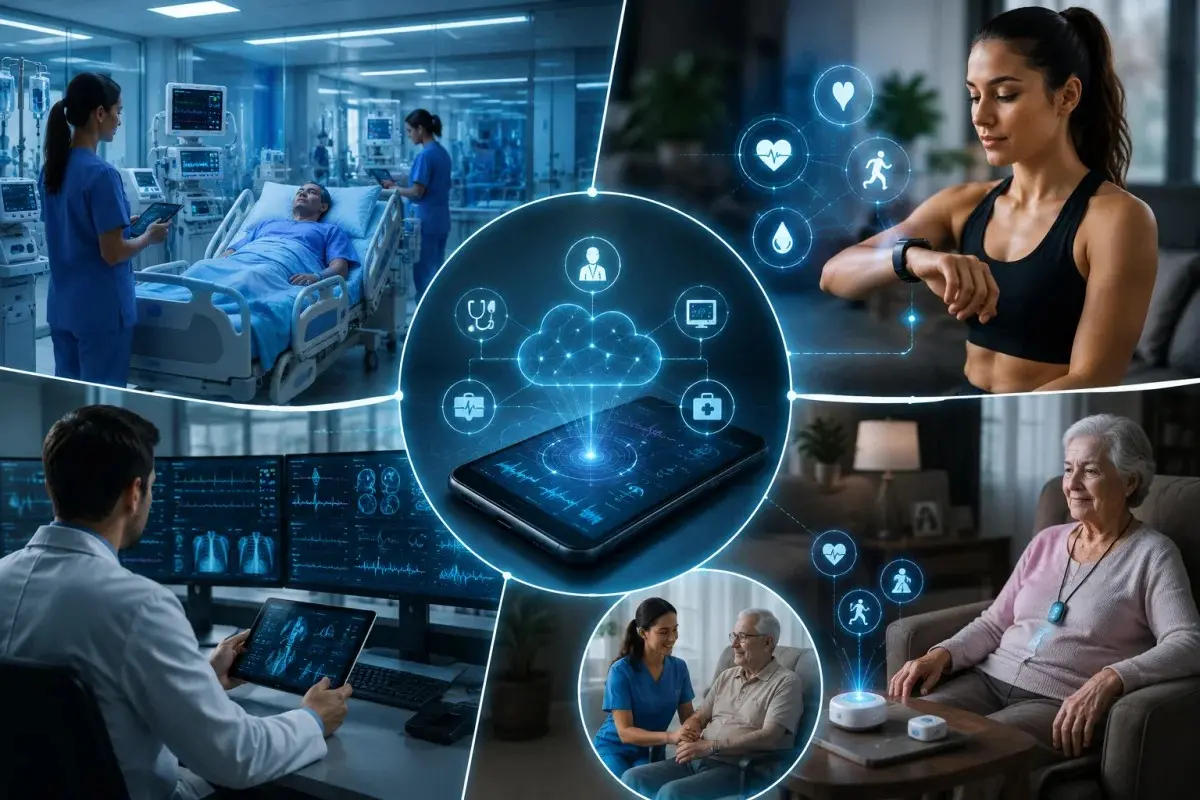
Looking at real-world examples of IoT in healthcare helps make the technology easier to understand beyond theory. Hospitals, clinics, and even individual patients are already using connected devices daily to improve care and streamline operations. These examples of IoT in healthcare show how the technology moves from concept to practical, everyday use, proving its value across different care environments rather than remaining a futuristic idea.
Case Examples from Hospitals and Clinics
Many hospitals now use connected patient monitoring systems that track vital signs continuously and alert staff the moment a reading becomes abnormal. Some clinics use smart infusion pumps that automatically adjust medication delivery based on real-time patient data. Other facilities rely on IoT-based asset tracking to instantly locate equipment such as wheelchairs or monitors, reducing delays during emergencies and improving overall hospital efficiency and patient safety.
Examples of Wearable IoT in Patient Care
Wearable IoT devices are one of the clearest examples of this technology in action. Smartwatches capable of detecting irregular heart rhythms have alerted users to seek emergency care before a serious event occurred. Continuous glucose monitors allow diabetic patients to track blood sugar levels throughout the day without repeated finger pricks. These wearables give patients more independence while still keeping healthcare providers informed of important health changes in real time.
Examples of IoT in Elderly and Home Care
IoT has become especially valuable in elderly and home care settings. Motion sensors placed in homes can detect falls or unusual inactivity and immediately alert caregivers or family members. Smart medication dispensers help older adults stay on track with prescriptions without requiring daily supervision. These examples show how IoT allows elderly patients to live more independently while still maintaining a safety net of real-time monitoring and support.
Benefits and Impact of IoT in Healthcare
The impact of IoT in healthcare goes far beyond convenience. By enabling continuous data collection and real-time communication, IoT has changed how care is delivered, monitored, and improved across nearly every part of the healthcare system. From better patient outcomes to reduced operational costs, the benefits of this technology are being felt by patients, doctors, and healthcare organizations alike, making IoT one of the most impactful advancements in modern medicine.
Improved Patient Outcomes
One of the clearest benefits of IoT in healthcare is improved patient outcomes. Continuous monitoring allows healthcare providers to detect warning signs earlier, often before a patient even notices symptoms themselves. This leads to faster interventions, fewer complications, and better management of chronic conditions. Patients also benefit from more personalized care, since treatment decisions can be based on real-time data rather than occasional checkups or self-reported information.
Cost Reduction and Operational Efficiency
IoT also helps reduce costs and improve efficiency within healthcare systems. Remote monitoring reduces the need for frequent hospital visits, lowering both patient expenses and hospital workload. On the operational side, IoT-enabled asset tracking prevents wasted time searching for equipment, while predictive maintenance on medical devices helps avoid costly breakdowns. Together, these efficiencies allow healthcare providers to allocate resources more effectively while maintaining high-quality care.
Real-Time Data and Faster Clinical Decisions
Access to real-time data is one of the most significant advantages IoT brings to healthcare. Instead of waiting for scheduled tests or manual reporting, doctors can view live updates on a patient’s condition and respond immediately when something changes. This speed is especially critical in emergencies, where early detection can prevent serious complications. Faster access to accurate data ultimately leads to quicker, more confident clinical decision-making.
Enhanced Preventive and Personalized Care
IoT supports a shift from reactive treatment to preventive and personalized care. By continuously tracking health metrics, providers can identify risk factors early and adjust treatment plans before conditions worsen. This personalized approach considers each patient’s unique data patterns rather than relying on general assumptions. As a result, patients receive care that is more tailored to their specific needs, improving both long-term health and overall quality of life.
Why IoT Is Important in Modern Healthcare
The importance of IoT in healthcare comes from its ability to solve long-standing challenges in the medical system. Traditional healthcare often relies on scheduled visits and delayed reporting, which can leave gaps in patient monitoring. IoT closes these gaps by enabling constant communication between patients and providers. As healthcare systems face growing patient numbers and limited resources, IoT offers a practical way to maintain quality care without overwhelming staff or infrastructure.
Bridging Gaps in Access to Care
IoT plays a major role in improving access to healthcare, especially for patients in remote or underserved areas. Connected devices allow individuals to receive monitoring and consultations without traveling long distances to a clinic or hospital. This is particularly important for elderly patients or those with mobility issues. By reducing dependence on physical visits, IoT helps ensure that more people receive timely care regardless of their location or circumstances.
Supporting the Shift to Value-Based Care
Healthcare systems are increasingly moving toward value-based care, which focuses on patient outcomes rather than the number of services provided. IoT supports this shift by giving providers continuous insight into patient health, allowing them to intervene early and prevent costly complications. This proactive approach not only improves patient wellbeing but also aligns with healthcare models that reward quality of care over quantity of treatments, making IoT a key enabler of this transition.
IoT Security in Healthcare
As IoT adoption grows, IoT security in healthcare has become a critical concern for providers and patients alike. Connected devices collect and transmit sensitive health data, which makes them a valuable target for cyberattacks if not properly protected. While IoT offers major benefits in patient care, it also introduces new vulnerabilities that healthcare organizations must actively manage. Addressing these security risks is essential to maintaining patient trust and ensuring the safe use of connected medical technology.
Common Security Risks in Connected Medical Devices
Connected medical devices can be vulnerable to several types of security risks, including unauthorized access, data interception, and malware attacks. Many IoT devices operate continuously and connect to hospital networks, creating entry points for cyber threats if security measures are weak. Older devices with outdated software are especially at risk, since they may lack the updates needed to defend against newer attack methods. These vulnerabilities highlight the need for consistent monitoring and device management.
Data Privacy and HIPAA/Compliance Considerations
Because IoT devices collect sensitive patient information, data privacy is a top priority in healthcare settings. In many regions, healthcare organizations must comply with strict regulations such as HIPAA to ensure patient data is stored, transmitted, and accessed securely. This includes using encrypted connections, limiting data access to authorized personnel, and maintaining clear audit trails. Meeting these compliance standards helps protect patient privacy while reducing legal and financial risks for healthcare providers.
Best Practices for Securing Healthcare IoT Networks
To reduce security risks, healthcare organizations should follow established best practices when managing IoT networks. This includes regularly updating device software, using strong authentication methods, and segmenting IoT devices from critical hospital systems. Continuous network monitoring can help detect unusual activity before it becomes a serious breach. By combining these practices with staff training on cybersecurity awareness, healthcare providers can significantly strengthen the overall security of their connected device ecosystems.
The Future of IoT in Healthcare
The future of IoT in healthcare looks increasingly connected, intelligent, and patient-centered. As technology continues to advance, IoT devices are expected to become more accurate, more integrated with AI, and more widely adopted across both hospitals and home care settings. This ongoing evolution suggests that IoT will not just remain a supporting tool but become a core part of how healthcare systems operate, diagnose, and deliver treatment in the years ahead.
Emerging Trends (5G, Edge Computing, AI-Driven Diagnostics)
Several emerging technologies are shaping the next phase of IoT in healthcare. Faster 5G networks will allow medical devices to transmit larger amounts of data with minimal delay, improving real-time monitoring accuracy. Edge computing will enable devices to process data locally, reducing response times for critical alerts. Meanwhile, AI-driven diagnostics will continue to improve, allowing systems to detect health issues earlier and with greater precision than traditional methods.
Predictions for IoT Adoption in the Next 5 Years
Over the next five years, IoT adoption in healthcare is expected to expand significantly, driven by rising demand for remote care and personalized treatment. More hospitals are likely to integrate IoT into everyday operations, while wearable health devices become standard tools for preventive care rather than optional accessories. As costs decrease and technology improves, smaller clinics and home care providers are also expected to adopt IoT solutions much faster than before.
Challenges That Could Shape Future Growth
Despite its potential, several challenges could influence how quickly IoT grows within healthcare. Data security and privacy concerns remain a major barrier, requiring stronger regulations and safeguards. Interoperability between different devices and systems is another ongoing issue, as many platforms still struggle to communicate effectively. Additionally, the cost of implementation may slow adoption in smaller healthcare facilities, meaning future growth will depend heavily on solving these practical and technical obstacles.
Frequently Asked Questions About IoT in Healthcare
This section answers some of the most common questions people ask about IoT in healthcare. These questions reflect real search patterns and everyday concerns from patients, healthcare professionals, and technology decision-makers. Covering them directly helps provide quick, clear answers while reinforcing the broader concepts explained throughout this guide.
What are examples of IoT in healthcare?
Examples of IoT in healthcare include wearable devices like smartwatches that track heart rate, remote patient monitoring systems that send vital signs to doctors, smart hospital beds that detect patient movement, and connected medication dispensers that remind patients to take their prescribed doses. Hospitals also use IoT for asset tracking, helping staff locate equipment such as wheelchairs or infusion pumps quickly during emergencies.
How does IoT improve healthcare outcomes?
IoT in healthcare improves healthcare outcomes by enabling continuous monitoring instead of relying only on scheduled checkups. This allows doctors to detect warning signs earlier and respond before conditions worsen. Patients with chronic illnesses benefit from real-time tracking that supports timely treatment adjustments. Overall, IoT reduces delays in care, supports more personalized treatment plans, and helps prevent complications through faster, data-driven decision-making.
Is IoT in healthcare secure?
IoT in healthcare can be secure, but it requires strong safeguards because medical data is sensitive. Risks such as unauthorized access or outdated device software can create vulnerabilities if not properly managed. Healthcare providers reduce these risks through encryption, strict access controls, regular software updates, and compliance with regulations like HIPAA. When these measures are in place, IoT systems can operate safely and protect patient information effectively.
What is the difference between IoT and AI in healthcare?
IoT and AI serve different but complementary roles in healthcare. IoT in healthcare refers to connected devices that collect and transmit real-time health data, such as wearables or hospital sensors. AI, on the other hand, analyzes that data to identify patterns, predict risks, and support clinical decisions. In simple terms, IoT gathers the information, while AI interprets it, and together they create smarter, more responsive healthcare systems.
What devices are considered IoT in healthcare?
Devices considered IoT in healthcare include wearable trackers, remote patient monitoring tools, smart hospital beds, connected infusion pumps, and asset tracking sensors used to locate medical equipment. Even implantable devices like smart pacemakers fall under this category. Essentially, any medical device that connects to a network to collect, transmit, or receive health-related data is classified as part of the healthcare IoT ecosystem.