The construction industry is experiencing one of the most significant transformations in its history. Rapid innovation, digitalization, and automation are changing how projects are planned, designed, and executed. At the center of this evolution is construction technology, a broad field that combines engineering, software, machinery, and data-driven processes to improve efficiency, safety, and sustainability.
Today, companies are adopting advanced tools that reduce costs, shorten project timelines, and improve overall quality. From artificial intelligence and robotics to drones and smart sensors, technology’s role in construction has become more important than ever. As urban populations continue to grow and infrastructure demands increase, organizations are investing heavily in innovative solutions that make building processes smarter and more reliable.
Understanding construction technology is essential for contractors, project managers, engineers, architects, and students entering the industry. Whether exploring new career opportunities, learning about modern building methods, or staying up to date with emerging trends, gaining knowledge of this rapidly evolving field provides a significant advantage. This guide explores the latest developments, practical applications, benefits, challenges, and future opportunities shaping the construction industry.
What Is Construction Technology
Many people ask, what is construction technology? Simply put, it refers to the tools, machinery, software, materials, and innovative processes used to improve construction activities. These technologies help teams design, manage, monitor, and complete projects more effectively. Traditionally, construction relied heavily on manual labor and paper-based workflows. However, modern construction technologies integrate digital systems, automation, and real-time communication to streamline operations.
These advancements help reduce errors, increase productivity, and improve collaboration among stakeholders. The concept covers everything from project planning software and Building Information Modeling (BIM) to drones, wearable devices, and autonomous equipment. As a result, construction technology has become a critical factor in delivering successful projects.
The Evolution Of Technology In Construction
The construction sector has evolved dramatically over the past few decades. Earlier projects depended on basic machinery and manual calculations. Today, technology in the construction industry enables teams to manage complex projects with unprecedented precision. Digital transformation has introduced advanced design platforms that allow engineers and architects to visualize entire structures before construction begins.
These innovations reduce costly mistakes and improve project coordination. At the same time, improvements in equipment, materials, and communication systems have created new opportunities for efficiency. The integration of construction and technology continues to reshape how buildings, roads, bridges, and infrastructure projects are developed worldwide.
Building Construction Technology In Modern Projects
Digital Design And BIM
One of the most influential advancements in building construction technology is Building Information Modeling. BIM creates a digital representation of a structure, allowing project teams to collaborate using a shared model.
Architects, engineers, and contractors can identify conflicts before construction starts, minimizing delays and reducing expenses. This approach has become a standard component of modern building construction and technology practices.
Smart Materials And Innovative Methods
The use of advanced materials is another major development. Self-healing concrete, high-performance insulation, and energy-efficient glass improve building durability and sustainability. In addition, new technologies in building construction include prefabrication and modular construction methods.
Components are manufactured off-site and assembled on location, reducing waste and accelerating project completion. The adoption of advanced technology in building construction allows developers to achieve higher quality standards while improving overall efficiency.
Construction Engineering Technology And Project Innovation
The field of construction engineering technology bridges engineering principles and practical construction methods. Professionals in this area focus on designing, implementing, and optimizing systems that improve project performance. Engineering technology professionals use sophisticated software to analyze structural integrity, material performance, and environmental impact.
These tools support informed decision-making throughout the project lifecycle. As projects become increasingly complex, construction technology solutions help engineering teams address challenges related to cost control, scheduling, and resource allocation. This integration of engineering expertise and digital innovation continues to drive industry growth.
Advanced Construction Technology Shaping The Industry
Modern projects increasingly rely on advanced construction technology to improve productivity and competitiveness. These innovations are transforming every stage of construction.
Some of the most impactful technologies include:
- Artificial Intelligence for project planning and risk assessment
- Robotics for repetitive construction tasks
- Drones for surveying and site inspections
- Internet of Things sensors for real-time monitoring
- Augmented Reality for design visualization
The rise of advanced construction technologies is enabling organizations to complete projects faster while maintaining high safety and quality standards. Furthermore, advanced technology construction solutions provide valuable insights that help teams make better operational decisions and reduce costly errors.
Smart Construction Technology And Automation
Artificial Intelligence And Predictive Analytics
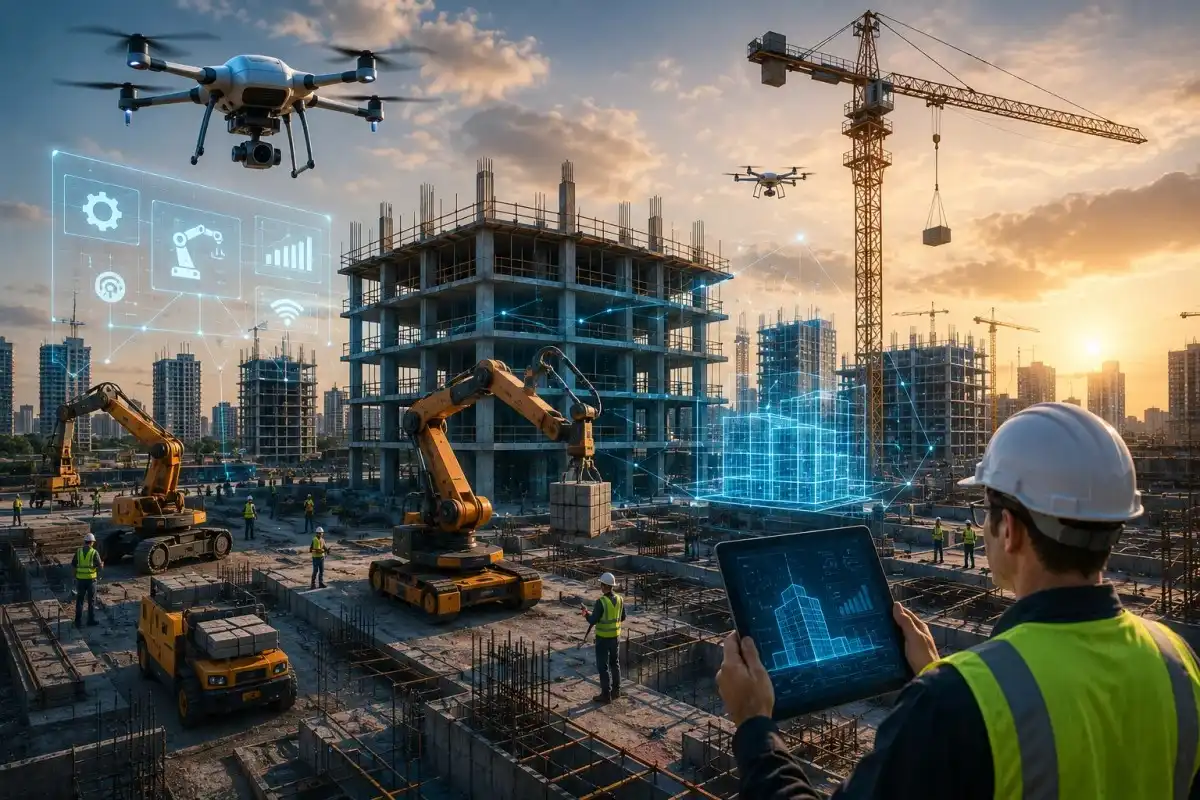
Artificial intelligence is becoming a core component of smart construction technology. AI-powered systems analyze vast amounts of project data to identify risks, forecast delays, and optimize schedules. Machine learning algorithms help managers make proactive decisions, improving project outcomes and reducing uncertainty.
Robotics And Autonomous Equipment
Automation is changing how construction sites operate. Robots can perform repetitive tasks such as bricklaying, welding, and material transportation. Autonomous machinery improves efficiency while reducing labor-intensive work. As a result, modern technology in construction industry environments is becoming safer and more productive. The adoption of automation demonstrates how new construction technologies are creating smarter workflows across the industry.
Construction Management Technology And Data-Driven Decisions
Effective project management is essential for construction success. Modern construction management technology provides real-time visibility into schedules, budgets, and resources. Project managers use cloud-based platforms to coordinate teams, track progress, and communicate instantly with stakeholders. These systems improve transparency and reduce delays.
The growth of technology construction management tools has significantly improved project coordination. Organizations can monitor performance metrics and identify potential issues before they escalate. In addition, construction technology management practices increasingly rely on digital dashboards and analytics to support strategic decision-making.
Construction Technology Data Analytics And GPS Applications
Data is becoming one of the industry’s most valuable assets. Construction technology data analytics enables organizations to collect and analyze information from equipment, sensors, and project management systems. By leveraging analytics, companies can improve productivity, predict maintenance requirements, and optimize resource utilization.
These insights contribute to more efficient project execution. Another important innovation is GPS’s role in modern construction technology. GPS systems provide accurate positioning data for surveying, machine control, and site management.
Benefits of GPS integration include:
- Improved equipment accuracy
- Reduced rework and material waste
- Enhanced site safety
- Faster project completion
- Better resource tracking
These capabilities demonstrate how data and location-based technologies are revolutionizing construction operations.
Construction Safety Technology Improving Worker Protection
Safety remains a top priority in construction. Modern construction safety technology helps organizations create safer work environments through proactive risk management. Wearable devices are among the most significant innovations. Wearable technology in construction can monitor workers’ locations, heart rates, fatigue levels, and environmental conditions.
Smart helmets, connected vests, and sensor-equipped equipment provide real-time alerts that help prevent accidents. These technologies enable managers to respond quickly to potential hazards. As safety regulations become more stringent, technology-driven solutions will continue to play a critical role in protecting workers and reducing incidents.
Equipment Management In Construction Technology
Efficient asset utilization is essential for project profitability. Equipment management in construction technology involves tracking, monitoring, and maintaining machinery using digital systems. Telematics solutions provide real-time information about equipment location, usage, fuel consumption, and maintenance needs. This visibility helps organizations reduce downtime and extend equipment lifespan.
Predictive maintenance technologies identify potential failures before they occur, minimizing costly disruptions. As a result, construction firms can improve operational efficiency while controlling expenses. The integration of smart equipment management systems highlights the growing influence of digital innovation throughout the construction industry.
Mivan Construction Technology And Modern Building Methods
Among notable construction technologies, Mivan has gained popularity in large-scale residential and commercial projects. Mivan construction technology utilizes aluminum formwork systems that enable faster concrete construction. The technique produces high-quality structures with improved consistency and reduced construction time.
This method offers several advantages, including enhanced structural strength, lower labor requirements, and faster project delivery. Developers often choose Mivan systems for high-rise buildings and mass housing projects. The success of Mivan demonstrates how innovative construction methods can significantly improve productivity and project outcomes.
Construction Technology Careers And Salary Opportunities
The growing adoption of technology is creating new employment opportunities throughout the industry. Construction technology careers now extend beyond traditional construction roles.
Professionals can pursue positions such as:
- BIM Specialist
- Construction Technology Manager
- Project Controls Analyst
- Construction Data Analyst
- Robotics Technician
- Digital Construction Engineer
The demand for skilled professionals continues to increase as organizations embrace digital transformation.
Regarding construction technology salaries, compensation varies by experience, location, specialization, and employer. Technology-focused roles often command higher salaries because they require advanced technical skills and expertise. Individuals with knowledge of digital construction tools, analytics, and automation technologies are particularly well-positioned for long-term career growth.
Construction Technology Trends 2026 And Beyond
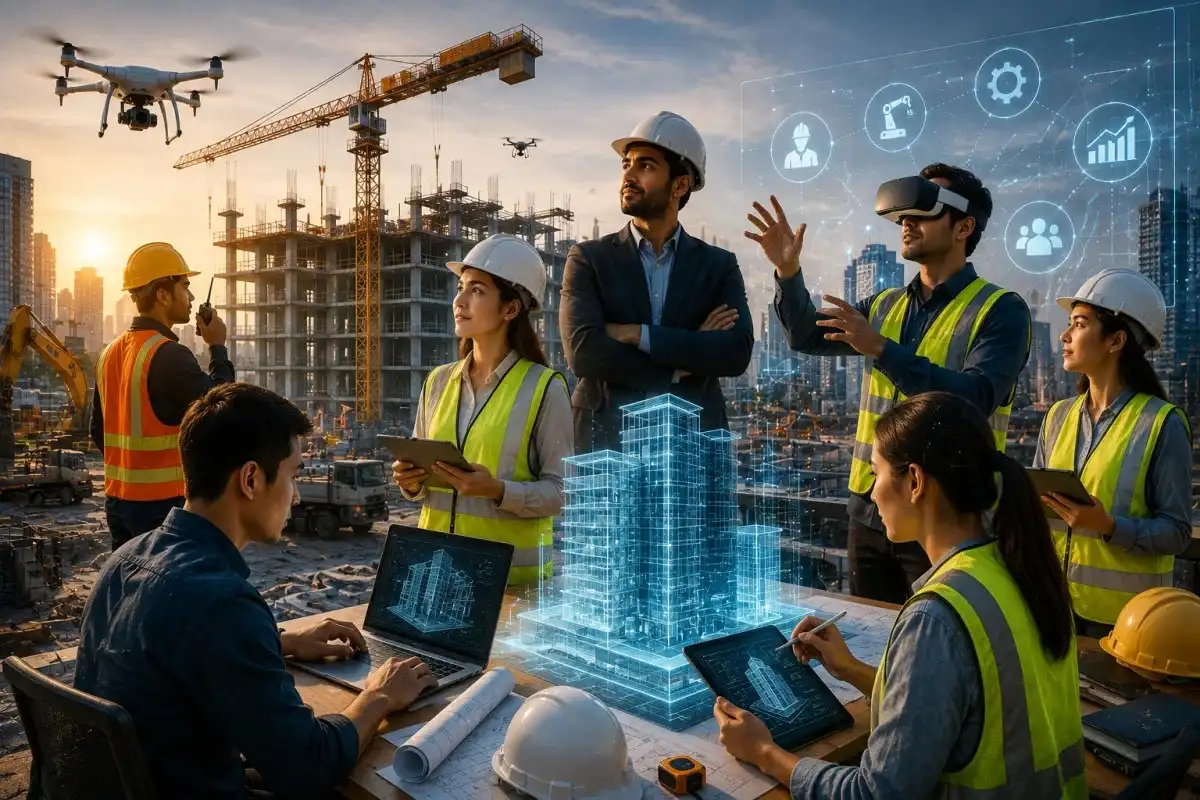
The future of construction will be shaped by continuous innovation. Several construction technology trends are expected to dominate the industry in the coming years.
Sustainability And Green Building
Environmental responsibility is becoming a major priority. Sustainable materials, energy-efficient systems, and carbon reduction strategies will continue to gain importance. Developers are increasingly investing in technologies that minimize environmental impact while improving building performance.
Digital Twins and Real-Time Monitoring
Digital twins create virtual replicas of physical assets, allowing teams to monitor performance throughout a structure’s lifecycle. This capability supports predictive maintenance, operational efficiency, and long-term asset management.
Artificial Intelligence Expansion
AI applications are expected to become more sophisticated. Future systems will provide deeper insights into project planning, risk management, and resource optimization. These developments are among the most important construction technology trends 2026 expected to influence industry practices. The continued emergence of the latest construction technology solutions will create new opportunities for efficiency, safety, and innovation.
Benefits And Challenges Of Construction Technology
The adoption of modern technology offers substantial advantages. Organizations experience improved productivity, reduced costs, enhanced safety, and better project outcomes. Digital tools also improve collaboration among project stakeholders, enabling faster communication and more informed decision-making.
However, challenges remain. Initial implementation costs can be significant, particularly for smaller companies. Additionally, workforce training is necessary to maximize the benefits of new systems. Cybersecurity concerns, data management complexities, and resistance to change may also slow adoption. Nevertheless, the long-term benefits typically outweigh these obstacles.
Examples Of Construction Technology In Real Projects
Numerous projects worldwide demonstrate the impact of innovation. Some notable examples of construction technology include drone-based site inspections, AI-driven scheduling systems, robotic bricklayers, and smart safety wearables. Large infrastructure developments increasingly use BIM and digital twins to improve coordination and lifecycle management.
Similarly, modular construction methods are accelerating housing and commercial building projects. These real-world applications illustrate how technology continues to redefine construction practices and improve project performance.
Frequently Asked Questions
What is construction technology?
Construction technology refers to the tools, equipment, software, materials, and processes used to improve planning, design, management, and execution of construction projects.
Why is construction technology important?
It improves efficiency, safety, quality, sustainability, and project delivery while reducing costs and minimizing errors.
What are some common construction technology examples?
Examples include BIM software, drones, robotics, AI systems, wearable safety devices, digital twins, GPS tracking, and modular construction methods.
What is smart construction technology?
Smart construction technology uses connected devices, sensors, automation, and data analytics to optimize construction operations and improve decision-making.
How does GPS help modern construction projects?
The role of GPS in modern construction technology includes accurate surveying, machine guidance, asset tracking, and improved project efficiency.
What careers are available in construction technology?
Popular careers include BIM specialist, construction technology manager, construction engineer, project analyst, robotics technician, and data analyst.
What is Mivan construction technology?
Mivan construction technology is an aluminum formwork system that enables faster, more efficient concrete construction for large-scale projects.
What are the top construction technology trends 2026?
Key trends include AI adoption, digital twins, sustainable construction practices, robotics, automation, advanced analytics, and smart building technologies.
Conclusion
The rapid advancement of construction technology is transforming the way buildings and infrastructure are designed, managed, and delivered. From BIM and robotics to AI, GPS, and wearable safety devices, innovative solutions are helping organizations improve productivity, reduce costs, and enhance safety across every stage of construction.
As digital transformation accelerates, professionals and businesses must adapt to remain competitive. Understanding developments in building construction, construction management, and advanced construction technologies is no longer optional—it is essential for long-term success. While challenges such as implementation costs and workforce training exist, the benefits of adopting modern solutions far outweigh the obstacles.
Looking ahead, emerging innovations, including digital twins, predictive analytics, automation, and sustainable building systems, will continue to shape the industry. Organizations that embrace these changes today will be better positioned to meet future demands, improve project outcomes, and capitalize on new opportunities. Ultimately, construction technology represents the foundation of a smarter, safer, and more efficient construction industry.