In today’s hyper-connected world, businesses and consumers increasingly rely on innovative technology. However, regarding communication between devices, two standard terms often surface: IoT (Internet of Things) and M2M (Machine-to-Machine). While they both enable automated device communication, understanding the difference between IoT and M2M is crucial for choosing the right solution for your needs.
Let’s explore what sets these two technologies apart, their use cases, and why one may better suit your business.
What Is the Difference Between IoT and M2M?
The primary difference between IoT and M2M lies in how devices connect and the scope of their communication networks.
IoT (Internet of Things)
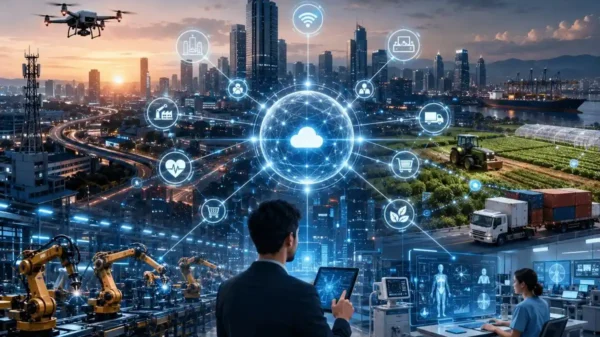
IoT refers to a broad ecosystem of devices connected through the Internet, which allows them to share data with each other and with centralized platforms for monitoring, analytics, and automation.
- Connectivity: Internet/cloud-based
- Scope: Wide-ranging, across multiple devices and industries
- Use Cases: Smart homes, wearable health trackers, smart agriculture, connected vehicles
- Strengths: Real-time data analysis, scalability, cloud integration
M2M (Machine-to-Machine)
M2M communication focuses on direct, often point-to-point communication between devices, usually within a private or closed network.
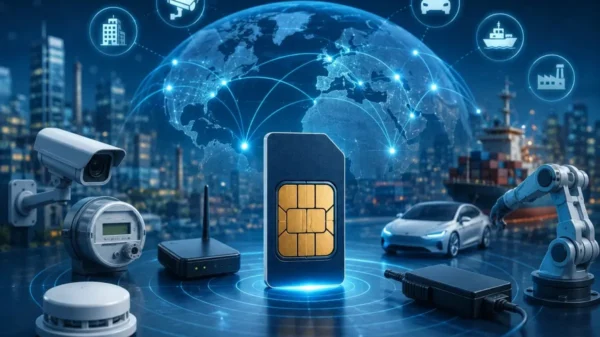
- Connectivity: Often cellular, satellite, or local wired networks
- Scope: Device-specific, typically isolated systems
- Use Cases: Vending machines, utility meters, industrial monitoring
- Strengths: Simple deployment, fast direct response, low overhead
The difference between IoT and M2M becomes clear when considering whether internet connectivity, cloud integration, and system-wide scalability are essential.
Real-Life Example: A Smart Home vs A Vending Machine
To better understand difference between IoT and M2M, imagine these two scenarios:
- IoT Example: A smart home setup allows you to adjust your thermostat, control lighting, and monitor security cameras remotely via a cloud-connected mobile app. All devices are integrated through the internet—this is IoT.
- M2M Example: A vending machine sends a direct signal to the supplier when inventory is low, without using the internet. This device-to-device interaction defines M2M communication.
Both are examples of machines talking to each other, but the difference between IoT and M2M lies in the architecture and application.
Side-by-Side Comparison Table
| Feature | IoT (Internet of Things) | M2M (Machine-to-Machine) |
|---|---|---|
| Connectivity | Internet/cloud | Cellular/point-to-point |
| Scope | Broad, scalable | Narrow, specific |
| Data Analytics | Real-time insights | Minimal or none |
| Integration | Cloud platforms, AI systems | Standalone systems |
| Examples | Smart homes, wearables, IoT sensors | Utility meters, vending machines |
This table highlights the technical and operational differences between IoT and M2M.
Why Does the Difference Between IoT and M2M Matter?
Understanding the difference between IoT and M2M helps businesses choose the proper infrastructure. IoT is a better fit if you aim to build a scalable, cloud-based, innovative solution that interacts with multiple devices and provides real-time data. If you need isolated device communication without cloud dependency, M2M is more straightforward and more cost-effective.
 Also Read:
 Also Read:
Business Use Cases
Ideal IoT Use Cases:
- Remote health monitoring
- Smart logistics and fleet tracking
- Smart farming and irrigation
- Industrial automation with predictive analytics
Ideal M2M Use Cases:
- ATM status reporting
- Remote oil field monitoring
- Fleet fuel sensors
- Simple alert systems in industrial equipment
Both technologies offer immense value, but the difference between IoT and M2M determines which one best suits your operations.
Conclusion
To sum up, the difference between IoT and M2M isn’t just technical—it’s strategic. IoT is a broader, internet-driven system suited for dynamic, scalable, and intelligent applications. M2M, meanwhile, provides a more focused, efficient solution for specific device interactions.
Frequently Asked Questions FAQs)
What is the main difference between IoT and M2M?
The main difference is that IoT uses internet/cloud connectivity for device communication, while M2M uses direct device-to-device communication, often without internet access.
Is M2M a part of IoT?
Yes, M2M can be considered a subset of IoT. M2M handles direct communication, while IoT encompasses broader, cloud-integrated networks.
Which is better for large-scale automation?
IoT is better for large-scale automation due to its ability to handle multiple devices through centralized cloud platforms.
Can M2M work without the internet?
Yes, M2M systems often use local or cellular networks,and do not require internet connectivity.
Are IoT and M2M secure?
Both can be secure with proper implementation, though IoT requires more attention due to broader network exposure.