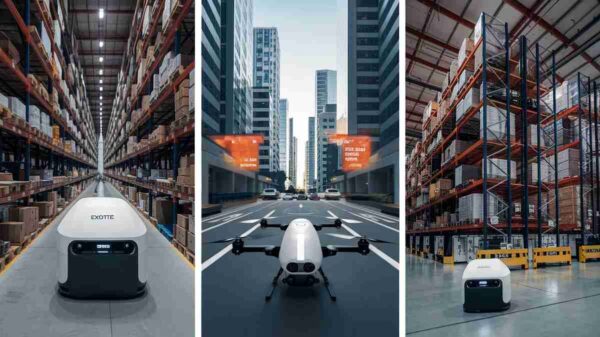
In today’s digital-first world, understanding the different types of technology is more than educational—it’s essential. From smart agriculture to advanced artificial intelligence, each technology category uniquely transforms industries and lifestyles.
This comprehensive guide explores the different types of technology, their functions, real-world applications, and how modern tools help streamline business operations through intelligent automation.
Breakdown of the Different Types of Technology
 Information and Communications Technology (ICT)
 Information and Communications Technology (ICT)
ICT is one of the most widely adopted types of technology in the modern world. It refers to integrating computers, networks, software, and telecommunication tools that store, retrieve, and transmit data.
Applications:
- Web development
- Cloud computing
- Cybersecurity
- Mobile applications
Related technologies: Computer networks, internet infrastructure, audiovisual tools
Health and Medical Technology
Health technology enhances medical care, diagnostics, and patient experience. It is one of the most impactful types of technology on the quality of life and longevity.
Examples:
- Wearable heart monitors
- Telehealth platforms
- Surgical robots
- AI-based diagnostic tools
Related fields: Biotechnology, medical imaging, assistive devices
Educational and Assistive Technology
Educational technology, also known as EdTech, revolutionises learning through tools like:
- Online learning platforms
- AI-powered tutors
- Interactive whiteboards
Assistive technology helps individuals with disabilities perform functions that might otherwise be difficult.
Semantic focus: eLearning, adaptive technology, special education tools
Manufacturing and Mechanical Technology
This domain includes technologies used to produce goods more efficiently. It is central to industrial growth and innovation.
Examples:
- Mechanical engineering technology
- Automation systems
- CNC machinery
Subcategories: Robotics, industrial design, aerospace technology
Agricultural and Environmental Technology
Agricultural technology helps increase productivity and sustainability in farming. Environmental tech aims to reduce carbon emissions and improve natural resource management.
Tools include:
- Smart irrigation
- Drones and sensors
- Renewable energy systems
Keywords: Environmental monitoring, precision farming, clean energy
Artificial Intelligence and Robotics
Artificial Intelligence (AI) is among the most disruptive types of technology, powering automation, intelligent analytics, and machine learning systems.
Applications:
- AI chatbots
- Predictive modeling
- Facial recognition
- Autonomous robotics
Related technologies: Natural Language Processing (NLP), machine vision, robotic process automation
Energy and Transportation Technology
Energy technology covers renewable energy systems like solar, wind, and battery storage, while transportation technology refers to innovations in vehicles, public transit, and logistics.
Examples:
- Electric vehicles (EVs)
- High-speed rail
- Smart grids
Subdomains: Mechanical engineering, energy efficiency, aerospace innovations
Emerging Technologies
Other specialised types of technology include:
- Internet of Things (IoT): Connecting devices to share data in real time
- Entertainment technology: AR/VR in media, gaming engines
- Architectural technology: Smart building systems, 3D design
- Financial technology (FinTech): Online payments, crypto wallets, robo-advisors
These technologies are rapidly evolving and often overlap across industries.
How Automation Tools Simplify Technology Management
Businesses using multiple types of technology often face challenges like integration, scalability, and maintenance. AI-powered automation tools can help:
- Automate lead generation and customer support across industries
- Create content optimised for both human and AI consumption (AIO)
- Provide no-code solutions for building websites and workflows
- Track and manage performance metrics across diverse tech platforms
By using intelligent automation, companies can reduce costs, speed development, and enhance decision-making.
 Using AI in Educational Technology
 Using AI in Educational Technology
Scenario: An online learning platform was struggling to scale personalised content delivery.
Action Taken:
- Implemented an AI-driven course generator
- Used NLP to analyse student feedback
- Integrated a chatbot to provide 24/7 academic support
Results:
- Content creation time dropped by 65%
- Student satisfaction improved by 40%
- Operating costs were reduced significantly
This example shows how combining different types of technology, like EdTech and AI, drives better outcomes.
Final Thoughts
Exploring the different types of technology reveals how interconnected modern life has become. Whether leading a tech startup, managing an enterprise, or learning new digital skills, being aware of these categories helps you innovate smarter. With the help of AI tools and automation platforms, navigating this technological landscape has never been easier or more efficient.
Frequently Asked Questions (FAQs)
What are the different types of technology?
The different types of technology include information technology, health tech, communication tools, manufacturing systems, energy solutions, artificial intelligence, agricultural tech, and more.
Why is it important to understand the different types of technology?
Understanding the different types of technology allows individuals and businesses to choose the right tools for innovation, efficiency, and growth.
What are some examples of emerging technologies?
Emerging technologies include the Internet of Things (IoT), blockchain, augmented reality (AR), quantum computing, and AI.
Which technology is the most widely used?
Information and communication Technology (IT) is the most universally adopted due to its role in digital connectivity and data management.
How do businesses use different types of technology?
Businesses use different types of technology—like FinTech for payments, AI for automation, and EdTech for training—to streamline operations and scale effectively.