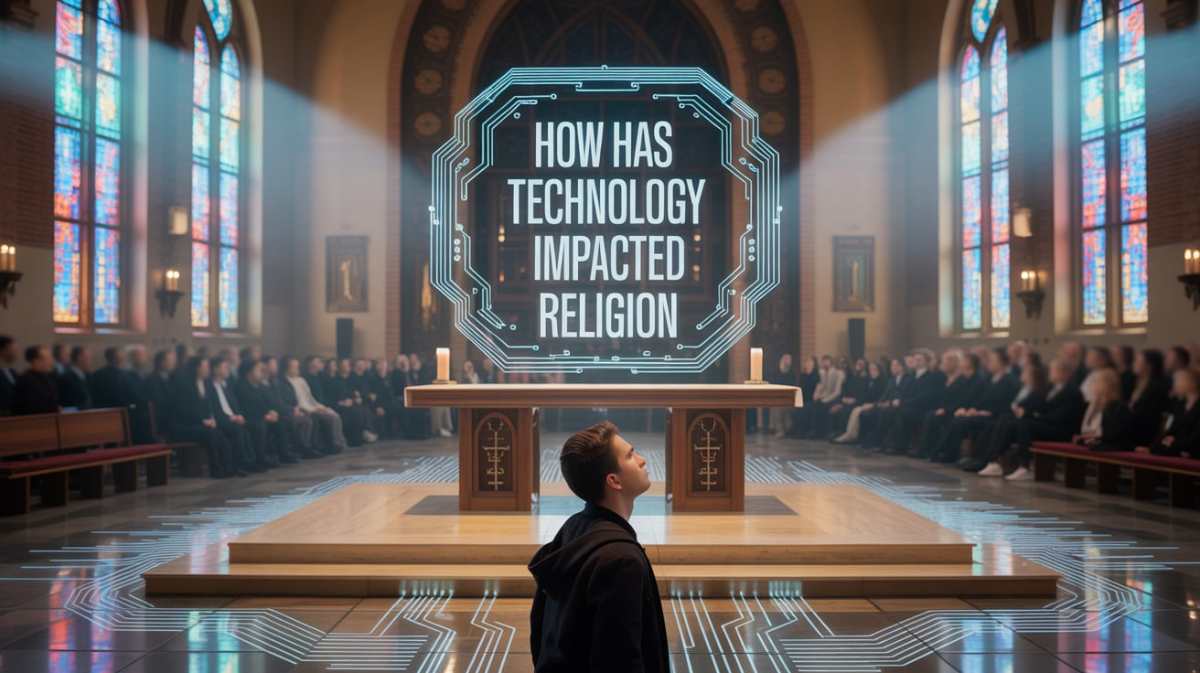
The question “How has technology impacted religion?” is becoming increasingly relevant in today’s interconnected world. Technology has transformed almost every aspect of human life, and religion is no exception. From online worship services to digital scripture archives, faith communities have found new ways to adapt, connect, and grow through technological advancements. Yet, this transformation also brings unique challenges.
Positive Impacts of Technology on Religion
 1. Increased Access to Religious Information
 1. Increased Access to Religious Information
One of the most profound ways technology has impacted religion is through the digitization of sacred texts and resources. Platforms now host scriptures, commentaries, and multimedia sermons in multiple languages, accessible from any device. This accessibility breaks geographical and financial barriers, allowing believers around the world to engage with religious teachings.
2. Enhanced Religious Education and Outreach
E-learning platforms, podcasts, and streaming services have revolutionized religious education. Seminaries offer online theology courses, and spiritual leaders stream live sermons to reach global audiences. This broadens outreach, especially for small congregations that previously had limited reach.
3. Creation of Online Religious Communities
Social media groups, faith-based forums, and religious apps enable believers to connect instantly. These digital congregations provide spaces for prayer requests, scriptural discussion, and moral support, bridging physical distances between members.
4. Innovation in Worship Practices
Occurring technologies like virtual reality (VR) and augmented reality (AR) allow believers to experience religious sites and rituals without traveling. For example, VR tours of the Vatican or Mecca give people immersive spiritual encounters from their homes.
5. Preservation of Religious Heritage
Technology enables digital archiving of manuscripts, artifacts, and oral traditions. This ensures sacred knowledge and cultural practices are preserved for future generations.
How Has Technology Impacted Religion Challenges and Negative Impacts
 1. Spread of Misinformation
 1. Spread of Misinformation
While access to information has increased, so has the risk of misinformation. Unverified interpretations of religious texts can circulate quickly, creating confusion and division within communities.
2. Erosion of Traditional Practices
The shift to digital worship can lead to fewer in-person gatherings. Some believers feel this reduces the sense of community and personal connection that face-to-face worship provides.
3. Challenges to Religious Authority
With so many voices online, traditional religious leaders sometimes face competition from self-proclaimed influencers offering alternative interpretations.
4. Potential for Addiction and Distraction
Excessive screen time and reliance on apps can shift focus away from spiritual growth and personal reflection.
5. Risk of Social Isolation
While technology connects people virtually, it can also replace deep, in-person relationships, leading to isolation.
Case Study: Virtual Worship During the Pandemic
During the COVID-19 lockdowns, religious institutions faced unprecedented disruption. Many quickly transitioned to livestreamed services and online community groups.
- Before technology adoption, Services were in-person only, limiting participation to local congregants.
- After technology adoption, Attendance expanded globally, with some congregations seeing double the engagement online.
- This demonstrated the potential for technology to expand reach while also highlighting the challenge of maintaining deep, personal connections in a digital space.
Balancing Faith and Technology
The question is not whether technology should be used in religion, but how. Faith communities are learning to balance traditional rituals with modern innovations, ensuring that core values remain intact while embracing the opportunities digital tools offer.
How Digital Tools Can Help Faith-Based Organizations
AI-powered content tools, automation platforms, and digital engagement systems can help religious institutions:
- Create and distribute educational materials faster and more effectively
- Automate event reminders and donation processes
- Analyze audience engagement to improve outreach strategies
- Personalize messages for different age groups or interest areas
- These solutions enable religious leaders to focus more on spiritual guidance rather than administrative burdens.
Conclusion
So, how has technology impacted religion? It has transformed accessibility, expanded outreach, and preserved sacred traditions, while also introducing challenges like misinformation and reduced in-person interaction. The future of religion in the digital age depends on mindful adoption, ensuring that technology serves faith rather than replaces it.
Frequently Asked Questions (FAQs)
How has technology impacted religion positively?
Technology has increased access to sacred texts, improved religious education, enabled online worship, and preserved cultural heritage through digital archives.
What are the adverse effects of technology on religion?
Potential downsides include misinformation, erosion of traditional practices, challenges to religious authority, and increased social isolation.
How do online communities affect religious life?
They provide global connection and support, but can sometimes replace deeper, in-person relationships.
Can technology replace traditional worship?
While it can supplement religious practice, most faith leaders agree that it should not replace in-person community gatherings.
What role did technology play in religion during the pandemic?
It enabled virtual worship, allowing congregations to continue services and maintain community connections despite restrictions.