Virtual Reality (VR) has evolved from a futuristic concept into a powerful technology reshaping industries, entertainment, education, and even healthcare. Once limited to science fiction, VR now allows people to experience immersive digital environments that feel almost real. With global investments increasing, experts predict the VR market will exceed $60 billion by 2030, showing how impactful this technology is becoming in everyday life.
What is Virtual Reality?
Virtual Reality is a computer-generated simulation that places users inside an interactive 3D environment. Unlike traditional screens, VR headsets make people feel like they are physically present in a digital world. This sense of “presence” is achieved through specialized hardware such as head-mounted displays, motion sensors, and controllers.
VR is different from Augmented Reality (AR), which overlays digital objects on the real world. Instead, VR transports users entirely into a digital environment, whether it’s a virtual classroom, a video game, or a training simulation.
 How Virtual Reality Works
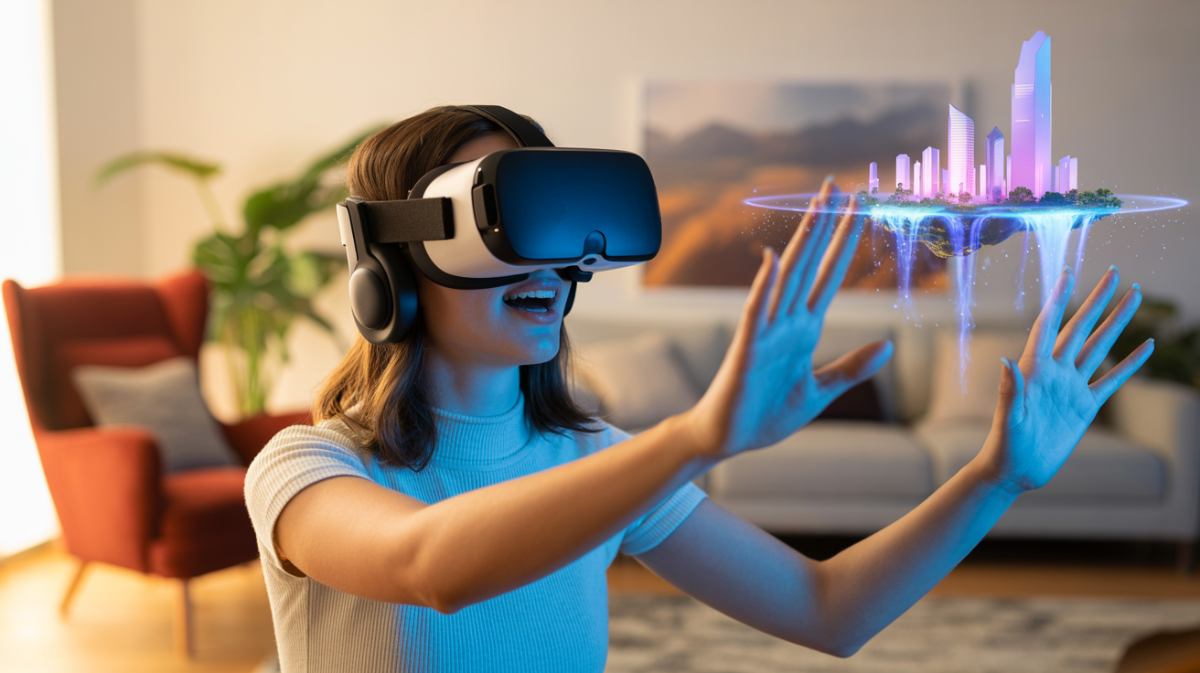 How Virtual Reality Works
VR relies on a combination of hardware and software to create immersive experiences. The main components include:
- Head-Mounted Display (HMD): The headset that delivers visuals directly to the eyes.
- Tracking Sensors: Devices that monitor head and body movements to adjust the perspective.
- Controllers: Handheld devices that allow interaction with the digital environment.
- VR Software: Applications and platforms that create virtual experiences.
Exploring how VR integrates with software solutions highlights its adaptability in both consumer and enterprise applications. Together, these elements provide a seamless illusion of being in another world, making VR both engaging and realistic.
Virtual Reality in Gaming and Entertainment
Gaming remains one of the most significant drivers of VR adoption. Popular VR games like Beat Saber and Half-Life: Alyx have shown how immersive storytelling and interactive gameplay can redefine the gaming industry.
Beyond gaming, entertainment companies use VR to host virtual concerts, create 360-degree movies, and offer theme park simulations. For instance, VR concerts by artists such as Travis Scott attracted millions of viewers worldwide, proving that digital experiences can rival physical events.
Virtual Reality in Education and Training
One of the most impactful uses of VR is in education. Students can take virtual field trips to historical sites, explore outer space, or perform science experiments in a safe digital environment. Research shows that VR-based learning improves retention by nearly 30% compared to traditional methods.
In professional training, VR is used by industries like aviation, healthcare, and construction. Surgeons can practice complex procedures in VR simulations without risk to patients. Pilots use flight simulators to prepare for real-world scenarios. These applications make VR an essential tool for skill development.
Virtual Reality in Healthcare
Healthcare professionals are increasingly adopting VR for therapy, training, and patient care. For example, Virtual Reality therapy helps patients with anxiety, phobias, or PTSD by gradually exposing them to controlled simulations.
Hospitals also use VR for pain management, where patients engage in calming virtual environments to reduce discomfort during treatments. Studies suggest that VR can reduce pain perception by up to 44% in clinical settings.
Business and Workplace Applications of VR
Companies are leveraging VR for collaboration, product design, and customer engagement. Virtual meetings allow global teams to work together as if they were in the same room. Architects and engineers use VR to walk clients through 3D models of buildings before construction begins.
Retailers are also exploring VR shopping experiences, where customers can browse products in a digital store from their homes. With integrations alongside virtual server agent technology, businesses can create scalable VR solutions that enhance customer experience.
Challenges Facing Virtual Reality
Despite its rapid growth, VR faces several challenges:
- High Costs: Advanced VR headsets and equipment can be expensive.
- Accessibility: Not everyone has access to high-speed internet or VR-ready devices.
- Motion Sickness: Some users experience discomfort due to a mismatch between their visual and physical movements.
- Content Limitations: The VR ecosystem still needs more diverse and high-quality applications.
Innovations such as GOC Technology and AI-powered automation tools are expected to solve many of these issues by making VR more accessible and affordable.
The Future of Virtual Reality
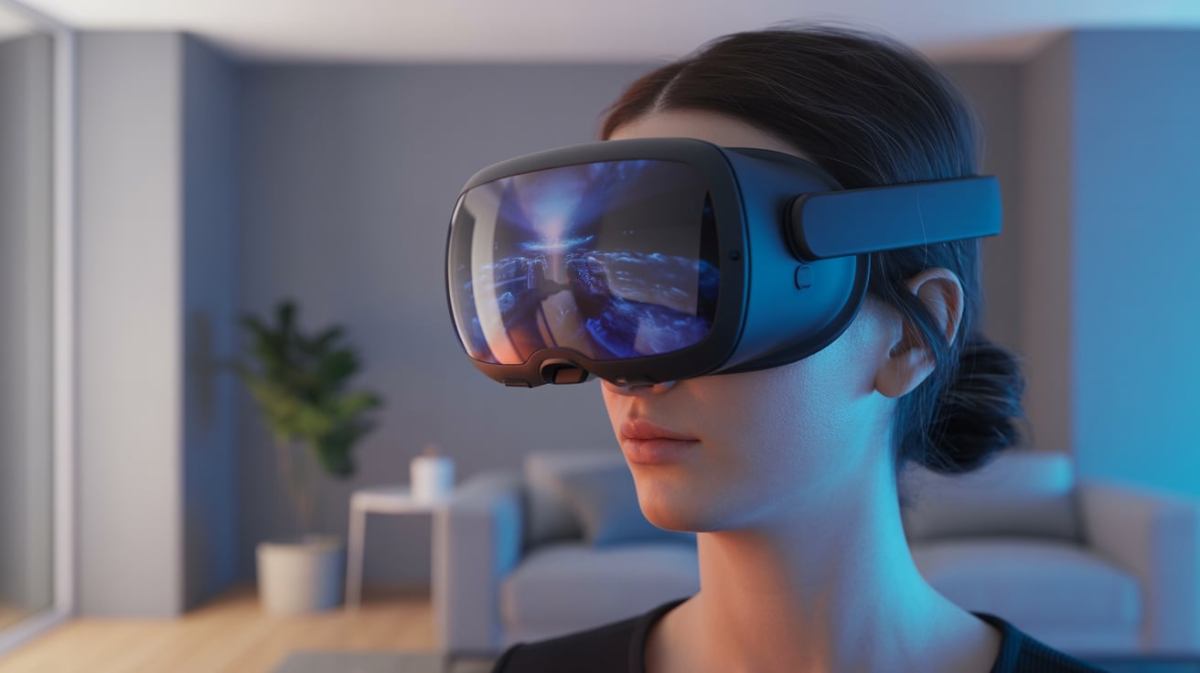 The Future of Virtual Reality
The future of VR looks promising with advancements like wireless headsets, AI-driven environments, and realistic haptic feedback that simulates touch. As 5G and cloud computing improve, VR experiences will become more accessible and seamless.
Developers are also experimenting with advanced settings similar to chatbot developer modes to fine-tune VR environments. This will give creators more control over interactions, making virtual experiences even more personalized.
Experts predict VR will expand into daily life, from shopping and fitness to remote work and social interactions. Imagine attending a virtual office where you collaborate with colleagues worldwide or joining a live sports match from your living room with the feeling of being in the stadium.
Frequently Asked Questions (FAQ)
1. What is the difference between Virtual Reality and Augmented Reality?
Virtual Reality creates a wholly digital environment, while Augmented Reality overlays digital elements on the real world.
2. Is Virtual Reality safe to use?
Yes, VR is safe when used in moderation. However, users should take breaks to avoid eye strain or motion sickness.
3. Can Virtual Reality be used in education?
Absolutely. VR enhances learning by providing immersive simulations, virtual field trips, and hands-on practice in a risk-free environment.
4. How expensive is Virtual Reality equipment?
Basic VR headsets can start around $300, while advanced systems with motion sensors and controllers may cost over $1,000.
5. What industries benefit most from Virtual Reality?
Industries such as gaming, education, healthcare, architecture, and retail are seeing significant benefits from VR adoption.