Cyber threats are evolving faster than ever, becoming more complex, targeted, and challenging to detect. As businesses continue to digitize their operations & store sensitive data online, the need for stronger, faster, and more adaptive cybersecurity solutions is urgent. One technology stands out in this battle: artificial intelligence (AI).
AI is not just enhancing traditional security measures—it’s fundamentally transforming how we detect, respond to, and predict cyberattacks. This blog explores how AI is shaping The Future of AI in Cyber Security and what this means for businesses looking to stay protected in a digital-first world.
Why Traditional Cybersecurity Isn’t Enough
Conventional security tools rely heavily on predefined rules and known threat signatures. While effective against known malware and standard attacks, they struggle to keep up with:
- Zero-day vulnerabilities
- Polymorphic malware that constantly changes form
- Sophisticated phishing and social engineering schemes
- Insider threats that mimic normal user behavior
These challenges require a more dynamic, intelligent defence system that can learn, adapt, and act faster than human analysts.
 How AI Is Redefining Cyber Defense
 How AI Is Redefining Cyber Defense
Intelligent Threat Detection
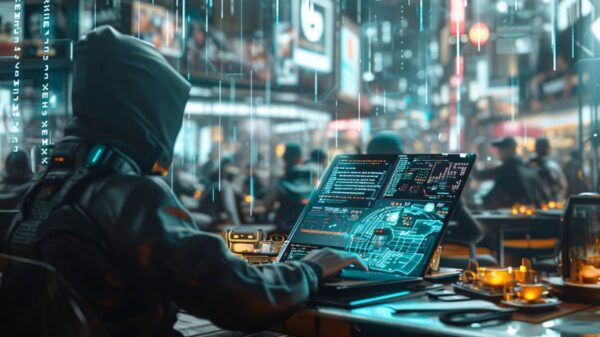
AI excels at analyzing large volumes of data in real-time. It can detect subtle patterns and anomalies in network behaviour that would be nearly impossible for a human to catch. For example, if a user suddenly accesses files at odd hours or downloads large volumes of data, AI can flag this as suspicious—even if no known malware is involved.
Faster, Automated Responses
One of the significant advantages of using AI is its ability to automate responses. Instead of waiting for a security team to investigate and react, AI can:
- Isolate infected systems
- Stop ongoing attacks
- Alert teams with actionable insights
This can significantly reduce the time between breach and response, which is critical for minimizing damage.
Predictive Capabilities
By analyzing historical data, AI can also predict where future threats may arise. This allows businesses to proactively patch vulnerabilities or tighten controls in areas most likely to be targeted.
What the Future Holds
Adaptive Security Systems
Shortly, AI will power adaptive cybersecurity frameworks that continuously evolve based on new data. These systems won’t just detect threats—they’ll learn from every interaction, making future detection even faster and more accurate.
Unified Human-AI Security Teams
Rather than replacing human analysts, AI will serve as a powerful assistant. It will handle routine monitoring and low-level decision-making, while human experts focus on high-impact strategy and complex investigations. This collaboration will lead to faster, smarter security operations.
Enhanced Protection for Small and Medium Businesses
Previously, advanced cybersecurity tools were reserved for large enterprises. AI is changing that by making innovative, scalable solutions accessible & affordable for businesses of all sizes. Smaller teams can benefit from enterprise-level protection without needing a large IT department.
Real-World Impact: A Quick Comparison
Let’s consider two businesses:
- Company X uses traditional firewalls and antivirus software. It suffered a ransomware attack that went unnoticed for days, leading to significant data loss and financial damage.
- Company Y uses AI-powered security systems. The same type of ransomware was instantly flagged due to unusual encryption behaviour. The system isolated the affected machine and prevented its spread.
Outcome:
Company X experienced weeks of downtime and customer churn. Company Y stayed operational with minimal disruption.
This comparison shows how AI doesn’t just enhance security—it protects business continuity and customer trust.
Helping Businesses Stay Ahead
Modern tools that integrate AI into their systems can give businesses an edge by:
- Reducing alert fatigue by prioritizing real threats
- Giving real-time visibility into network health
- Adapting to new threats without manual updates
- Empowering teams with instant insights and automated workflows
For growing businesses, these capabilities mean less time worrying about cybersecurity and more time focusing on growth.
Final Thoughts
 Final Thoughts
The Future of AI in Cyber Security lies in intelligent, responsive systems that can adapt as fast as threats evolve. AI brings this vision to life, offering a more innovative, proactive way to defend against cyberattacks.
Businesses that invest in AI-powered security today are not just protecting their data—they’re building a foundation of digital trust and resilience for the future.
frequently Asked Questions (FAQs)
Can AI completely stop cyberattacks?
AI can significantly reduce risk and speed response, but no system is 100% foolproof. The most effective defence is a layered approach combining AI, human oversight, and strong policies.
Is AI in cybersecurity only for large enterprises?
Not anymore. Technology advancements have made AI-driven solutions more affordable and scalable, making them ideal for startups and small businesses.
What types of threats can AI detect?
AI can identify various threats, including malware, phishing attempts, data exfiltration, insider threats, and abnormal user behaviour.