IoT monitoring is how businesses keep an eye on the growing web of connected devices, sensors, and equipment that power modern operations across factory floors, hospital wards, and smart city grids. As the number of connected devices keeps climbing, monitoring them in real time isn’t optional anymore; it’s the difference between catching a problem before it costs you and finding out after the damage is done.
This guide covers everything you need to know: what IoT monitoring actually is, how it works, the different types (remote, asset, environmental, industrial, and patient monitoring), the core features to look for in a platform, and how to get started monitoring your own devices no matter your industry or scale.
What Is IoT Monitoring?
IoT monitoring is the practice of continuously tracking the status, performance, and health of internet-connected devices, sensors, machines, meters, gateways, wearables, and other “smart” equipment using real-time data instead of manual checks. Rather than having someone physically inspect a piece of equipment or log readings by hand, IoT monitoring systems collect data automatically, send it to a central platform, and flag anything that needs attention.
At its core, IoT monitoring answers three questions at all times: Is this device online? Is it working the way it should? And is something about to go wrong? That constant feedback loop is what makes IoT monitoring valuable across industries as different as manufacturing, healthcare, agriculture, and smart cities. The underlying need (visibility into distributed devices) is the same everywhere, even if the use case changes.
How IoT Monitoring Works (Sensors, Gateways, Cloud)
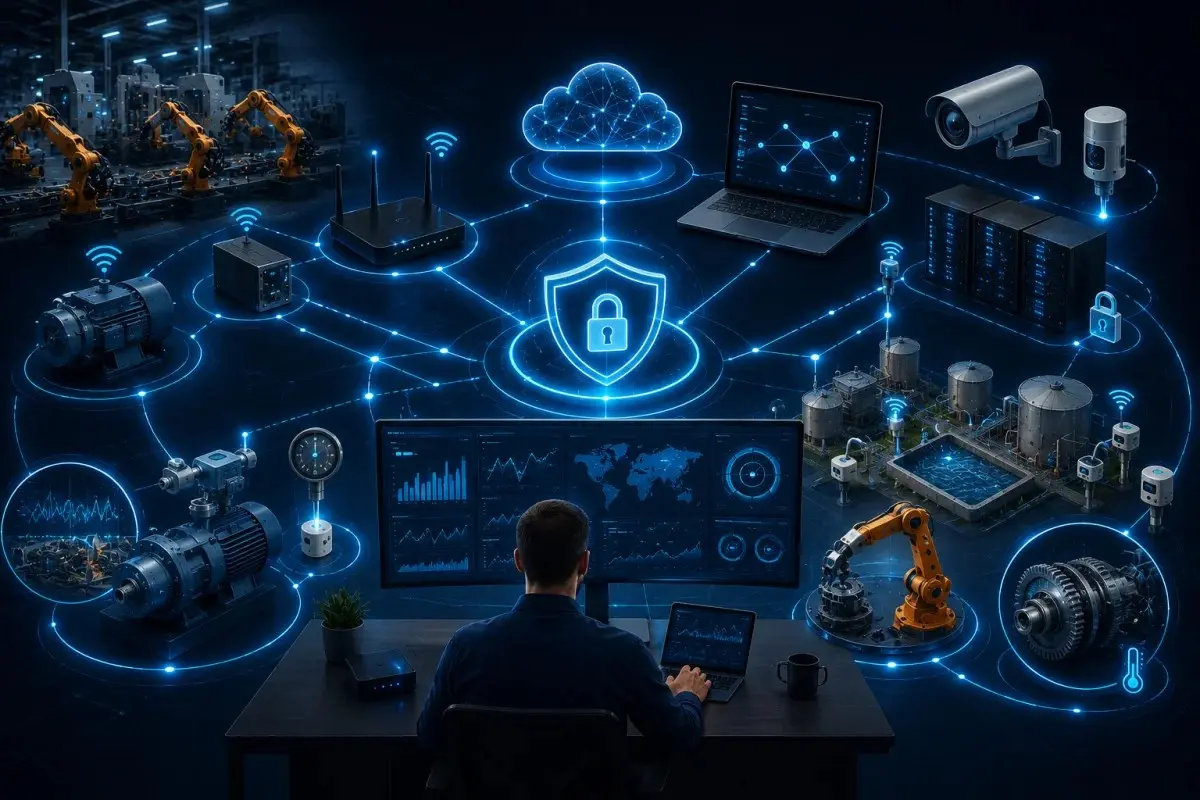
IoT monitoring typically runs on a simple three-layer pipeline:
- Sensors and devices collect raw data: temperature, vibration, location, pressure, moisture, energy usage, or whatever metric matters for that asset.
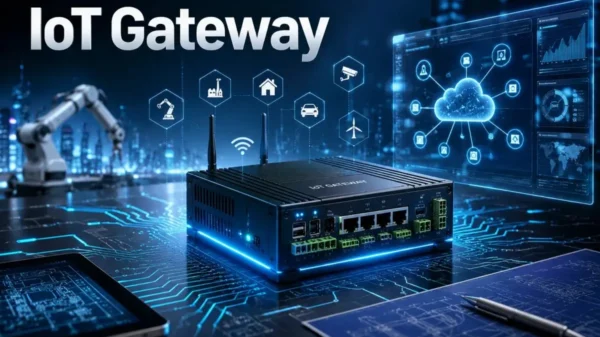
- Gateways aggregate that data locally and transmit it to the cloud via Wi-Fi, cellular IoT, LoRaWAN, or other protocols, often performing some initial filtering or compression along the way.
- Cloud platforms ingest, store, and analyze the data, then surface it through dashboards, alerts, and reports so teams can act on it.
Most modern platforms layer on automation: threshold-based alerts, anomaly detection, and sometimes predictive analytics that flag issues before they cause downtime, rather than just reporting problems after they happen.
IoT Monitoring vs. Traditional Monitoring
Traditional monitoring relies on scheduled inspections, manual readings, or standalone systems that don’t communicate with one another. Someone walks the floor with a clipboard, or a technician checks a gauge once a shift. It works, but it’s slow, labor-intensive, and reactive by nature: problems are often caught only after they’ve already caused damage or downtime.
IoT monitoring replaces that with continuous, automated data collection and centralized visibility. The differences that matter most:
- Frequency: Continuous streaming data vs. periodic manual checks
- Speed of response: Real-time alerts vs. delayed discovery
- Scale: One dashboard can track thousands of devices vs. one person checking one asset at a time
- Data value: Historical trends enable predictive maintenance vs. isolated point-in-time readings
That shift from reactive, manual oversight to proactive, automated visibility is the fundamental reason IoT monitoring has become standard practice rather than a nice-to-have.
Key Benefits of IoT Monitoring
The value of IoT monitoring comes down to one thing: knowing what’s happening with your devices before it becomes a costly problem. Businesses that adopt IoT monitoring typically see improvements across three areas: visibility, cost, and scale.
Real-Time Visibility and Faster Response
When data flows continuously rather than arriving only through periodic manual checks, teams can spot irregularities the moment they occur. A temperature spike in a cold storage unit, a sudden vibration pattern in industrial equipment, or a device that suddenly goes offline can all trigger an alert within seconds rather than being discovered hours or days later during a routine check. This shift from delayed discovery to immediate awareness is often the single biggest operational improvement companies report after implementing IoT monitoring.
Cost Savings from Predictive Maintenance
Traditional maintenance schedules are built around fixed intervals or reactive repairs, meaning equipment often gets serviced too early (wasting money) or too late (after it has already failed). IoT monitoring changes this by tracking the actual condition of equipment over time. Platforms can identify subtle patterns, like a motor running slightly hotter than usual or a machine’s vibration signature shifting, that indicate wear before a full breakdown occurs. Acting on those signals rather than waiting for failure reduces unplanned downtime and extends the service life of expensive assets.
Scalability for Growing Device Fleets
Manual monitoring approaches break down as the number of devices grows. Checking ten machines by hand is manageable. Checking ten thousand sensors spread across multiple facilities is not. IoT monitoring platforms are built to scale horizontally, meaning the same dashboard and alerting infrastructure that handles a small pilot deployment can typically handle a fleet that has grown a hundredfold, often with minimal added overhead. This makes IoT monitoring particularly valuable for organizations planning to expand their connected device footprint over time rather than staying at a fixed size.
Together, these benefits explain why IoT monitoring has moved from a specialized industrial tool to something adopted broadly across healthcare, agriculture, logistics, energy, and smart infrastructure.
Types of IoT Monitoring
IoT monitoring isn’t a single, one-size-fits-all system. The core technology stays the same across industries, but how it gets applied changes significantly depending on what needs to be tracked and why. Understanding the main types helps clarify which features and platform capabilities actually matter for a given use case.
Remote Device Monitoring
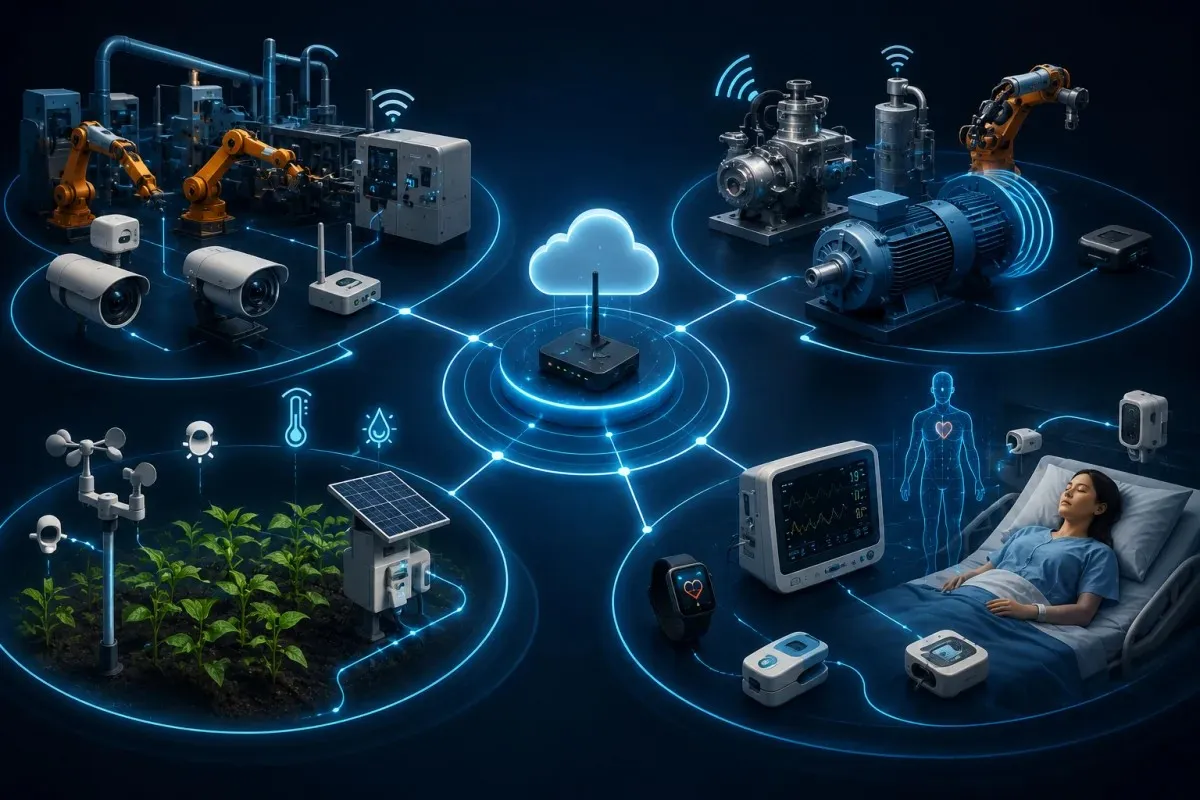
This is the foundational form of IoT monitoring: checking that devices are online, functioning correctly, and reporting data as expected, all without anyone needing to be physically present. Remote device monitoring is especially valuable for equipment installed in hard-to-reach locations, such as sensors on offshore platforms, agricultural equipment spread across large farms, or devices installed behind customer firewalls and routers. Teams can check device status, diagnose connectivity issues, and often push updates or reconfigure settings entirely from a central dashboard.
Asset and Condition Monitoring
Asset monitoring tracks the location, usage, and operational status of physical equipment such as vehicles, machinery, or shipping containers. Condition monitoring goes a step further by focusing specifically on the health of the equipment, monitoring for signs of wear, stress, or impending failure using metrics such as vibration, temperature, and pressure. Together, these two approaches let organizations answer both where an asset is and how well it’s performing, which is central to reducing unplanned downtime in industries like manufacturing and logistics.
Environmental Monitoring
Environmental IoT monitoring tracks conditions like air quality, humidity, water levels, soil moisture, and temperature across a physical space. This type of monitoring shows up in agriculture, where soil sensors guide irrigation decisions, in water treatment facilities, where tank and flow monitoring prevents overflow or contamination, and in smart cities, where networks of environmental sensors inform everything from traffic management to pollution tracking.
Industrial and Equipment Monitoring
Industrial IoT monitoring focuses on production equipment, HVAC systems, and machinery on factory floors or in data centers. The goal here is typically twofold: catching mechanical issues before they cause costly downtime, and optimizing performance and energy use across large-scale operations. This category often overlaps heavily with condition monitoring and predictive maintenance, since industrial equipment failures tend to be expensive and disruptive when they aren’t caught early.
Patient and Health Monitoring
In healthcare, IoT monitoring takes the form of wearable devices and connected medical equipment that track vital signs such as heart rate, blood oxygen levels, and glucose levels in real time. Remote patient monitoring allows clinicians to keep tabs on patients outside a hospital setting, catching concerning changes early and reducing the need for frequent in-person visits. This application of IoT monitoring has grown substantially as healthcare systems seek to manage chronic conditions and post-surgical recovery more efficiently.
Across all these applications, the sensors, alert thresholds, and outcomes teams care about change, but the goal stays constant: turning raw device data into timely, actionable information.
Core Features of an IoT Monitoring Platform
Not all IoT monitoring platforms are built the same way, but the effective ones tend to share a common set of capabilities. Understanding these features makes it easier to evaluate which platform actually fits a given use case rather than choosing based on marketing alone.
Dashboards and Alerts
A good dashboard turns raw device data into something a human can actually read and act on at a glance. Rather than sifting through logs, teams can see device status, performance trends, and flagged issues in one place. Alerts complement this by notifying the right people the moment a metric crosses a defined threshold, whether that’s a temperature exceeding a safe range or a device failing to check in on schedule. The best platforms allow these alerts to be customized by severity and routed to the appropriate team, so a minor anomaly doesn’t get the same urgency as a critical failure.
Device Management and Control
Monitoring is only half the equation. Many platforms also allow teams to manage devices remotely, including rebooting equipment, adjusting configuration settings, and grouping devices by location, function, or type. This becomes increasingly important as a device fleet grows, since manually managing thousands of individual devices is not realistic without centralized controls.
Firmware and Status Monitoring
Keeping devices updated and secure requires visibility into firmware versions across the entire fleet. A platform with robust firmware monitoring can flag devices running outdated or vulnerable software and often supports remote update deployment. Status monitoring works alongside this, continuously confirming that a device is online, connected, and reporting data as expected, so a silent failure doesn’t go unnoticed for days.
Data Storage and Analytics
Every device generates a stream of historical data, and how a platform stores and analyzes that data determines how useful it becomes over time. Strong platforms retain historical records long enough to identify trends, support predictive maintenance models, and generate reports for compliance or performance reviews. Analytics tools built on top of that stored data allow teams to move from simply reacting to problems to anticipating them.
Together, these four capabilities form the backbone of any serious IoT monitoring platform. A system missing one of them, particularly analytics or alerting, tends to leave teams with data but no real way to act on it.
How to Monitor IoT Devices: Step-by-Step
Setting up IoT monitoring can feel complex given the number of devices, protocols, and platforms, but the process generally follows a consistent sequence regardless of industry or scale.
Connecting Devices to a Monitoring Platform
The first step is establishing a reliable connection between each device and the monitoring platform. This usually involves configuring the device to communicate over a chosen protocol, such as Wi-Fi, cellular, or a low-power option like LoRaWAN, and registering it on the platform so its data has somewhere to go. Most platforms provide software development kits or agent software that gets installed on the device or its gateway to handle this communication. Getting this connection right the first time matters, since a poorly configured device can appear to be malfunctioning when the real issue is simply a communication failure.
Monitoring Devices Behind a Router or Firewall
Many IoT devices sit behind routers, firewalls, or private networks, particularly in home, commercial, or industrial settings where security policies restrict direct external access. Monitoring these devices typically requires an outbound connection initiated by the device itself, rather than an inbound connection from the platform, since firewalls are usually configured to block unsolicited incoming traffic. Some setups also rely on a local gateway that collects data from multiple devices on the internal network and forwards it to the cloud platform as a single outbound stream, which simplifies firewall configuration considerably.
Setting Up Alerts for Device Performance
Once devices are connected and reporting data, the next step is defining what should trigger a notification. This starts with identifying the metrics that matter most for that specific device or use case, whether that’s temperature, battery level, connectivity status, or a custom performance indicator. From there, teams set thresholds that separate normal variation from issues worth investigating and decide how alerts should be delivered, such as via email, SMS, or by integrating with an existing incident management tool. Well-configured alerts strike a balance: tight enough to catch real problems early, but not so sensitive that teams become desensitized to constant false alarms.
Following these three steps consistently gives teams a monitoring setup that scales cleanly from a handful of pilot devices to a full fleet deployment.
Industry Use Cases
IoT monitoring has moved well beyond a handful of early adopter industries. Today, it plays a role in nearly every sector that relies on distributed equipment, physical assets, or environmental conditions requiring consistent oversight.
Industrial IoT and Predictive Maintenance
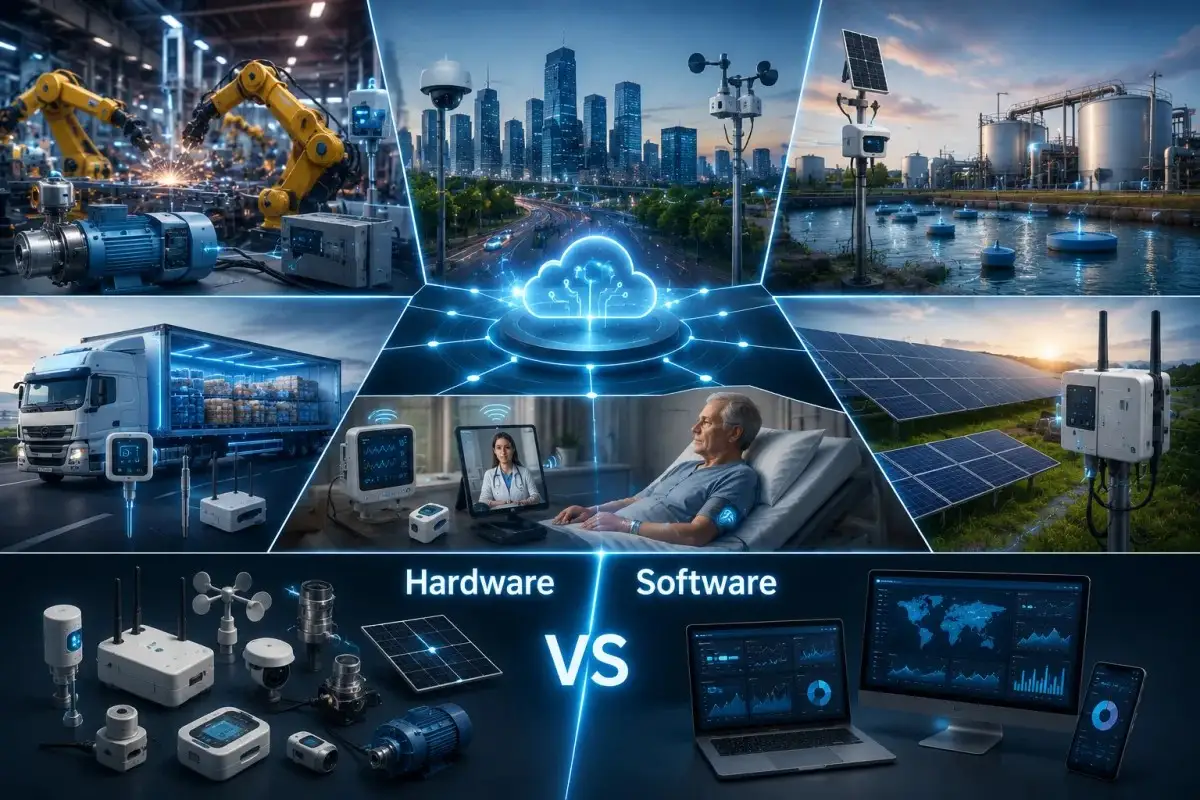
Manufacturing plants use IoT monitoring to track the health of machinery in real time, monitoring vibration patterns, temperature shifts, and unusual noise signatures that often precede equipment failure. Predictive maintenance built on this data allows facilities to schedule repairs based on actual equipment condition rather than fixed calendar intervals, reducing both unplanned downtime and unnecessary maintenance costs. This has become one of the most mature and widely adopted IoT monitoring applications in heavy industry.
Smart City Infrastructure Monitoring
Cities increasingly rely on networks of connected sensors to manage traffic flow, monitor air quality, track parking availability, and oversee public utilities like street lighting and water systems. IoT monitoring gives municipal teams a real-time view of infrastructure health across a large geographic area, allowing them to respond to issues such as a malfunctioning traffic signal or a water main leak far faster than traditional inspection schedules would allow.
Water, Tank, and Environmental Monitoring
Facilities that manage water treatment, storage tanks, or other liquid assets use IoT monitoring to continuously track levels, flow rates, and quality metrics. This prevents costly overflow events, catches contamination early, and supports regulatory compliance by maintaining a consistent record of conditions over time. Environmental monitoring more broadly extends this same approach to tracking soil moisture, humidity, and air quality in settings ranging from agricultural fields to greenhouse operations.
Cold Chain and Temperature Monitoring
Industries that depend on maintaining precise temperature ranges, such as food distribution and pharmaceutical logistics, use IoT monitoring to track conditions throughout the entire supply chain. Sensors placed in transport vehicles, storage facilities, and packaging continuously report temperature and humidity data, triggering alerts the moment conditions drift outside a safe range. This visibility is often critical not just operationally but for regulatory compliance, since many cold chain products require documented proof that safe conditions were maintained.
Solar Power Monitoring
Solar installations use IoT monitoring to track energy output, panel performance, and system health across individual panels or entire arrays. This allows operators to quickly identify underperforming panels, detect equipment faults, and optimize overall energy generation, which becomes especially valuable as solar deployments scale from single installations to large distributed networks.
Healthcare and Remote Patient Monitoring
As covered earlier, healthcare providers use IoT monitoring via wearables and connected medical devices to track patients’ vital signs outside traditional clinical settings. This extends care beyond hospital walls, supports earlier intervention for chronic conditions, and reduces the burden of frequent in-person visits for both patients and providers.
Across these industries, the specific metrics and devices differ, but the underlying value remains the same: continuous, automated visibility that replaces slower, manual oversight.
Choosing the Right IoT Monitoring Solution
With so many platforms on the market, selecting the right one comes down to matching platform capabilities to the specific needs of a device fleet, budget, and industry.
What to Look for in an IoT Monitoring Platform
The right platform depends heavily on the scale and type of deployment involved. A small pilot project with a handful of sensors has very different requirements than an enterprise fleet spanning thousands of devices across multiple facilities. Key considerations include how well the platform supports the specific protocols and IoT connectivity types used by the devices, how flexible its alerting and dashboard configuration is, whether it supports the level of historical data retention needed for trend analysis, and how well it integrates with existing systems such as maintenance software or business intelligence tools. Security also deserves close attention, particularly how the platform handles device authentication, data encryption, and firmware updates across the fleet.
How IoT Monitoring Platforms Compare
Platforms tend to differentiate themselves along a few consistent lines. Some prioritize breadth, supporting a wide range of device types and protocols to serve general-purpose monitoring needs. In contrast, others specialize deeply in a single vertical, such as industrial equipment or healthcare devices, offering more tailored features for that specific use case. Ease of setup varies significantly as well, with some platforms designed for technical teams comfortable configuring integrations from scratch, while others are built around simpler, more guided onboarding for teams without dedicated engineering resources. Pricing models differ too, often scaling by number of connected devices, data volume, or feature tier, which makes it worth mapping expected fleet growth against a platform’s pricing structure before committing.
Affordable vs Enterprise Scale Solutions
Organizations just getting started with IoT monitoring often benefit from lighter, more affordable platforms that cover the essentials, such as basic dashboards, alerting, and device status tracking, without the cost of enterprise features they don’t yet need. As deployments grow, priorities typically shift toward platforms that offer stronger scalability, more advanced analytics, tighter security controls, and dedicated support. Choosing a platform that can scale with a deployment, rather than requiring a full migration later, tends to save significant time and costs in the long run.
Ultimately, the best solution is the one that fits the specific mix of devices, industry requirements, and a team’s growth plans, rather than the platform with the longest feature list.
Best Practices for IoT Monitoring
Setting up an IoT monitoring system is only the first step. Getting real, lasting value out of it depends on how well that system is maintained, secured, and refined over time.
Gateway and Network Monitoring Best Practices
Since most IoT devices route their data through gateways before it reaches the cloud, keeping those gateways healthy is just as important as monitoring the devices themselves. A failing or overloaded gateway can silently cut off data from dozens or even hundreds of devices at once, creating a blind spot that appears to be a device problem but is actually a network problem. Regularly checking gateway uptime, bandwidth usage, and connection stability helps teams catch these issues before they cascade into a wider outage. It also helps to build redundancy into critical gateways where possible, so a single point of failure doesn’t take down monitoring for an entire facility or region.
Data Security in Remote Monitoring
Every connected device is a potential entry point for unauthorized access, which makes security a core part of any monitoring strategy rather than an afterthought. Strong practices include encrypting data both in transit and at rest, enforcing unique authentication credentials for each device rather than shared defaults, and keeping firmware up to date to patch known vulnerabilities. Access to the monitoring platform itself should also be tightly controlled, with permissions limited to what each team member actually needs. As device fleets grow, the potential attack surface expands, so security practices need to scale with deployment rather than be treated as a one-time setup task.
Reducing Downtime with Condition Monitoring
The real payoff of IoT monitoring comes from acting on the data it produces, not just collecting it. Teams that consistently review condition monitoring trends, rather than only responding to active alerts, tend to catch slow-developing issues that a simple threshold alert might miss, such as gradual performance degradation over several months. Building a routine around reviewing this data, adjusting alert thresholds as normal operating patterns become clearer, and feeding findings back into maintenance schedules is what separates organizations that get real value from IoT monitoring from those that simply have a dashboard nobody looks at.
Consistently following these practices turns an IoT monitoring setup from a passive data-collection tool into an active part of how an organization prevents downtime and protects its equipment.
Frequently Asked Questions
What is IoT remote monitoring?
IoT remote monitoring is the ability to track the status and performance of connected devices from anywhere, without being physically present at the device’s location. It relies on sensors that collect data and transmit it over a network to a centralized platform, where the data can be viewed, analyzed, and acted on in real time. This is especially valuable for equipment installed in remote or hard-to-access locations, since it eliminates the need for regular site visits to verify proper operation.
How do I monitor an IoT device remotely?
Monitoring an IoT device remotely begins by connecting it to a monitoring platform, typically via Wi-Fi, cellular, or a low-power protocol, depending on the device’s location and power constraints. Once connected, the device begins reporting data, including status, performance metrics, and health indicators, to the platform’s dashboard. From there, teams can set up alerts to flag issues automatically, check device status at any time, and, in many cases, manage or reconfigure the device without needing physical access.
What industries use IoT monitoring most?
IoT monitoring has broad adoption across manufacturing, healthcare, agriculture, logistics, energy, and municipal infrastructure. Manufacturing and industrial settings use it heavily for predictive maintenance and equipment health tracking. Healthcare relies on it for remote patient monitoring and connected medical devices. The agriculture and environmental sectors use it to monitor soil, water, and air conditions. At the same time, the logistics and cold chain industries rely on it to maintain product quality during transport and storage. Smart cities use it to manage traffic, utilities, and public infrastructure at scale.
Conclusion
IoT monitoring has grown from a niche industrial tool into a foundational part of how organizations manage connected devices across nearly every sector. Whether the goal is catching equipment failures before they happen, tracking environmental conditions, or keeping tabs on patients outside a hospital, the underlying approach stays consistent: continuous data collection, centralized visibility, and timely alerts that let teams act before small issues become expensive ones.
Choosing the right platform and following solid practices for security, gateway health, and ongoing data review determine whether an IoT monitoring setup delivers real operational value or just becomes another dashboard nobody checks. As device fleets continue to grow across industries, the organizations getting the most out of IoT monitoring are the ones treating it as an active, evolving system rather than a one-time setup.