A major T-Mobile outage disrupted cell service for thousands of customers across the United States on Monday, July 27, 2026. Downdetector logged a sharp spike in complaints starting around 1 p.m. Pacific Time, with reports climbing past 60,000 within a few hours. Affected users could not make calls, send texts, or use mobile data, and the disruption triggered widespread confusion nationwide before service gradually returned that evening. Here is what is known so far about the T-Mobile outage, why phones showed SOS mode, and what to do if service has not yet returned for you.
What Triggered the Disruption
Reports tied to the T-Mobile outage began building quickly during Monday afternoon, according to outage-tracking data. Most affected customers described losing mobile signal entirely, while others said their 5G home internet also stopped working. The disruption was not limited to one region, with complaints coming from cities including New York, Chicago, Detroit, and Minneapolis.
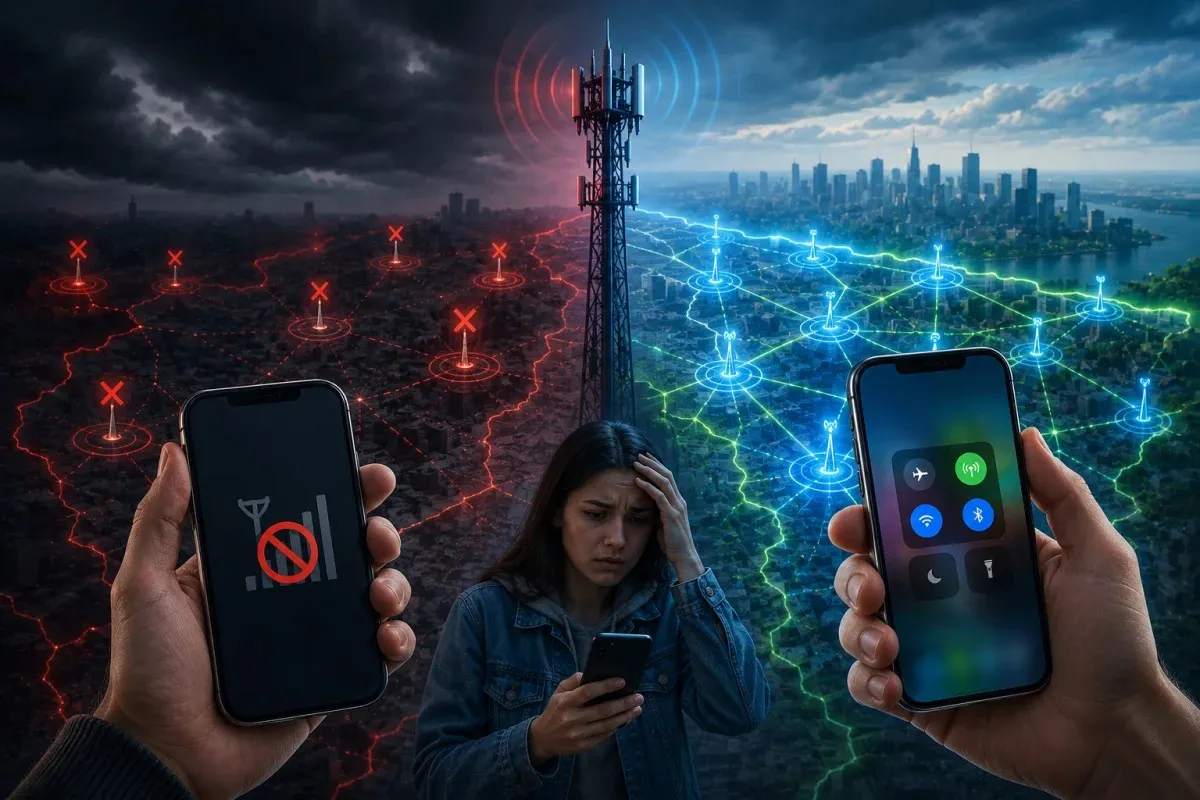
By the peak of the incident, tens of thousands of new reports were arriving every hour on Downdetector. Some households reported uneven effects, with one phone losing service while a second device on the same network kept working nearby. That pattern suggests the network problem may have touched specific towers or routing segments rather than the entire system at once.
Network Segments, Not A Full Blackout
Engineers who track carrier reliability note that outages of this size rarely mean every tower failed simultaneously. Instead, a single routing or authentication failure can ripple outward, cutting service for pockets of users while leaving nearby customers untouched. That uneven pattern matched what many T-Mobile customers described on social media Monday afternoon.
SOS Mode Confusion
Many iPhone users noticed “SOS” appearing in their status bar during the outage, which caused alarm for people unfamiliar with the indicator. SOS mode activates automatically when a phone cannot reach its regular carrier network, letting it fall back to another available network for emergency calls only. It does not mean a device is broken, and normal service typically returns once the underlying network issue clears.
Regular calls, texts, and data remain unavailable while a phone displays SOS mode, even though emergency dialing still works. This fallback is a built-in safety feature on most modern smartphones, not something unique to T-Mobile. Seeing SOS during a T-Mobile outage is a signal to wait for restoration rather than proof of permanent device damage.
Read more: Cyber Crime Crackdown Intensifies
How T-Mobile Responded
T-Mobile acknowledged the T-Mobile outage several hours after reports first spiked, well after frustration had already built up online. In a statement, a company spokesperson said engineering teams were actively working through reports of technical issues affecting some customers. The company described restoring service as its highest priority and said available resources were focused on a fix.
No Root Cause Confirmed Yet
The response came later than many affected customers wanted, and complaints about the delayed communication continued even as service began returning for some users. T-Mobile has not released a detailed explanation for what caused the T-Mobile outage. Until an official technical breakdown is published, the exact origin of the network disruption remains unconfirmed, and any specific cause circulating online should be treated as unverified.
Who Was Affected
The T-Mobile outage did not stop at T-Mobile’s own subscriber base. Because several other carriers and prepaid brands run on T-Mobile’s network infrastructure, customers using those services also reported problems during the same window. Verizon users separately reported some disruptions Monday, though at noticeably lower volume than T-Mobile’s numbers.
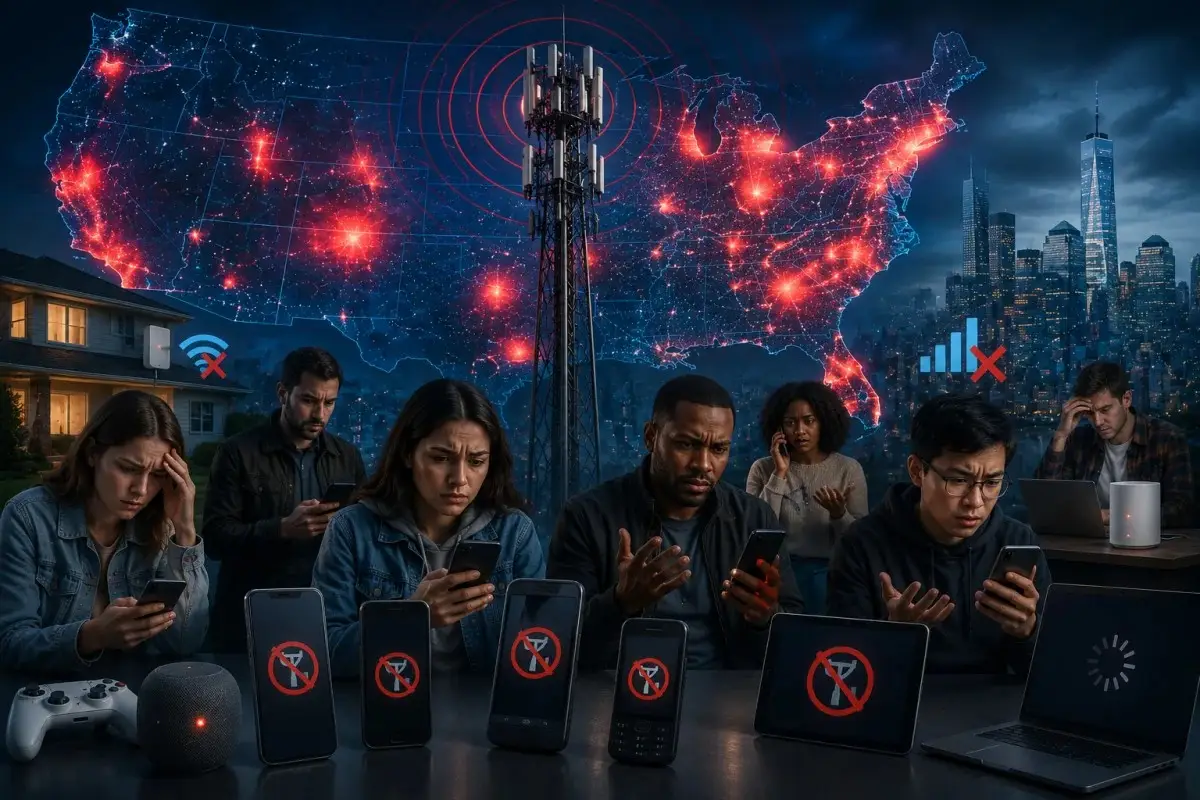
Key details reported during the disruption include:
- Downdetector reports for T-Mobile peaked at more than 64,000 around 4 p.m. Eastern time.
- Affected users mainly reported lost voice calls, failed texts, and dropped mobile data.
- Some 5G home internet customers also lost connectivity during the outage window.
- Complaint volume fell sharply by evening, dropping to under 7,000 reports by 8:40 p.m. Eastern.
- No single state or region was identified as the sole source of the problem.
Read more: PS Plus Games Catalog
What To Do If You Are Affected
If your phone shows SOS mode, restarting the device or toggling airplane mode on and off can sometimes speed up reconnection once the underlying issue clears. Checking Downdetector or T-Mobile’s official status channels offers a faster read on whether a T-Mobile outage is ongoing or already clearing in your area. Wi-Fi calling, where available, can serve as a temporary workaround for calls and texts while cellular service is unstable.
Where Things Stand Now
Next Steps For Customers
Service for most affected customers returned gradually through Monday evening, matching the drop in Downdetector reports. T-Mobile has not announced compensation or account credits tied to the outage, and no timeline has been given for a full technical explanation. Customers still experiencing problems are encouraged to contact T-Mobile support directly, since isolated issues can persist even after a broader network disruption has largely resolved. Anyone following the T-Mobile outage should watch the company’s official channels for updates before assuming a device issue on their own end.