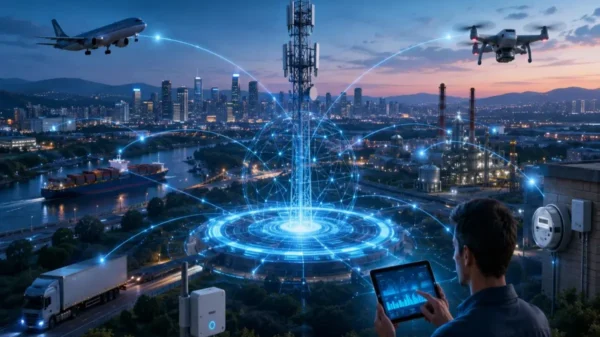
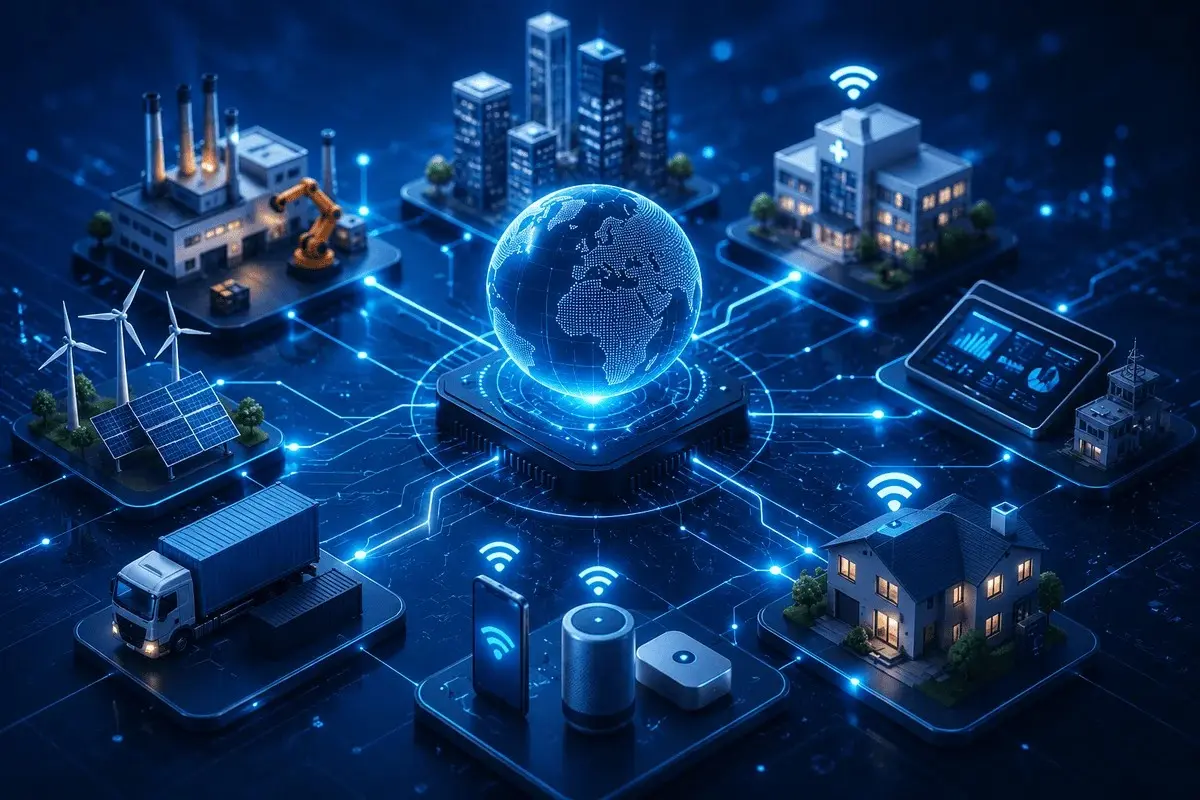
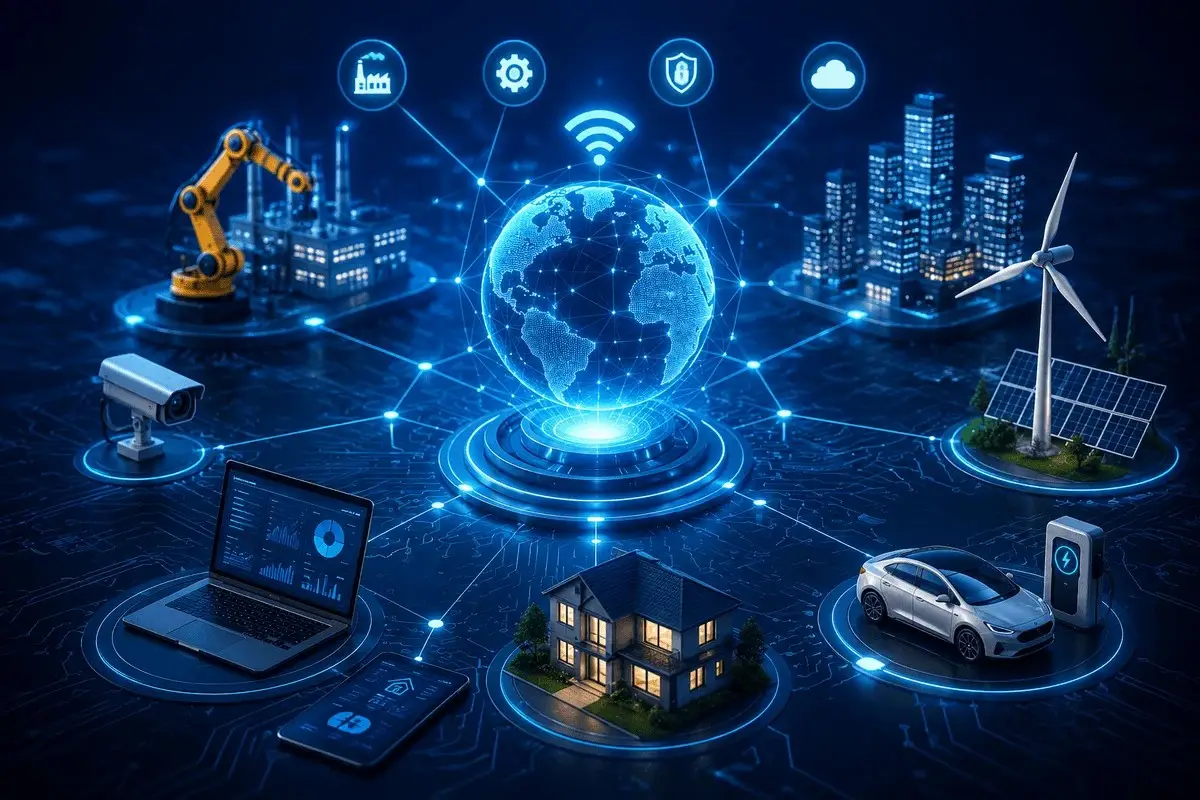
The world is becoming more connected than ever before, and IoT developments are playing a central role in this transformation. The Internet of Things (IoT) refers to a network of physical devices, sensors, software, and communication technologies that collect, exchange, and analyze data in real time. From smart homes and wearable devices to industrial automation and connected healthcare systems, IoT developments continue to reshape how people live and how businesses operate.
As organizations seek greater efficiency, automation, and data-driven decision-making, investments in IoT applications, software development, and intelligent connected systems continue to rise. Businesses across manufacturing, healthcare, transportation, agriculture, retail, and energy sectors are leveraging IoT technologies to improve operations, reduce costs, and create innovative customer experiences. These ongoing IoT developments are helping organizations unlock new levels of productivity and innovation.
The rapid evolution of cloud computing, artificial intelligence, edge computing, and 5G networks has accelerated IoT adoption worldwide. As a result, organizations increasingly require specialized IoT development services and expert guidance to build secure, scalable, and future-ready solutions. Modern IoT developments are also driving the creation of smarter devices, advanced analytics capabilities, and highly connected digital ecosystems. This article explores the latest IoT trends, development processes, technologies, challenges, best practices, and future opportunities shaping the connected world through continuous IoT developments.
Understanding Modern IoT Developments
Modern IoT ecosystems are far more advanced than the connected devices introduced a decade ago. Today’s systems integrate sensors, cloud platforms, machine learning algorithms, and real-time analytics to create intelligent environments capable of autonomous decision-making. At the heart of IoT innovation lies the ability to collect data from physical devices and transform that information into actionable insights. Whether monitoring machinery in a factory or tracking patient health metrics, IoT enables organizations to respond quickly and accurately to changing conditions.
The growth of IoT solutions development has expanded beyond simple connectivity. Businesses now demand end-to-end ecosystems that combine hardware, software, cloud infrastructure, security frameworks, and advanced analytics capabilities. Furthermore, improvements in wireless technologies, including 5G, Wi-Fi 6, Bluetooth Low Energy, and LPWAN networks, have significantly enhanced device performance, reliability, and scalability.
The Importance of IoT Application Development
Building Intelligent User Experiences
One of the most critical components of any IoT ecosystem is IoT application development. Applications serve as the interface between users and connected devices, allowing individuals and organizations to monitor, control, and analyze device performance. Modern applications provide real-time dashboards, automated alerts, predictive insights, and remote management capabilities.
These features improve operational visibility and help users make informed decisions quickly. Developing IoT applications requires a deep understanding of user behavior, connectivity protocols, cloud integration, and cybersecurity requirements. Developers must ensure that applications remain responsive, scalable, and secure even as device networks grow.
Application Development in IoT Environments
The field of application development in IoT environments differs significantly from traditional software projects. Developers must account for device limitations, network reliability, data synchronization, and hardware integration. As a result, successful IoT application development involves collaboration between software engineers, hardware specialists, cloud architects, and cybersecurity professionals.
This multidisciplinary approach ensures seamless communication between devices and applications. Organizations looking to develop IoT applications often prioritize usability, interoperability, and long-term scalability to maximize return on investment.
The Role of IoT Software Development
Creating the Intelligence Behind Connected Devices
While applications provide user interaction, IoT software development powers the functionality that makes connected systems intelligent. Software components manage device communication, process sensor data, execute automation workflows, and integrate with cloud services.
Modern software development for IoT focuses on creating reliable, secure architectures capable of handling large volumes of data from thousands, or even millions, of devices. Developers must carefully design communication frameworks, APIs, analytics engines, and security controls to ensure efficient system performance.
IoT Software Development Services in Demand
Businesses increasingly rely on professional IoT software development services to accelerate deployment and reduce development risks. These services typically include custom software creation, cloud integration, device management, analytics implementation, and security enhancements. As IoT ecosystems become more complex, specialized expertise is essential to ensure performance, compliance, and scalability across diverse operating environments.
IoT Device Development and Hardware Innovation
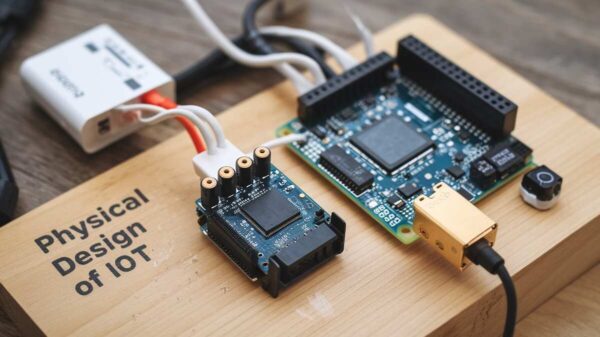
The success of any IoT solution begins with effective IoT device development. As IoT development continues to accelerate across industries, devices serve as the foundation of IoT ecosystems, collecting environmental data and executing commands from applications or cloud platforms. The development of IoT devices involves selecting appropriate sensors, microcontrollers, connectivity modules, and power management systems. Engineers must balance performance, durability, cost, and energy efficiency when designing hardware solutions.
Recent advancements in semiconductor technology have enabled smaller, more powerful devices capable of processing data locally. This trend supports edge computing strategies that reduce latency and improve responsiveness, further advancing modern IoT developments. Additionally, organizations investing in IoT hardware development are focusing on sustainability by designing energy-efficient devices with longer operational lifespans and lower environmental impact. These innovations demonstrate how IoT developments are creating smarter, more efficient, and environmentally responsible connected systems.
IoT Firmware Development: The Bridge Between Hardware and Software
A critical but often overlooked aspect of IoT ecosystems is IoT firmware development. Firmware acts as the operational layer that controls hardware behavior and facilitates communication with higher-level software systems. Effective firmware design ensures devices function reliably under various conditions while maintaining security and performance standards. Firmware updates also allow manufacturers to introduce new features, fix vulnerabilities, and improve functionality without replacing hardware.
As cybersecurity threats continue to evolve, secure firmware development practices have become essential for protecting devices from unauthorized access and malicious attacks. Organizations increasingly recognize firmware as a strategic component of long-term IoT success, making firmware expertise a valuable part of modern IoT development solutions.
The IoT Development Process Explained
Planning and Strategy
A successful IoT development process begins with identifying business objectives and use cases. Organizations must clearly define the problems they aim to solve and the outcomes they expect to achieve. Key considerations include device requirements, connectivity options, data management strategies, security needs, and scalability goals. Early planning reduces development risks and ensures alignment with business priorities.
Design, Development, and Testing
The next stage involves IoT design and development, where teams create system architectures, user interfaces, hardware prototypes, and software frameworks.
Typical development stages include:
- Device architecture design
- Sensor integration
- Firmware programming
- Cloud platform configuration
- Mobile and web application development
- Security implementation
- System testing and validation
Comprehensive testing ensures reliable performance across devices, networks, and user environments before deployment.
Deployment and Optimization
Once deployed, IoT systems require continuous monitoring and optimization. Performance metrics, device health, security status, and user feedback help organizations identify opportunities for improvement. Ongoing maintenance ensures long-term reliability while supporting future expansion and feature enhancements.
IoT Platform Development and Cloud Integration
Modern connected ecosystems depend heavily on IoT platform development. Platforms serve as centralized environments that manage devices, collect data, process information, and enable application integration. Cloud platforms allow organizations to scale infrastructure dynamically while reducing operational complexity. They also provide access to advanced analytics, artificial intelligence tools, and machine learning capabilities.
Leading IoT platforms support millions of connected devices while maintaining high levels of reliability and security. These platforms play a crucial role in enabling real-time decision-making and business intelligence. Organizations pursuing large-scale IoT solution development initiatives often prioritize flexible platforms that support diverse hardware and communication protocols.
Benefits of IoT Development Services for Businesses
Businesses increasingly turn to professional IoT development services to accelerate innovation and improve operational efficiency. These services help organizations navigate the technical complexities associated with connected systems.
Some major benefits include:
- Faster product development cycles
- Reduced operational costs
- Improved customer experiences
- Enhanced data visibility
- Greater automation capabilities
- Better asset utilization
- Increased scalability and flexibility
Professional providers offering IoT application and software development services can also help organizations address regulatory compliance, cybersecurity requirements, and system integration challenges.
As competition intensifies across industries, leveraging expert development services often provides a significant strategic advantage.
Common Challenges in IoT Solutions Development
Despite its tremendous potential, IoT development continues to introduce several challenges that organizations must address carefully. Security remains one of the most significant concerns. Connected devices create multiple entry points that attackers can exploit if proper safeguards are not in place. As IoT development expands across industries, strong encryption, robust authentication mechanisms, and continuous monitoring become essential components of secure IoT ecosystems.
Data management also presents challenges. Large-scale deployments generate enormous volumes of information that must be stored, processed, and analyzed efficiently. Organizations need robust infrastructure and analytics capabilities to extract meaningful insights from collected data. Interoperability is another common obstacle. Devices from different manufacturers often use varying protocols and standards, making integration difficult. Successful IoT development solutions prioritize compatibility and standardized communication frameworks.
Finally, scalability requires careful planning. Systems that perform well with hundreds of devices may struggle when expanded to thousands or millions of connected endpoints. To ensure long-term success, organizations must design flexible architectures that can support future IoT developments without compromising performance, security, or reliability.
Future Trends Driving IoT Developments
Artificial Intelligence and Edge Computing
The convergence of artificial intelligence and IoT is creating smarter, more autonomous systems. AI algorithms enable predictive maintenance, anomaly detection, intelligent automation, and advanced analytics capabilities. Edge computing further enhances performance by processing data closer to devices rather than relying entirely on cloud infrastructure. This reduces latency and improves responsiveness for time-sensitive applications.
Digital Twins and Advanced Analytics
Digital twin technology is becoming increasingly popular in manufacturing, healthcare, logistics, and smart city initiatives. These virtual representations of physical assets allow organizations to simulate performance, predict failures, and optimize operations. Advanced analytics platforms are also transforming raw IoT data into actionable business intelligence, enabling more informed strategic decision-making.
5G Connectivity Expansion
The continued rollout of 5G networks will significantly influence future IoT developments. Faster speeds, lower latency, and greater device density support more sophisticated applications across industries. As connectivity improves, organizations will unlock new possibilities for automation, remote monitoring, and real-time collaboration.
Why Businesses Need Skilled IoT Developers
The growing complexity of connected ecosystems has increased demand for experienced IoT developers and specialized engineering teams. As IoT developments continue to expand across industries, organizations require professionals who can design, build, and manage increasingly sophisticated connected systems. An effective IoT developer requires expertise across multiple disciplines, including embedded systems, cloud computing, networking, cybersecurity, software engineering, and data analytics. This combination of skills enables developers to create integrated solutions that perform reliably under real-world conditions and support evolving IoT developments.
Organizations increasingly seek talented IoT developers capable of managing the full project lifecycle, from concept and prototyping to deployment and optimization. As IoT adoption accelerates globally, the demand for skilled professionals will continue to rise, creating significant opportunities within the technology sector. The continued growth of IoT developments is expected to drive even greater demand for specialized expertise in the years ahead.
FAQ About IoT Developments
What are IoT developments?
IoT developments refer to advancements in connected devices, software, applications, platforms, and technologies that enable machines and systems to communicate, collect data, and automate processes.
What is IoT application development?
IoT application development is a key part of modern IoT, involving the creation of mobile, web, or desktop applications that enable users to interact with connected devices, monitor data, and control system operations.
How do businesses develop IoT applications?
As part of ongoing IoT developments, organizations typically define requirements, design system architecture, build hardware and software components, integrate cloud services, conduct testing, and deploy solutions to develop IoT applications.
What is the role of IoT firmware development?
In IoT development, firmware is the low-level software that controls device hardware, manages communication, and ensures reliable operation.
Why are IoT development services important?
IoT development relies heavily on professional IoT services, which provide technical expertise, accelerate deployment, enhance security, and help organizations build scalable, connected solutions.
What industries benefit most from IoT?
Many industries benefit from IoT developments, including manufacturing, healthcare, agriculture, transportation, retail, logistics, energy, and smart city initiatives.
What challenges do IoT projects face?
Despite the advantages of IoT developments, common challenges include cybersecurity risks, interoperability issues, scalability concerns, complex data management, and regulatory compliance requirements.
What is the future of IoT technology?
The future of IoT development will be driven by artificial intelligence, edge computing, 5G connectivity, digital twins, predictive analytics, and autonomous systems, creating smarter, more connected environments.
Conclusion
The rapid pace of IoT developments continues to transform industries, businesses, and everyday experiences. As connected technologies become more intelligent and accessible, organizations are discovering new opportunities to improve efficiency, enhance customer experiences, and drive innovation. From IoT application development and IoT software development to IoT device development, firmware engineering, and cloud-based platforms, every component plays a vital role in creating successful connected ecosystems. Businesses that invest in robust IoT development services can leverage real-time data, automate operations, and respond more effectively to changing market demands.
Although challenges such as cybersecurity, interoperability, and scalability remain important considerations, ongoing technological advancements continue to address these concerns. The integration of artificial intelligence, edge computing, and 5G connectivity is further expanding the possibilities of connected systems. Organizations that embrace modern IoT developments today will be better positioned to compete, innovate, and thrive in an increasingly connected digital future.