As connected devices continue to transform industries, businesses need efficient ways to manage communication between sensors, machines, cloud platforms, and applications. This is where an IoT gateway becomes essential. Whether in manufacturing, healthcare, agriculture, transportation, or smart cities, a well-designed IoT gateway serves as the bridge connecting devices to data processing systems.
The growing number of connected devices has created challenges related to security, interoperability, scalability, and data management. Organizations often deploy an IoT gateway to solve these issues by enabling protocol translation, local processing, and secure communication. Without a reliable gateway layer, many IoT deployments would struggle to operate efficiently.
Today, enterprises use advanced gateway technologies to support edge computing, improve network performance, and reduce reliance on the cloud. Understanding how gateways work can help businesses make better infrastructure decisions and maximize the value of connected ecosystems. This guide explores the architecture, benefits, applications, security considerations, deployment strategies, and future trends associated with modern gateway technology.
What Is an IoT Gateway
Many people ask what an IoT gateway is and why it plays such a critical role in connected environments. In simple terms, an IoT gateway is a hardware or software component that sits between IoT devices and centralized systems such as cloud platforms or data centers. When discussing what an IoT gateway is, it helps to think of it as a translator and traffic manager. Different devices often use different communication protocols. The gateway converts these protocols into formats that cloud applications can understand while ensuring efficient data exchange.
Similarly, if someone asks what an IoT gateway is, the answer extends beyond simple connectivity. Modern gateways perform filtering, preprocessing, encryption, authentication, and local analytics. These capabilities reduce bandwidth usage and improve overall system performance. Understanding what a gateway in IoT is requires recognizing its role as the intermediary that manages communication, security, and data flow between devices and enterprise applications.
Core Functions Of An IoT Gateway
The primary responsibility of an IoT gateway is to collect information from connected devices and deliver it to destination platforms. However, modern gateways perform far more sophisticated tasks. An IoT gateway can aggregate data from hundreds or thousands of sensors. Instead of transmitting every piece of raw information to the cloud, it can process and filter data locally. This approach reduces network congestion and lowers operational costs.
Another important capability involves protocol conversion. Devices may communicate through Zigbee, Modbus, Bluetooth, LoRaWAN, Wi-Fi, or industrial protocols. The gateway translates these protocols into formats suitable for cloud services and enterprise applications. Security is equally important. A properly configured IoT gateway encrypts traffic, authenticates devices, and prevents unauthorized access. As cyber threats continue to evolve, gateway security has become a key component of enterprise IoT strategies.
Understanding Gateway Architecture
The concept of a gateway in IoT centers on providing a reliable communication layer between devices and applications. A gateway typically includes processing power, memory, networking interfaces, operating systems, and security components. Most IoT gateways contain both hardware and software elements. Hardware handles connectivity and local processing, while software manages device communication, monitoring, analytics, and security enforcement.
Organizations often deploy an IoT gateway device at the edge of the network. This placement enables rapid decision-making and reduces dependence on distant cloud servers. In time-sensitive applications, edge processing significantly improves responsiveness. A modern IoT device gateway may also include artificial intelligence capabilities that analyze data locally and trigger automated actions without requiring cloud interaction.
Types Of IoT Gateway Devices
Selecting the right IoT gateway depends on deployment requirements, connectivity needs, and operational goals. Different industries use different gateway configurations. An IoT gateway device designed for industrial environments typically features rugged hardware that withstands extreme temperatures, vibration, and dust. These solutions support long-term deployment in demanding conditions.
Some organizations deploy a device gateway IoT solution focused primarily on cloud connectivity, while others prioritize local analytics and edge intelligence. The ideal choice depends on workload requirements and business objectives. Specialized gateways may support wireless sensor networks, industrial automation systems, smart buildings, healthcare equipment, or transportation infrastructure. Each deployment requires careful evaluation of performance, scalability, and security needs.
Industrial IoT Gateway Applications
An industrial IoT gateway serves as the foundation of many Industry 4.0 initiatives. Manufacturing facilities rely on gateways to connect legacy equipment with modern analytics platforms. Many industrial IoT gateways collect data from programmable logic controllers, sensors, robotic systems, and production machinery. This data helps organizations improve operational efficiency and predictive maintenance programs.
The term industrial IoT gateway often refers to solutions designed specifically for factory environments where reliability and uptime are critical. These gateways enable seamless communication across diverse industrial protocols. An industrial IoT gateway also supports real-time monitoring, enabling operators to detect performance issues before they lead to costly failures. As industrial digital transformation accelerates, gateway technology is gaining importance.
Edge Computing And Gateway Integration
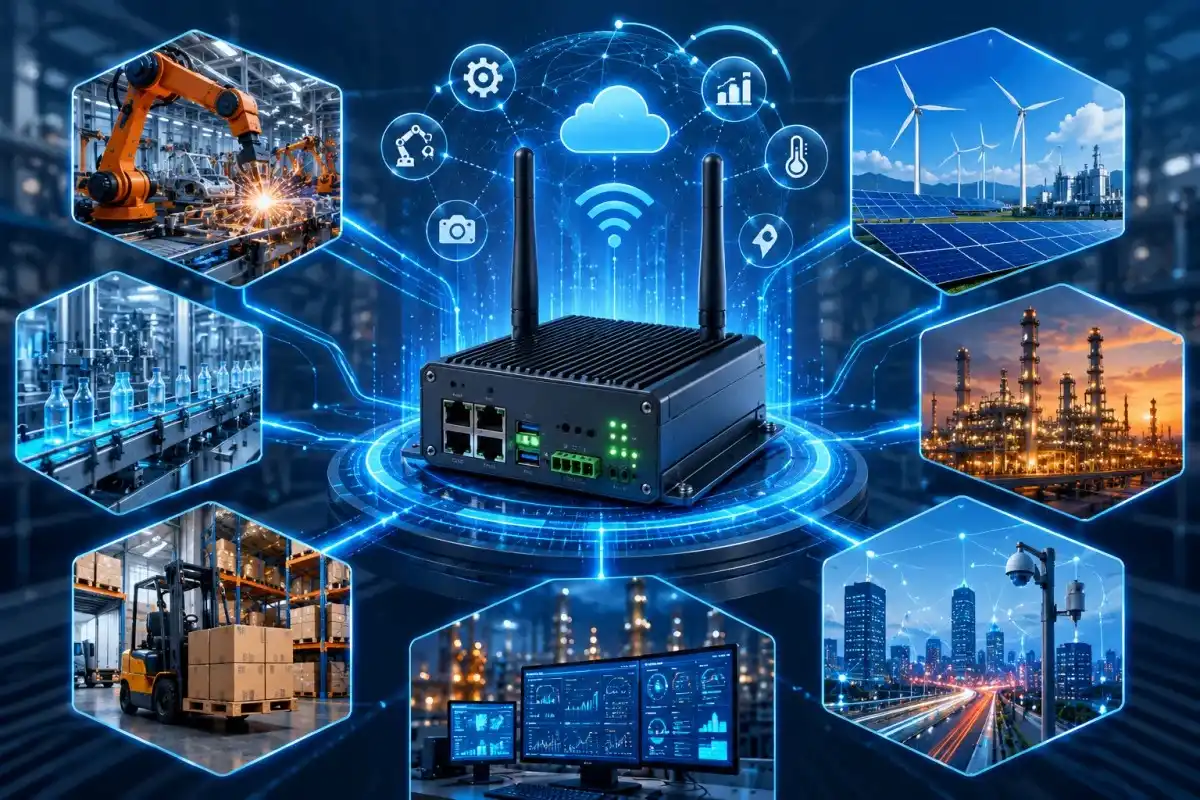
The rise of edge computing has increased demand for the edge IoT gateway model. Rather than sending all information to centralized systems, edge gateways process data closer to the source. An IoT edge gateway can perform local analytics, filtering, and event detection. This reduces latency and improves response times for mission-critical applications. Organizations deploying multiple IoT edge gateways often experience significant reductions in cloud bandwidth consumption.
Local processing minimizes unnecessary data transfers while improving scalability. The concept of edge gateway IoT infrastructure aligns closely with modern digital transformation initiatives. Businesses can gain faster insights and improve operational efficiency through distributed intelligence. An edge computing IoT gateway combines connectivity with processing power, creating a highly efficient architecture for modern IoT ecosystems.
Security And Protection Strategies
A secure IoT gateway is essential for protecting connected environments against cyber threats. As IoT deployments expand, attackers increasingly target connected devices and communication channels. An IoT secure gateway helps defend networks through encryption, authentication, access controls, and threat monitoring. These protections reduce vulnerabilities and improve overall resilience.
Many organizations implement an IoT security gateway as the first line of defense between external networks and critical infrastructure. Security-focused gateways can identify suspicious traffic and block malicious activities before damage occurs. Effective IoT gateway security also requires regular updates, vulnerability assessments, and configuration management. Security should be integrated into every stage of deployment rather than treated as an afterthought.
IoT Gateway Solutions For Enterprise Environments
Modern businesses increasingly invest in IoT gateway solutions to support large-scale deployments. These solutions combine hardware, software, analytics, and management capabilities into unified platforms. A comprehensive IoT gateway solution enables organizations to simplify device onboarding, monitor network health, and automate operational workflows. Centralized management reduces administrative complexity and improves visibility.
Many enterprises deploy an IoT gateway platform that supports multi-site operations and integrates with cloud providers, analytics tools, and business applications. Such platforms provide scalability while maintaining security and reliability. When evaluating vendors, organizations should consider interoperability, performance, security certifications, lifecycle support, and integration capabilities.
Linux and LoRaWAN-Based Gateways
A Linux IoT gateway is popular because Linux offers flexibility, stability, and extensive developer support. Open-source ecosystems allow organizations to customize gateway functionality according to their requirements. Linux-based gateways support a wide range of communication protocols and security tools. This flexibility makes them suitable for industrial, commercial, and research applications.
In long-range wireless deployments, a LoRaWAN IoT gateway provides connectivity between LoRaWAN devices and network servers. These gateways are widely used in agriculture, smart cities, environmental monitoring, and asset tracking. An IoT LoRaWAN gateway enables low-power devices to communicate over long distances while minimizing energy consumption. This capability makes LoRaWAN a preferred option for many remote monitoring projects.
Sensor Connectivity And Data Management
An IoT sensor gateway plays a crucial role in collecting information from distributed sensing devices. Sensors generate enormous amounts of data that must be processed efficiently before reaching enterprise systems. The gateway aggregates information from multiple sources and applies filtering rules to eliminate unnecessary traffic. This approach improves network efficiency while reducing storage requirements.
Organizations seeking greater visibility often focus on tracking data flow through IoT gateways. Effective monitoring tools provide insights into communication paths, performance metrics, latency levels, and device activity. Data management strategies should prioritize reliability, scalability, and security to ensure long-term operational success.
Best Practices For Deployment And Monitoring
Successful gateway deployments require careful planning and ongoing management. Following best practices for IoT gateway monitoring helps organizations maintain performance and prevent operational disruptions. Key recommendations include:
- Monitor bandwidth utilization and latency trends regularly.
- Implement automated alerts for device failures and security incidents.
- Perform routine firmware and software updates.
- Maintain detailed logs for auditing and troubleshooting.
Organizations should also conduct capacity planning to ensure future scalability. Continuous monitoring helps identify bottlenecks before they impact operations. Another important practice involves segmenting networks to improve security and reduce the potential impact of cyberattacks. Combined with strong authentication policies, segmentation creates a more resilient infrastructure.
Future Trends In Gateway Technology
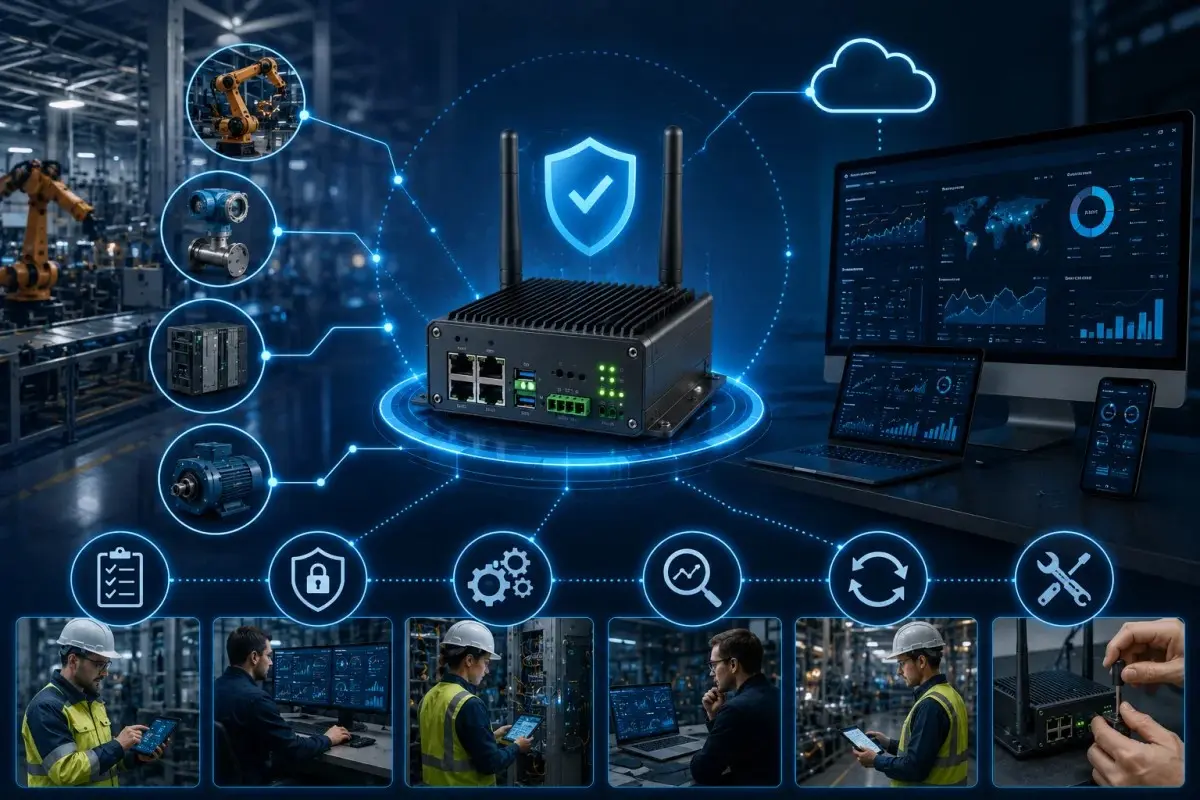
The future of the IoT gateway market is closely linked to advancements in artificial intelligence, edge computing, and 5G connectivity. These technologies are enabling faster and more intelligent data processing. As AI capabilities become more accessible, gateways will increasingly perform predictive analytics at the edge. This evolution will reduce reliance on centralized cloud systems and improve operational responsiveness.
5G networks will further enhance gateway performance by delivering higher bandwidth and lower latency. Businesses will be able to support more connected devices while maintaining reliable communication. In addition, future gateways are expected to offer stronger cybersecurity features, automated management capabilities, and improved interoperability across diverse ecosystems.
Frequently Asked Questions
What does an IoT gateway do?
Why is an IoT gateway important?
Can an IoT gateway process data locally?
What industries use IoT gateways?
How does gateway security protect IoT systems?
What is the difference between edge computing and a gateway?
Are Linux gateways suitable for enterprise deployments?
Conclusion
An IoT gateway is one of the most important components of a successful IoT architecture. It bridges the gap between connected devices and enterprise systems while providing security, protocol translation, data management, and edge computing capabilities. As organizations continue to expand their connected infrastructures, the need for a reliable IoT gateway becomes even more critical.
From industrial automation and smart cities to healthcare and agriculture, gateway technology enables efficient communication and real-time decision-making. Businesses that invest in the right IoT gateway can improve operational efficiency, strengthen cybersecurity, reduce bandwidth costs, and enhance scalability. By following proven deployment practices and embracing emerging technologies such as AI, edge computing, and 5G, organizations can maximize the value of their connected ecosystems and prepare for future innovation.