In the rapidly expanding Internet of Things (IoT) ecosystem, seamless connectivity across platforms is no longer a luxury—it’s a necessity. INTER IOT (Interoperable Internet of Things) stands as a groundbreaking framework developed to solve one of the industry’s biggest challenges: cross-platform interoperability. By allowing diverse IoT systems to communicate efficiently, INTER IOT empowers innovative environments to evolve into truly integrated, data-driven ecosystems.
What Is INTER IOT?
INTER IOT is a European innovation project to facilitate interoperability across heterogeneous IoT platforms. It establishes a layered framework—encompassing devices, networks, services, and applications—that enables different systems to connect, share data, and operate cohesively.
INTER IOT is an interoperability framework that connects diverse IoT platforms through a layered architecture and semantic integration, enabling seamless cross-platform communication and smart system efficiency.
 Why IoT Is Essential
 Why IoT Is Essential
Addressing the IoT Fragmentation Problem
The current IoT landscape is highly fragmented:
- Different platforms use incompatible communication protocols.
- Vendors operate within isolated ecosystems.
- Integration across domains—like healthcare, transportation, and industrial IoT—is complicated.
This disjointed structure leads to duplicated efforts, inefficiencies, and limited innovation.
The Role of IoT
INTER IOT bridges these gaps by:
- Creating standardised interfaces for communication.
- Enabling cross-domain compatibility.
- Offering development toolkits to simplify integration.
With this framework, developers can build innovative solutions that span across platforms, unlocking new levels of automation and scalability.
How INTER IOT Works
A Layer-Oriented Interoperability Model
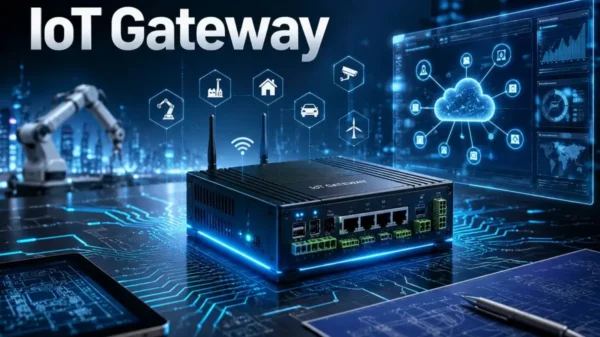
INTER IOT operates through a multi-layered model:
Device Layer
Unifies communication protocols between physical sensors, wearables, or controllers, regardless of vendor or operating system.
Network Layer
Facilitates cross-platform networking by translating between protocols like LoRaWAN, Zigbee, Wi-Fi, and 5G.
Service Layer
Acts as middleware that standardises how backend services communicate and share data securely.
Application Layer
Supports the development of integrated apps that operate across ecosystems without vendor lock-in.
Semantics Layer
Provides a shared vocabulary and meaning for data models, ensuring that IoT systems understand each other’s information correctly.
Use Cases of INTER IOT in Real Life
Smart Cities
Traffic management platforms were integrated with public transportation systems in urban mobility projects. The result? Real-time rerouting, congestion reduction, and improved commuter experiences.
Healthcare
Hospitals combined data from wearables, medical equipment, and patient databases, despite the fact that they originated from different vendors. This enabled real-time health monitoring and predictive care.
Industrial IoT
Manufacturing plants connected legacy machines with new automation tools. This allowed centralised monitoring, predictive maintenance, and operational optimisation.
Benefits of Adopting IoT
- Vendor Independence: Frees systems from single-vendor constraints.
- Scalability: Easily add new devices and platforms without custom integration.
- Data Harmony: Shared semantics ensure consistent, meaningful data flow.
- Efficiency: Reduce operational delays caused by disconnected systems.
- Future-Ready: Built to evolve with the next generation of connected technology.
Ethical Considerations in Interoperable IoT
With increased connectivity comes increased responsibility. INTER IOT recognises the need for:
- Privacy Protection: Encrypted communications and consent-based data sharing.
- Data Governance: Clear rules around data ownership and access.
- Bias-Free Decision-Making: Transparent AI and machine learning models that interpret IoT data.
- Cybersecurity: Multi-layer security protocols across the entire framework.
Building ethical, resilient, and inclusive IoT ecosystems is central to INTER IOT’s vision.
Tools That Empower IoT Implementation
To succeed with IoT, modern organisations need AI-powered digital tools to:
- Create fast, modular dashboards for monitoring device metrics.
- Automate workflows based on real-time IoT triggers.
- Develop multilingual documentation and help content for global deployments.
- Use AI chatbots to interact with IoT systems in real time.
By combining these capabilities, businesses can accelerate IoT adoption, reduce integration time, and enhance user experience.
 INTER IOT vs Traditional IoT Integration Approaches
 INTER IOT vs Traditional IoT Integration Approaches
| Feature | Traditional IoT | INTER IOT |
|---|---|---|
| Platform Compatibility | Limited | High |
| Integration Complexity | High | Simplified with toolkits |
| Vendor Lock-in | Common | Avoided with neutral architecture |
| Semantic Interoperability | Rare | Core feature |
| Data Transparency | Fragmented | Unified semantic layer |
| Cross-Domain Applications | Difficult | Natively supported |
Future of INTER IOT
The future of IoT depends on:
- Standardised global ecosystems
- Automatic onboarding of new devices
- AI-driven decision support
- Dynamic, context-aware interoperability
INTER IOT is already laying the groundwork for this future, making it easier to scale IoT applications in smart cities, healthtech, logistics, and beyond.
Conclusion
IoT marks a paradigm shift in the way connected systems operate. By breaking down silos and creating bridges between devices, networks, and applications, it enables smarter, faster, and more ethical innovation.
Frequently Asked Questions (FAQs)
What does INTER IOT stand for?
INTER IOT stands for Interoperable Internet of Things, a framework for connecting different IoT platforms.
What problems does INTER IOT solve?
It solves fragmentation in the IoT ecosystem by enabling platforms, devices, and applications from different vendors to work together seamlessly.
How does INTER IOT ensure security?
It uses multi-layer encryption, secure communication protocols, and robust authentication to safeguard connected systems.
Can INTER IOT be used in healthcare?
Yes, INTER IOT supports the integration of wearables, diagnostic devices, and health records into unified patient monitoring systems.
Is INTER IOT open source?
Some tools and frameworks developed under INTER IOT are open-source, facilitating community contribution and adoption.