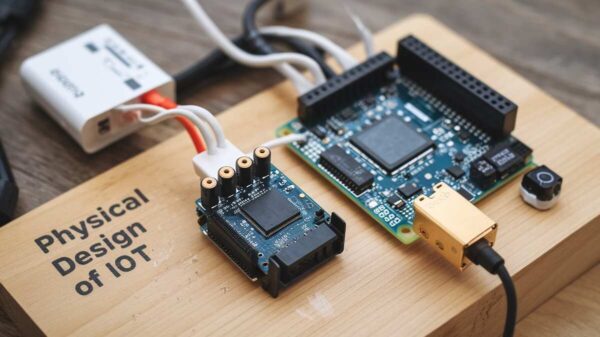
Today’s Internet of Things (IoT) has become an integral part of our lives, connecting everything from smart home devices to fitness trackers. But behind the scenes, something vital ensures that these devices function seamlessly, communicate with each other, and remain secure. That something is IoT device firmware – the unsung hero of the smart tech ecosystem.
In this blog, we’ll examine IoT device firmware, its core functions, its importance in the IoT ecosystem, and the key elements that make your smart devices both innovative and secure. We’ll explore how firmware contributes to your devices’ seamless communication, maintains their security, and supports their smooth operation in a connected world.
What Is IoT Device Firmware?
At the heart of every IoT device, whether it’s a smartwatch, smart thermostat, or health monitor, lies firmware. Think of firmware as the brain of your smart device. It is a specific type of software embedded directly into the device’s hardware. Unlike regular software updates on your computer or phone, firmware works more intimately with the device’s components to make it perform its core functions.
Firmware enables your devices to interact with others in a connected ecosystem, perform data processing, and stay secure. It bridges hardware and higher-level software, ensuring that devices are functional and responsive.
Why Firmware Matters in the IoT Ecosystem
In the world of IoT, firmware acts as the central point of coordination. No matter how advanced, every smart device relies on firmware to communicate with others and execute its tasks. Even the most sophisticated gadgets would be regular, non-interactive devices without firmware.
Here are a few reasons why IoT firmware is so essential:
- Enables Seamless Communication: It ensures devices can “talk” to each other via various communication protocols, such as MQTT, CoAP, or HTTP.
- Facilitates Automation: Firmware processes data and triggers actions, such as adjusting temperature on a smart thermostat or sending alerts from a security camera.
- Maintains Security: As a protective layer, it ensures that the data exchanged between devices is secure from malicious threats.
The Core Functions and Operation of IoT Device Firmware
The real power of IoT firmware comes from its ability to manage various critical tasks. Let’s break down some of the key functions it performs:
Data Collection and Processing
Imagine your fitness tracker, which constantly collects data about your daily steps, heart rate, and activity levels. How does it know what to do with that data? That’s where firmware comes in. It gathers sensor data, processes it, and helps the device make real-time decisions. Whether tracking your steps or monitoring your heart rate, firmware plays a crucial role in interpreting the data and acting accordingly.
Device Control and Automation
Think of your smart home system. When you walk into a room, your bright lights turn on automatically, and your coffee machine starts brewing at a set time. All of this is powered by firmware. It controls your device’s behavior, making it responsive to your inputs and external conditions without requiring manual intervention.
Communication Protocols
For IoT devices to function harmoniously, they need to understand each other. Communication protocols are the language devices used to exchange information. Whether it’s MQTT, CoAP, or HTTP, firmware ensures devices in the IoT ecosystem can speak the same language and work together seamlessly.
Security: The Fortress Behind IoT Firmware
Security is one of the most crucial aspects of IoT device firmware. In a world where devices constantly exchange sensitive data, protecting that data is paramount. IoT device firmware helps keep devices secure by incorporating various layers of defense.
Encryption and Data Integrity
When your smart doorbell sends a signal to your phone, how do you know it hasn’t been intercepted or altered? Firmware uses encryption to secure data, ensuring that authorized devices can only read it. This provides the integrity of the data, preventing tampering during transmission.
Secure Boot Processes
When you turn on your device, the firmware runs a secure boot process to check for unauthorized or malicious software. This acts as a gatekeeper, ensuring that only trusted software can run on your device and protecting it from cyber threats.
Authentication and Authorization
Firmware ensures your device can authenticate itself, confirming its identity before interacting with other devices or networks. It also manages authorization, determining the device’s actions based on its verified identity.
The Role of Over-the-Air (OTA) Updates
Firmware doesn’t remain static. As with any software, IoT devices need regular updates to stay functional and secure. OTA updates allow firmware to be upgraded remotely without any physical intervention.
These updates are crucial for:
- Adding New Features: Ensuring devices stay up-to-date with the latest functionalities.
- Fixing Bugs and Security Vulnerabilities: Patching any issues that could compromise security or performance.
OTA updates are essential for maintaining long-term functionality and reliability in IoT devices.
Power Management: Efficient Use of Resources
Many IoT devices, such as sensors and wearables, use batteries. Firmware is critical in managing these power constraints by optimizing energy consumption.
- Optimizing Sleep Modes: Firmware ensures devices are in a low-power state when not in use, prolonging battery life.
- Minimizing Power Consumption: By carefully managing power during idle times, firmware ensures your device doesn’t waste energy.
Ensuring Compatibility and Interoperability
IoT devices often need to work together, even from different manufacturers. Firmware ensures that devices communicate effectively across various platforms and systems, enabling smooth integration into the larger IoT ecosystem.
The Future of IoT Device Firmware: Innovations on the Horizon
As IoT technology keeps up to evolve, so does firmware. Emerging trends, similar as edge computing and AI integration, are transforming firmware. These technologies will enable devices to process data locally (at the edge), making them faster and more autonomous.
New standards and protocols are also continually being developed to ensure seamless communication between increasingly complex IoT ecosystems.

Conclusion
IoT device firmware may not always be visible, but it is the backbone of our connected world. From enabling communication between devices to securing data and optimizing energy consumption, firmware is indispensable in ensuring the smooth functioning of innovative technologies.
As IoT continues to grow and evolve, firmware will become more sophisticated, ushering in an era of more intelligent, secure devices. By understanding firmware’s core functions and significance, we can appreciate its remarkable role in our daily lives.